used the 0.1% cream on a small area of dermatitis for several days. The itching eased quickly, but he had initially applied too much and needed clarification about using a thin layer.
Triamcinolone
The 0.1% cream helps reduce redness, swelling, itching, and immune-driven irritation on affected skin. It is intended for external use, not for joint injection or oral treatment.
Product information
Triamcinolone acetonide, the active ingredient in Triamcinolone, is a topical corticosteroid cream for inflammatory and itchy skin conditions.
Dosage and administration
Use a thin layer of Triamcinolone on the affected skin and spread it gently until the cream is absorbed. Wash hands before application and wash them afterward unless the hands are the treated area.
- Apply only to the prescribed skin area.
- Keep the cream away from the eyes, mouth, genital mucosa, and open wounds unless specifically directed.
- Follow the individually selected duration rather than continuing indefinitely.
- If an application is missed, apply it when remembered unless the next application is due soon; do not apply extra cream to compensate.
- Do not cover the area with plastic, airtight dressings, or tight bandages unless specifically instructed.
Large surface areas, damaged skin, prolonged treatment, and occlusion increase absorption. Children may be more vulnerable because skin absorption can be greater in relation to body size.
Facial skin can develop thinning and steroid-related eruptions sooner than thicker skin on the trunk or limbs. Avoid using triamcinolone on the face unless that site has been specifically included in the treatment plan.
Food does not affect a topical cream in the way it can affect an oral medicine. Triamcinolone cream is applied to the skin, so it may be used regardless of meals when the prescribed application is due. The FDA's 2024 product information for topical triamcinolone focuses on external application, absorption, body surface area, and occlusion rather than food timing [3]. Do not swallow the cream or apply it inside the mouth.
Ingredients
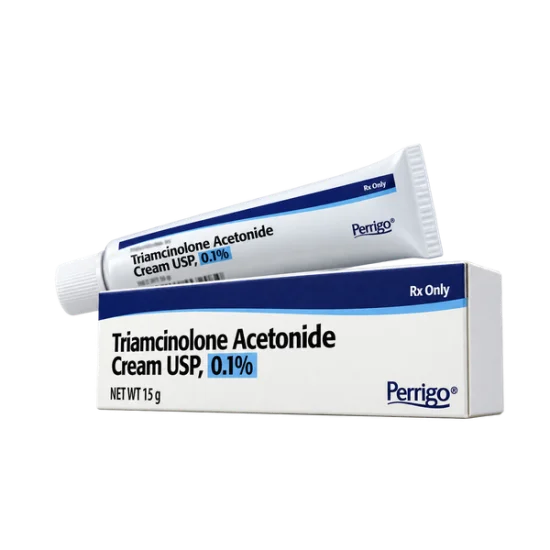
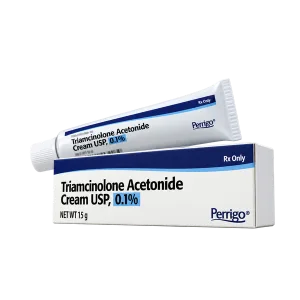
Triamcinolone contains triamcinolone acetonide 0.1% in a topical cream formulation. The cream is supplied in a 15 g tube and is used for steroid-responsive inflammatory skin disorders, including selected cases of Atopic Dermatitis, Contact Dermatitis, Rash, and Plaque Psoriasis.
Corticosteroids reduce excessive immune signalling in the skin. This can calm itching, redness, scaling, and swelling when those symptoms result from inflammation.
Triamcinolone Acetonide and Triamcinolone Hexacetonide
Triamcinolone acetonide and triamcinolone hexacetonide are different ester forms of triamcinolone. Hexacetonide has a longer duration of action in some injected preparations, while acetonide is widely used in topical creams and ointments.
These forms are not interchangeable. Concentration, vehicle, injection site, release characteristics, and intended route all affect treatment decisions.
The topical product described here contains triamcinolone acetonide 0.1%. It should not be used as a substitute for a joint injection or an oral corticosteroid.
Inflammatory Conditions Treated by Route
Topical triamcinolone may be prescribed for inflammatory skin disease when the diagnosis supports corticosteroid treatment. A rash caused by bacteria, fungi, viruses, parasites, or an untreated allergy may worsen when steroid cream is used alone.
Facial rashes, lesions around the eyes, rapidly spreading redness, and undiagnosed sores need a clinical assessment before steroid treatment. Steroids can reduce visible inflammation while allowing an infection to continue underneath.
How it affects the body
Triamcinolone enters skin cells and binds to glucocorticoid receptors. This changes the activity of genes involved in inflammatory signalling and reduces the release of substances that promote redness, swelling, itching, and irritation.
Topical treatment controls inflammation and symptoms. It does not remove every underlying trigger, such as an allergen, infection, irritant, or chronic immune disorder.
Therapeutic indications
Topical triamcinolone may be prescribed for inflammatory skin disease when the diagnosis supports corticosteroid treatment. The cream is used for steroid-responsive inflammatory skin disorders, including selected cases of Atopic Dermatitis, Contact Dermatitis, Rash, and Plaque Psoriasis.
Common mistakes
Common errors include applying a thick layer, covering the area with plastic, continuing treatment after the intended course, and using the cream on every new rash without confirming the cause.
Another mistake is applying the cream to the face, groin, or skin folds because those areas feel itchy. These sites often need a shorter course, a lower-strength approach, or a different diagnosis.
Some patients stop once itching improves, then restart repeatedly when symptoms return. Recurrence can signal an untreated trigger or infection, so repeated self-directed courses may delay appropriate care.
Do not use triamcinolone on a broken or infected area simply because it reduced redness previously. Reduced redness can hide progression.
When not to use it
Triamcinolone is not suitable for you if:
- you have a known allergy to triamcinolone acetonide or an ingredient in the cream;
- the affected area has an untreated bacterial, fungal, viral, or parasitic infection;
- the cream is intended for the eye or inside the mouth;
- you plan to use it on a large area, under plastic, or beneath a tight dressing without specific instructions;
- the rash is undiagnosed, rapidly spreading, painful, or associated with fever;
- you intend to use the cream as a replacement for an injectable or oral corticosteroid.
Eye pain, blurred vision, facial swelling, severe skin thinning, or signs of infection require prompt clinical review.
When this is not for you
Do not use this cream without medical advice if you have an untreated infection, an allergy to triamcinolone or its ingredients, or a rash that is painful, spreading, or accompanied by fever. It is also not intended for the eyes, inside the mouth, large areas, plastic-covered skin, or as a replacement for steroid tablets or injections.
Possible side effects
Short-term topical use can cause burning, stinging, irritation, dryness, or itching at the application site. These effects may settle, but persistent or worsening symptoms deserve review.
Longer exposure can produce skin thinning, stretch marks, visible small blood vessels, acne-like eruptions, changes in pigmentation, or increased hair growth. Risk rises when treatment covers a large area, continues for too long, is applied under occlusion, or is used on thin skin.
Topical Adverse Effects
Children and people treating skin folds may absorb more corticosteroid. Repeated courses on the same site should not become an automatic response to every flare.
Worsening redness, pus, spreading pain, warmth, fever, or rapidly expanding lesions may indicate infection rather than a need for more steroid. Stop treating the situation as a routine flare and obtain prompt medical assessment.
Allergic contact dermatitis to a corticosteroid or an excipient is uncommon but possible. New swelling, blistering, severe burning, or a rash extending beyond the treated area needs medical review.
Systemic and Injection-Related Risks
Absorption from topical treatment is usually lower than with oral corticosteroids, yet it can become clinically relevant with large areas, prolonged use, damaged skin, or occlusive dressings. Repeated injections carry their own local and systemic risks.
People with diabetes, recurrent infections, glaucoma, immune problems, or a history of poor wound healing should disclose these conditions before corticosteroid treatment. The same applies to people taking medicines that suppress immunity.
Triamcinolone may interact with the broader treatment plan even when applied to the skin. The risk depends on exposure, body surface area, duration, route, and other corticosteroid medicines being used.

Comparison
Different corticosteroids vary in route, formulation, concentration, and clinical potency. A topical product should not be replaced by an oral steroid or another cream without a treatment decision based on diagnosis and body site.
| Treatment | Typical route and role | Main limitation |
|---|---|---|
| Triamcinolone | Topical treatment for selected inflammatory skin conditions; some formulations are injectable | Prolonged or extensive topical use can damage skin and increase absorption |
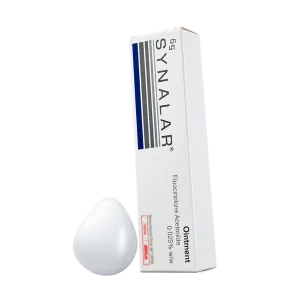
| Fluocinonide or clobetasol propionate 0.05% | Topical treatment with formulation-dependent potency | Stronger treatment may cause more local adverse effects and is not automatically more suitable |
| Prednisone | Oral systemic corticosteroid for conditions requiring whole-body treatment | Produces systemic exposure and is not interchangeable with a topical cream |
Clobetasol propionate 0.05% is generally reserved for selected short-term topical uses. Fluocinonide is another topical corticosteroid whose clinical strength depends on the concentration and vehicle.
Prednisone affects the whole body. Triamcinolone cream is applied to the skin. They should not be swapped without medical direction.
What doctors say
In clinical practice, physicians match the corticosteroid route, strength, vehicle, body site, and duration to the diagnosis. A cream that works well on an inflamed elbow may be unsuitable for the eyelids or a child’s skin.
Clinicians usually reassess persistent inflammation instead of simply increasing steroid strength. A recurring rash may reflect infection, allergen exposure, irritant contact, psoriasis, or another condition requiring a different approach.
The FDA, EMA, and MOHAP use product-specific information when evaluating corticosteroid safety and directions. The formulation matters as much as the ingredient name.
Comparison
Common questions
Can Triamcinolone be combined with other corticosteroids or immune-suppressing medicines?
Combining corticosteroids can increase total exposure, especially when topical treatment is used over large areas or for extended periods. A 2024 FDA corticosteroid labelling framework supports reviewing concurrent steroid therapy before treatment is intensified [1]. MOHAP clinical practice also requires the route and formulation to be considered, because a cream, injection, and oral corticosteroid do not have identical exposure patterns. Avoid adding another steroid product without a specific treatment plan.
Is Triamcinolone suitable for older adults?
Older adults may have thinner skin and a higher risk of bruising, skin tearing, and local steroid effects. EMA's 2023 safety information for topical corticosteroids supports using the smallest suitable amount for the shortest clinically appropriate period, with extra care on fragile skin [2]. Age alone does not rule out treatment, but the body site, skin condition, diabetes status, glaucoma history, and other medicines influence the decision. Facial and folded skin deserve special caution.
Can Triamcinolone be applied with food or on an empty stomach?
Food does not affect a topical cream in the way it can affect an oral medicine. Triamcinolone cream is applied to the skin, so it may be used regardless of meals when the prescribed application is due. The FDA's 2024 product information for topical triamcinolone focuses on external application, absorption, body surface area, and occlusion rather than food timing [3]. Do not swallow the cream or apply it inside the mouth.
Can Triamcinolone affect driving, concentration, or machinery work?
A small-area topical application is not expected to cause the same concentration effects as a sedating medicine. WHO's 2022 medication-safety principles still support considering the route, amount, duration, and any other corticosteroid treatment being used [4]. If severe allergic symptoms, visual changes, dizziness, or illness develops, driving and machinery work should stop until the problem is assessed. The cream should never be applied near the eyes unless specifically directed.
How soon can the effect of Triamcinolone become noticeable?
Itching and redness may begin to improve after several applications, although the timing depends on the diagnosis, severity, body site, and exposure to the original trigger. The FDA's 2024 topical corticosteroid label describes treatment response alongside limits on duration and surface area rather than promising a fixed onset time. Lack of improvement, rapid worsening, discharge, or fever suggests that the condition may not be a simple steroid-responsive flare. Increasing the amount does not reliably solve that problem.
Which condition rules out Triamcinolone treatment?
An untreated skin infection is a concrete reason to avoid using triamcinolone alone until the diagnosis and treatment plan are reviewed. EMA's 2023 corticosteroid safety guidance recognises that topical steroids can worsen or mask some infections. Warning signs include pus, spreading warmth, increasing pain, fever, or rapidly expanding redness. A fungal, viral, bacterial, or parasitic cause may require a different treatment.
Can alcohol be used while applying Triamcinolone?
Alcohol does not create the same direct food interaction for a topical cream as it can for certain oral medicines. WHO's 2022 guidance on medicine safety still supports caution when alcohol contributes to poor judgement, missed applications, skin scratching, or delayed recognition of infection. Alcohol should not be used to clean the treated skin because it can increase dryness and irritation. Avoid drinking if another medicine in the treatment plan has an alcohol warning.
Does Triamcinolone cream treat joint inflammation?
Topical Triamcinolone cream is intended for skin application and does not treat inflammation inside a joint. Specialist-administered intra-articular corticosteroid injections may use triamcinolone acetonide or triamcinolone hexacetonide for selected joint conditions, including Juvenile idiopathic arthritis. The American College of Rheumatology's 2021 guidance describes joint injections as part of a broader management plan rather than a replacement for disease-modifying treatment [5]. A painful swollen joint requires assessment, especially when fever or reduced movement is present.
Do you offer anonymous delivery?
Your order will be securely packed and shipped within 24 hours. This is exactly what your package will look like (images of an actual item sent). It has the size and look of a regular private letter (24x11x0.7 cm) and its contents cannot be seen.
Reviews: Triamcinolone
used the cream for a recurring rash on the forearm. The first course helped, although the rash returned after a new fragranced product was introduced, which pointed to an ongoing trigger.
had used a corticosteroid cream on facial skin for longer than intended. The irritation improved at first, but visible thinning and recurrent redness led to a medical review.
applied a small amount to an inflamed elbow and found the cream easy to spread. She reported mild dryness during the first days and separated moisturiser from the steroid application.
expected the cream to treat a painful, spreading rash. It did not help, and increasing redness with discharge required assessment for infection rather than a stronger steroid course.
Sources
- U.S. Food and Drug Administration (2024). Prescribing Information — triamcinolone acetonide cream
- European Medicines Agency (2023). Summary of Product Characteristics (SmPC) — triamcinolone acetonide
- U.S. Food and Drug Administration (2024). Drug Label — triamcinolone acetonide topical
- World Health Organization (2019). Medication Safety in Polypharmacy: Technical Report
- American College of Rheumatology (2019). 2019 Update of the 2011 American College of Rheumatology Guideline for the Treatment of Juvenile Idiopathic Arthritis