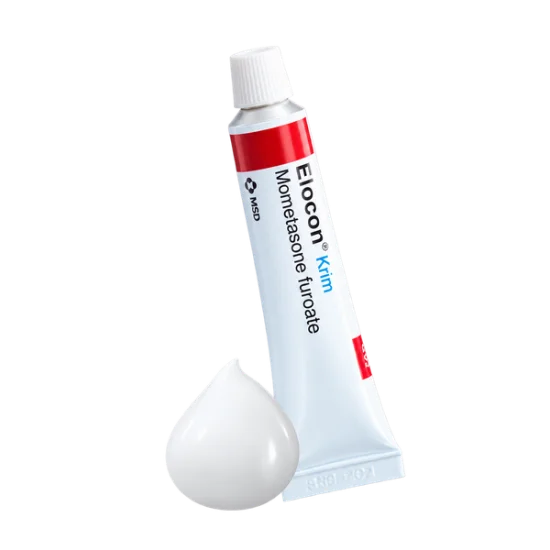
I used Elocon cream on small eczema patches on my wrists for five days. The itch eased by the second day and the redness gradually faded. I had used too much cream on the first evening, so I switched to a very thin layer after that.
It is used when a clinician selects a topical corticosteroid for steroid-responsive eczema, dermatitis, or plaque psoriasis. The cream acts mainly at the treated skin site to settle a flare.
Product information
By binding corticosteroid receptors in inflamed skin, Elocon cream with mometasone furoate reduces signals that drive redness, swelling and itch.
Dosage and administration
Use clean, dry hands before and after application. If the hands are the treatment area, leave them unwashed after applying the cream so the medicine is not removed immediately.
- Use the smallest amount that covers the active patch.
- Keep Elocon away from the eyes, mouth, and inside the nose.
- Do not use it on cuts, untreated bacterial infections, fungal infections, or viral skin lesions.
- Do not cover treated skin with airtight bandages, plastic wraps, or tight dressings unless specifically instructed.
- Leave time between Elocon and an emollient so the products do not dilute each other on the skin.
A fingertip unit can help prevent overuse. One adult fingertip unit is the amount squeezed from the tip of the index finger to the first crease; it covers roughly two adult handprints of skin. This is a practical estimate, not a reason to treat large skin areas without a defined plan.
If you miss an application, apply it when remembered on the same day. Do not apply an extra layer to compensate. Repeated thick applications increase exposure without improving control of the flare.
Ingredients
Elocon cream contains mometasone furoate as its active corticosteroid ingredient. The cream is applied to affected skin and works mainly at the treated site to reduce inflammation, redness, swelling, scaling, and itching.
How it affects the body
Mometasone furoate is the active corticosteroid in Elocon cream. It enters skin cells and binds glucocorticoid receptors, which changes the production of inflammatory proteins. This reduces mediators such as prostaglandins and leukotrienes, substances involved in redness, warmth, swelling, and itch. The amount of inflammation controlled can vary with the thickness of the lesion and the treated site. Clinical response should be reviewed if the rash does not improve.
The medicine also reduces the widened superficial blood vessels that make an inflamed area look red. Its effect is local when used in a thin layer on limited skin areas. Absorption into the bloodstream can rise when it is applied over large areas, used for extended periods, placed under airtight coverings, or used on damaged skin.
Topical corticosteroids are often described by potency. Mometasone is stronger than low-potency hydrocortisone products, so it can be useful for more active inflammatory flares but requires more careful site selection and course length. The eyelids, face, skin folds, groin, and underarm areas absorb topical corticosteroids more readily than the palms or soles.
Therapeutic indications
Elocon is a topical corticosteroid cream for inflammatory skin conditions that respond to corticosteroids. Mometasone furoate helps calm active inflammation, making it useful when redness, thickened skin, scaling, and persistent itching are disrupting daily comfort. It treats the inflammation behind a flare; it does not remove the underlying tendency toward eczema or psoriasis. [1]
Eczema often causes dry, sore, itchy areas that may crack after repeated scratching. Contact dermatitis can produce redness, burning, and small blisters after exposure to an irritant or allergen. Plaque psoriasis usually forms well-defined, raised scaly patches, often affecting the elbows, knees, lower back, or scalp margins.
Management of Plaque Psoriasis and Eczema
For eczema, Elocon is generally used during an active flare rather than as a daily moisturiser. The aim is to reduce inflammation quickly enough for the skin barrier to recover with regular emollient care.
Psoriasis plaques can be thicker than eczema patches, so a corticosteroid may reduce the redness and itch while helping scale lift more comfortably. Mometasone does not cure psoriasis. Recurring plaques may need a longer-term management plan that includes moisturising treatment, trigger control, and clinician review.
Common mistakes
Using more cream than necessary is one of the most frequent errors. Topical corticosteroids do not work better when applied in a thick white layer. The skin absorbs only part of the applied medicine, while excess can spread to unaffected areas.
Another mistake is treating every itchy rash as eczema. Fungal rashes, scabies, bacterial infections, and allergic reactions may also itch, but they need different treatment.
Patients also sometimes use Elocon only when itching becomes unbearable. Starting treatment at the early signs of a familiar, diagnosed flare may prevent days of scratching and skin damage.
When not to use it
Elocon should not be applied to untreated skin infections caused by bacteria, fungi, or viruses. Examples include cold sores, chickenpox-related lesions, ringworm, or infected eczema with oozing and crusting. Corticosteroids can reduce visible inflammation while masking the progression of an infection.
- Skin near the eyes, including eyelids.
- Facial skin, groin, underarms, and skin folds.
- Large treatment areas or broken skin.
- Infants and children, who have a higher skin-surface-area-to-body-weight ratio.
- Long-standing psoriasis treated without dermatology guidance.
- Use beneath nappies or airtight dressings, which can act as occlusive coverings.
Topical mometasone has few interaction concerns when used correctly on small areas. Still, tell the prescriber about oral corticosteroids, injected steroids, steroid inhalers, or strong corticosteroid creams used elsewhere on the body. Combined steroid exposure may matter when treatment is prolonged or covers extensive skin.
When this is not for you
This is NOT for you if you have a known allergy to mometasone furoate, another corticosteroid, or any component of the cream.
Possible side effects
Most people using a short, targeted course tolerate Elocon cream well. Temporary stinging, tingling, itching, or mild burning can occur after application, especially when eczema has cracked or been scratched. These sensations should settle rather than intensify.
The main safety issue with topical corticosteroids is prolonged use on thin or sensitive skin. Skin thinning, visible small blood vessels, stretch marks, acne-like spots, changes in skin colour, and folliculitis can develop when a stronger steroid is used too long or under occlusion. The FDA product information also warns that excessive topical exposure can suppress normal adrenal hormone function, though this is uncommon with short courses on small areas. [1]
Seek prompt clinical assessment if the treated skin becomes painful, develops yellow crusting, pus, rapidly spreading redness, or fever. These may signal a skin infection rather than an ordinary inflammatory flare.
Comparison
Elocon is one option within a wider approach to eczema and psoriasis. Its role is to suppress active inflammation. Other approaches focus on repairing the skin barrier, reducing itch, or controlling a different cause of rash.
| Treatment category | Main role | When it may be preferred |
|---|---|---|
| Emollients and barrier creams | Restore moisture and reduce dryness | Daily eczema maintenance |
| Low-potency hydrocortisone | Mild anti-inflammatory action | Sensitive sites or mild flares |
| Non-steroidal anti-inflammatory creams | Control selected inflammatory conditions | When steroid-sparing care is needed |
Emollients are central to eczema care because dry skin has a weaker barrier and reacts more easily to soaps, heat, sweat, and friction. They do not replace Elocon during a significant inflammatory flare, yet regular moisturising can reduce the frequency of flares for some people.
Antifungal creams are for fungal infections, not eczema or psoriasis. Applying a corticosteroid to an undiagnosed fungal rash may make it less obvious while allowing the infection to spread. The American Academy of Dermatology recommends matching topical treatment to the diagnosis, skin site, severity, and patient age rather than treating every itchy rash in the same way. [2]
What doctors say
In clinical practice, doctors usually look at three details before choosing a topical corticosteroid: the diagnosis, the body site, and the severity of the flare. Elocon can be a useful short-course option for inflamed, itchy skin when the rash is confirmed as steroid-responsive.
A common expectation problem is stopping too soon because the redness has faded while itch persists. The opposite problem is continuing daily use for weeks because the cream helped quickly at first. The appropriate stopping point depends on the condition, the body area, and how the skin looks after treatment.
MOHAP, WHO, and EMA all support the wider principle of responsible medicine use: the lowest exposure that controls symptoms is preferred. For topical corticosteroids, that means a thin layer, limited area, defined course, and reassessment if the expected improvement does not appear.
Comparison
Common questions
Stopping Elocon and Tapering
For a short course on a small area, Elocon can usually be stopped when the prescribed course ends or the flare has settled. Tapering is more relevant after extended treatment, treatment over large areas, or repeated use on sensitive skin, where a clinician may advise reducing frequency rather than stopping abruptly. The FDA’s mometasone information, revised in 2023, links prolonged or extensive topical corticosteroid use with a greater chance of systemic absorption. [1]
A rebound of redness or itching after stopping may mean the original skin condition is still active, not that the cream has caused dependence. Avoid restarting repeated courses without a clear plan if the same area flares again quickly. A clinician may need to reassess the diagnosis, identify triggers, or adjust the maintenance strategy.
Course Duration and Long-Term Use
Elocon is usually intended for short, defined courses rather than continuous daily use. The acceptable duration varies with the diagnosis, treatment site, age, and response; thin skin areas need more caution than thicker skin on the trunk or limbs. British dermatology guidance published in 2023 supports intermittent, targeted topical corticosteroid use within a wider skin-barrier plan. [3]
Long-term uninterrupted use can increase the risk of skin thinning, stretch marks, and visible blood vessels. Persistent eczema or psoriasis often requires maintenance with emollients and a clinician-led flare plan rather than daily Elocon.
Use With Other Corticosteroid Medicines
Elocon can be used alongside other corticosteroid medicines only when the total steroid exposure has been considered. This includes steroid inhalers for asthma, oral corticosteroids, steroid injections, nasal sprays, and other steroid creams. The European Medicines Agency's guidance published in 2023 emphasises that corticosteroid effects depend on dose, route, treatment duration, and individual susceptibility.
A small Elocon treatment area is less likely to add meaningful systemic exposure than large-area use under occlusion. Even so, avoid using several topical corticosteroids on the same patch unless the regimen clearly separates their roles.
Pregnancy and Breastfeeding
Pregnancy does not automatically rule out topical mometasone, yet treatment should use the smallest area and shortest course that controls the condition. Systemic absorption is usually limited with appropriate topical use, but it rises with large areas, damaged skin, and airtight coverings. WHO guidance on medicines in pregnancy published in 2023 supports balancing maternal symptom control with the minimum necessary exposure.
During breastfeeding, do not apply Elocon to the nipple or breast area where an infant could ingest the cream. Wash hands after use before handling the baby, especially if the treated area is on the hands.
Driving, Concentration, and Machinery
Elocon cream is not expected to impair concentration, alertness, driving, or the ability to operate machinery because it acts mainly in the skin. This differs from sedating oral antihistamines that may be used for itch. The 2023 FDA prescribing information does not identify impaired driving as a typical concern with topical mometasone.
If a severe skin condition itself disrupts sleep or concentration, managing the flare may improve daytime comfort. Avoid applying the cream immediately before tasks involving repeated hand washing if the hands are being treated, as the medicine may be removed.
Do you offer anonymous delivery?
Your order will be securely packed and shipped within 24 hours. This is exactly what your package will look like (images of an actual item sent). It has the size and look of a regular private letter (24x11x0.7 cm) and its contents cannot be seen.
Reviews: Elocon
My dermatologist had prescribed it for a scaly patch near my elbow. It helped the itch within a few days, but I found the cream less comfortable after showering because the area was very dry. Moisturiser later in the day made a real difference.
I applied it to a rash that I assumed was eczema, but it spread at the edge and became more irritated. It turned out not to be the right condition for a steroid cream. The experience taught me not to reuse a previous treatment for every new rash.
I used the cream for a short flare on my hands during a period of frequent washing. The skin became less sore after several applications. I was careful not to put it on continuously once the cracks had settled.
Sources
- FDA (2023). Elocon (mometasone furoate) Cream, 0.1% Prescribing Information.
- American Academy of Dermatology (2023). Guidelines of Care for the Management of Atopic Dermatitis With Topical Therapies.
- British Association of Dermatologists (2023). Topical Corticosteroids Patient Information Leaflet.