The first few weeks did not feel different, and mild nausea bothered me after breakfast. Taking the tablet with a fuller meal helped. Later, my morning stiffness became easier to manage, although I still needed regular rheumatology reviews.
Hydroxychloroquine sulfate in Plaquenil changes parasite survival and modulates immune activity. Plaquenil is prescribed for malaria prevention or treatment and for autoimmune diseases such as rheumatoid arthritis and systemic lupus erythematosus. Its long-term use requires attention to retinal health, drug interactions, and individually selected dosing.
Product information
Plaquenil contains hydroxychloroquine sulfate in tablets for oral use. Hydroxychloroquine belongs to the aminoquinoline group and is also classified as a disease-modifying antirheumatic drug, or DMARD. DMARDs influence the disease process rather than providing only short-term relief from pain or inflammation. The dose is decided individually, taking age, other medicines and health conditions into account.
Dosage and administration
The dose of Plaquenil is decided individually, taking age, other medicines, and health conditions into account. Body weight is important because excessive cumulative exposure increases the risk of retinal toxicity.
- Take the prescribed tablet dose by mouth.
- Take tablets with food or milk when gastrointestinal upset occurs.
- Use Plaquenil at the same time each day when it forms part of a regular autoimmune treatment plan.
- Follow the prescribed duration for malaria prevention or treatment.
- Do not double the next dose after a missed dose unless a clinician has specifically directed this.
- If a dose is missed, take it when remembered unless the next scheduled dose is close; in that situation, skip the missed dose and resume the usual schedule.
- Do not stop long-term treatment abruptly without a clinical reason, especially when it is controlling lupus or rheumatoid arthritis activity.
Malaria prevention may begin before travel and continue after leaving the risk area, depending on the destination and the chosen regimen. Malaria treatment requires a different schedule and may require another antimalarial if resistance is expected. A rheumatology regimen is usually regular rather than occasional.
Ingredients
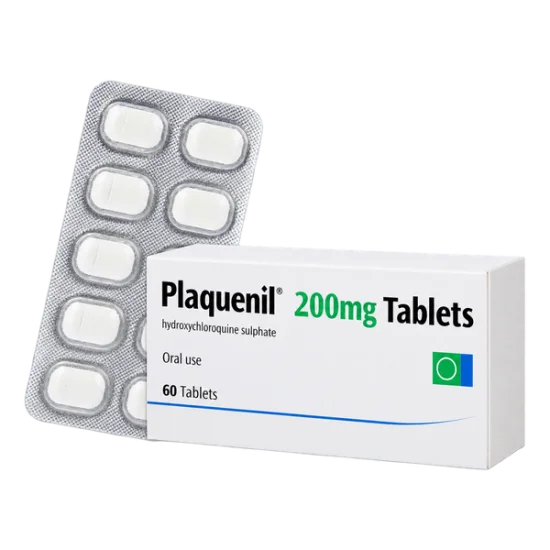
Plaquenil contains hydroxychloroquine sulfate as its active ingredient. The product is supplied for oral use as tablets, with the pack marked as containing 60 tablets.
How it affects the body
Hydroxychloroquine accumulates inside certain cells and affects lysosomal activity, antigen processing, and immune signalling. These effects help reduce abnormal inflammatory activity in rheumatoid arthritis and lupus. The same active substance interferes with the survival of malaria parasites inside red blood cells.
Therapeutic indications
Plaquenil has two major clinical roles: antimalarial treatment and immune-modifying treatment. The dose and duration differ substantially between these uses, so a malaria regimen should never be transferred to rheumatoid arthritis or lupus treatment.
| Clinical use | Main pharmacological purpose | Treatment pattern |
|---|---|---|
| Malaria prevention or treatment | Impairs parasite survival | Selected according to destination, parasite sensitivity, body weight, and medical guidance |
| Rheumatoid arthritis | Reduces immune-driven joint inflammation | Usually continued regularly over a longer period |
| Systemic or discoid lupus erythematosus | Helps control immune activity affecting skin, joints, and other tissues | Long-term treatment may be used when clinically appropriate |
For malaria, local parasite resistance is relevant. The World Health Organization uses regional resistance patterns when developing malaria treatment guidance, so Plaquenil may be suitable in some settings and unsuitable in others [1]. Travel destination, duration, previous antimalarial exposure, and the type of malaria risk all influence the prescription.
For rheumatoid arthritis, Plaquenil may be used when joint inflammation is persistent or when a rheumatology plan requires a DMARD with a particular safety profile. Lupus treatment may involve skin, joint, blood, kidney, or systemic manifestations, and hydroxychloroquine is often considered within a broader disease-management plan.
Plaquenil does not act like a fast painkiller. Its anti-inflammatory benefit in autoimmune disease develops gradually, and treatment may continue even after symptoms improve to reduce disease activity and flare risk.
Common mistakes
Several avoidable habits can interfere with Plaquenil treatment:
- Using a malaria-prevention schedule for rheumatoid arthritis or lupus.
- Taking tablets irregularly because symptoms fluctuate.
- Doubling a missed dose.
- Failing to mention antacids, antibiotics, heart medicines, or diabetes treatment.
- Starting azithromycin without checking for cardiac-risk interactions.
- Delaying an eye examination during long-term treatment.
- Assuming normal vision means retinal monitoring is unnecessary.
- Crushing tablets or changing the administration method without clinical instructions.
- Stopping treatment after a short period because the anti-inflammatory effect is gradual.
- Forgetting to mention kidney disease, retinal disease, fainting, or a previous reaction to chloroquine.
One easily missed detail is that the risk of retinal toxicity relates to exposure over time, not simply to whether a person feels well on a given day. Another is that kidney impairment can alter hydroxychloroquine handling and change the dose selected by the prescriber.
When not to use it
- Existing retinal or macular disease.
- Previous hydroxychloroquine-related retinopathy.
- Severe kidney impairment, which can increase exposure.
- Significant liver disease.
- Psoriasis or porphyria, where symptoms may worsen in susceptible individuals.
- Known allergy to hydroxychloroquine, chloroquine, or an excipient.
- Certain heart-rhythm disorders or a history of unexplained fainting.
- Glucose-6-phosphate dehydrogenase deficiency, where blood-cell complications require clinical consideration.
- Pregnancy or breastfeeding, where the decision depends on disease severity, malaria risk, and specialist assessment.
When this is not for you
This medicine is not suitable for you if you have a known hydroxychloroquine allergy, clinically significant pre-existing maculopathy, or a previous serious reaction to the drug. It also requires a specific medical review if you have heart-rhythm disease, kidney impairment, retinal disease, or several interacting medicines.
Visual warning signs include difficulty reading, blurred central vision, missing areas in the visual field, changes in colour perception, or new light sensitivity. Report these symptoms promptly rather than waiting for the next routine appointment.
Possible side effects
Plaquenil may cause gastrointestinal upset, which can be reduced by taking tablets with food or milk. Long-term use requires attention to retinal health, and interactions with other medicines should be reviewed. People who are pregnant, have a known allergy, or take interacting medicines should seek medical advice before use.
Comparison
Plaquenil is one option within DMARD treatment. Rheumatologists select a DMARD according to disease severity, affected organs, pregnancy plans, kidney and liver function, infection risk, blood-test results, and previous treatment response.
| Treatment category | Main clinical profile | Monitoring focus |
|---|---|---|
| Hydroxychloroquine | Aminoquinoline DMARD used in rheumatoid arthritis and lupus | Retinal assessment, blood count, liver and kidney considerations |
| Methotrexate, sulfasalazine, or leflunomide | Conventional DMARD options for inflammatory arthritis | Blood counts, liver function, infection risk, and medicine-specific precautions |
| Chloroquine or other specialist options | Related antimalarial or immune-modifying approaches in selected cases | Retinal, blood, cardiac, and indication-specific monitoring |
Methotrexate is often considered when rheumatoid arthritis requires stronger disease suppression, though it brings distinct liver, blood, infection, pregnancy, and alcohol-related considerations. Sulfasalazine may suit some inflammatory arthritis patterns and requires attention to blood counts and liver function. Leflunomide has a long elimination period and needs careful pregnancy and liver-risk management.
Chloroquine is chemically related to hydroxychloroquine, yet the two medicines are not interchangeable at the same dose. The choice depends on the diagnosis and the prescriber’s assessment rather than the tablet name alone.
What doctors say
In clinical practice, rheumatologists tend to set expectations early: Plaquenil may take weeks or longer to show its full benefit in autoimmune disease. The aim is steadier control of inflammation, fewer flares, and preservation of function rather than immediate pain relief.
A doctor will usually review symptom changes, joint findings, skin or systemic lupus activity, laboratory results, kidney function, and eye-monitoring status. A stable symptom report does not remove the need for retinal surveillance because early retinal toxicity can be symptom-free.
A practical point from prescribing work is that patients often judge the medicine too early. If the first week feels unchanged, that does not show whether the treatment will control autoimmune inflammation. Conversely, new visual symptoms, fainting, severe weakness, or marked muscle changes should not be ignored while waiting for a planned review.

Comparison
Common questions
What should be discussed with a doctor before starting Plaquenil?
Tell the prescriber about retinal disease, visual symptoms, kidney or liver impairment, heart-rhythm problems, fainting, G6PD deficiency, psoriasis, porphyria, pregnancy, and breastfeeding. Provide a complete list of medicines, including azithromycin, digoxin, antacids, diabetes treatments, and drugs that may prolong the QT interval. MOHAP's 2024 clinical practice guidance places patient history and medicine review at the centre of safe prescription decisions in the UAE. A baseline eye assessment may be arranged when long-term treatment is planned.
How soon can the effect of Plaquenil become noticeable?
The antimalarial effect follows the prescribed treatment schedule, while improvement in rheumatoid arthritis or lupus can take several weeks and may continue developing over a longer period. The 2021 American College of Rheumatology guideline describes hydroxychloroquine as a DMARD whose benefit is assessed through disease activity, symptoms, and examination rather than a single early dose. A lack of immediate pain relief does not prove treatment failure. Persistent inflammation, worsening symptoms, or new organ involvement requires an earlier clinical review.
Can Plaquenil cause retinal problems?
Yes. Hydroxychloroquine can cause retinopathy or maculopathy, with risk influenced by cumulative exposure, dose relative to body weight, kidney function, age, and pre-existing retinal disease. The 2016 American Academy of Ophthalmology recommendations support baseline and follow-up retinal assessment for patients receiving long-term hydroxychloroquine. Report blurred central vision, reading difficulty, colour-perception changes, light sensitivity, or missing areas in the visual field without waiting for a routine appointment.
Do you offer anonymous delivery?
Your order will be securely packed and shipped within 24 hours. This is exactly what your package will look like (images of an actual item sent). It has the size and look of a regular private letter (24x11x0.7 cm) and its contents cannot be seen.
Reviews: Plaquenil
I had been taking Plaquenil as part of my lupus plan and found it easier to remember with dinner. The eye appointment was inconvenient, but the testing was straightforward. I was frustrated that the medicine did not remove every flare.
I used the tablets for a planned trip and followed the schedule given for the destination. I noticed some stomach discomfort during the first doses, which improved with food. The travel plan made the timing more complicated than I expected.
After several weeks, I was unsure whether the tablets were helping because the pain had not disappeared. I had also missed doses on busy days. My review showed that I needed a more consistent routine and a clearer plan for tracking symptoms.
Sources
- World Health Organization (2023). Guidelines for Malaria