The itching eased after the first few applications, and I slept without waking to scratch. The ointment was greasy under loose clothing, but it helped the cracked areas feel less tight.
Adults and adolescents with corticosteroid-responsive inflammatory skin flares may be prescribed Synalar ointment to control local itching, redness, and swelling. Synalar contains fluocinolone acetonide 0.025% w/w, a topical corticosteroid that calms excessive inflammatory activity in the skin.
Product information
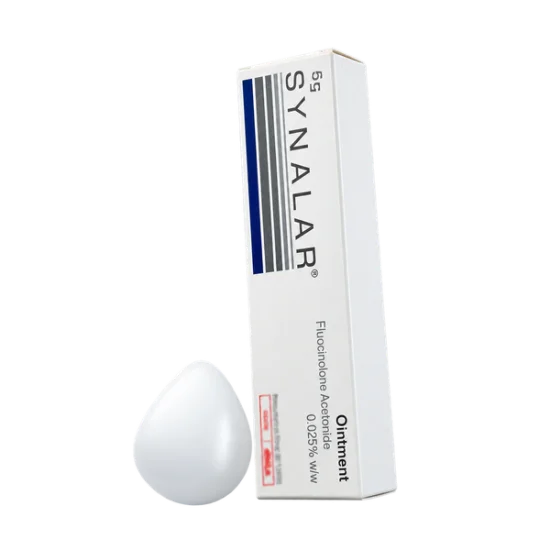
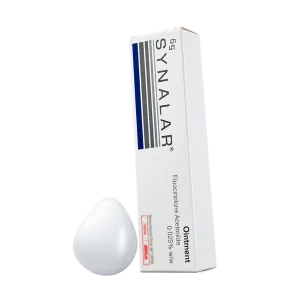
Synalar is an ointment for external skin use containing fluocinolone acetonide 0.025% w/w. The product is supplied in a 15 g tube and belongs to the topical corticosteroid group.
Fluocinolone acetonide is a synthetic fluorinated glucocorticoid related to 16α-hydroxyprednisolone.
Dosage and administration
Apply Synalar externally to the diagnosed affected area according to the regimen confirmed with a healthcare professional before starting. Clean hands before and after application unless the hands are the treatment site.
- Gently dry the affected skin without rubbing it raw.
- Apply a thin film of ointment to cover the inflamed area.
- Rub it in lightly until the ointment is distributed.
- Keep the application limited to the prescribed sites.
- Use the prescribed schedule and do not extend the course on your own.
Do not apply a thick visible layer in the belief that it will work faster. Topical corticosteroids work after they contact the skin; excess ointment mainly increases absorption, greasiness, and transfer to other areas.
Missed applications should not be doubled. Apply the next scheduled amount as directed. A short lapse may allow itch to return, yet applying extra ointment to compensate can raise the risk of local adverse effects.
Ingredients
Synalar is an ointment for external skin use containing fluocinolone acetonide 0.025% w/w. The product is supplied in a 15 g tube and belongs to the topical corticosteroid group.
Fluocinolone acetonide is a synthetic fluorinated glucocorticoid related to 16α-hydroxyprednisolone. Glucocorticoids act on receptors inside skin cells and reduce the signals that drive inflammation. This makes Synalar useful when a diagnosed skin condition is responsive to topical steroids. The FDA prescribing information for fluocinolone acetonide ointment describes its anti-inflammatory, antipruritic, and vasoconstrictive effects in the skin [1].
Active ingredient profile
Fluocinolone acetonide penetrates the outer skin layers and binds to glucocorticoid receptors. This action reduces production of inflammatory mediators, including cytokines that contribute to heat, redness, swelling, and itch.
The ointment base is useful for dry, thickened, scaly, or cracked areas because it creates an occlusive film that limits water loss from the skin. Ointment leaves a protective film. It can feel greasy, which is a practical drawback on moist skin folds or areas where rapid absorption is preferred.
How it affects the body
Fluocinolone acetonide enters epidermal and dermal cells after application. It activates glucocorticoid receptors, which then alter gene transcription. The result is lower production of inflammatory cytokines and mediators that recruit immune cells into the skin.
Less inflammation means less redness. Reduced vascular activity can also lessen swelling. The anti-itch effect matters because scratching damages the skin barrier, which can prolong an eczema flare and increase the chance of secondary infection.
Synalar treats the inflammatory pathway rather than acting as an antibiotic, antifungal, or moisturiser. This distinction explains why it can settle steroid-responsive dermatitis but is unsuitable as sole treatment for an infected rash. WHO materials on skin disease describe eczema and psoriasis as conditions in which inflammation and impaired barrier function can produce persistent itch and visible scaling [4].
Therapeutic indications
Synalar is used for local corticosteroid-responsive dermatoses when inflammation is producing itch, erythema, scaling, or thickened skin. It does not remove the underlying tendency toward eczema or psoriasis. Its role is to settle a flare while skin-barrier care and trigger avoidance continue.
Conditions that may respond when clinically diagnosed include:
- Eczema, including dry, itchy, inflamed patches associated with atopic dermatitis.
- Contact dermatitis, where the skin reacts after exposure to an irritant or allergen.
- Plaque psoriasis, when small localized plaques are inflamed and scaly.
- Other corticosteroid-responsive dermatoses, where a clinician has identified inflammation rather than infection as the main problem.
A red rash does not always need a steroid. Fungal infections, bacterial infections, rosacea, acne-like eruptions, and viral lesions can worsen or become harder to recognise if a corticosteroid is applied without a clear diagnosis. The American Academy of Dermatology advises matching topical treatment to the diagnosed skin disease and the body site involved [2], consistent with NICE guidance.
Common mistakes
Several practical errors reduce the benefit of Synalar or increase the chance of side effects:
- Treating every rash as eczema: Ringworm and other infections may look red and scaly but need different treatment.
- Applying ointment to broken, infected, or weeping lesions without assessment: This can mask symptoms while infection progresses.
- Using Synalar on the face for prolonged periods: Facial skin is thin and more prone to steroid-related changes.
- Covering treated skin with airtight materials: This can increase drug absorption.
- Stopping moisturiser once the flare improves: Barrier care remains useful after inflammation settles.
- Sharing the tube with another person: Similar-looking rashes can have very different causes.
When not to use it
Synalar is not for you if you have a known allergy to fluocinolone acetonide or another ingredient in the ointment.
Avoid applying it to untreated bacterial, fungal, or viral skin infections, including cold sores, chickenpox lesions, or suspected fungal ringworm. It should not be used in the eye or on the eyelid margin. Accidental eye exposure should be rinsed with clean water.
Use during pregnancy or breastfeeding requires an individual clinical decision. Large-area treatment, prolonged treatment, and application to the breast area before feeding should be avoided unless specifically advised. The FDA highlights that children can absorb proportionally more topical corticosteroid than adults because of their higher skin-surface-area-to-body-weight ratio [5].
When this is not for you
Do not use Synalar if you are allergic to fluocinolone acetonide or any ingredient in the ointment. Do not put it on a rash that may be an untreated bacterial, fungal, or viral infection, or in the eye or on the edge of the eyelid. If you are pregnant or breastfeeding, ask a healthcare professional before use, especially if a large area or the breast area would be treated.
Possible side effects
Synalar is generally well tolerated when used sparingly on an appropriate skin area for a limited course. Mild burning, stinging, dryness, irritation, or itching can occur after application. These effects are more likely on already inflamed or fissured skin.
Prolonged use, use on large areas, application beneath occlusive dressings, or use on thin skin can increase systemic absorption. Possible local corticosteroid effects include skin thinning, visible small blood vessels, stretch-mark-like changes, easy bruising, altered pigmentation, folliculitis, and acne-like eruptions. These effects are more likely with repeated use on the face, groin, underarms, eyelids, or skin folds.
Comparison
Synalar on this page is an ointment containing fluocinolone acetonide 0.025% w/w. An ointment is richer and more occlusive than a cream, so it is often chosen for very dry, scaly skin rather than moist or weeping areas.
The vehicle affects comfort and adherence. Thick ointment may stay on the skin longer and support barrier repair, yet it can transfer to clothing and feel uncomfortable in hot weather. For facial skin, skin folds, or genital skin, clinicians usually select treatment cautiously because these areas absorb corticosteroids more readily.
Vehicle selection and anti-inflammatory options
| Treatment approach | Main action | Typical role |
|---|---|---|
| Synalar ointment with fluocinolone acetonide | Topical corticosteroid that suppresses inflammation and itch | Short treatment of localised inflammatory flares |
| Topical calcineurin inhibitor | Reduces immune-cell signalling without steroid-related skin thinning | Sensitive areas or steroid-sparing maintenance plans |
| Plain emollient | Supports the skin barrier and reduces dryness | Daily care between flares and alongside prescribed treatment |
Topical calcineurin inhibitors and emollients do not replace Synalar during every acute flare. They serve different roles. Emollients improve barrier hydration but do not rapidly suppress an established inflammatory reaction. Steroid-sparing treatments may suit sensitive locations or recurrent disease, though they can cause transient burning when first applied. Clinicians also consider the treatment site, affected area, and recurrence pattern when selecting an option.
EMA guidance on topical products recognises that the vehicle can influence local delivery and clinical performance of a skin treatment [3].
What doctors say
In dermatology practice, the key issue is not whether a topical steroid works, but whether its strength, vehicle, body site, and duration fit the condition. Synalar can reduce a local flare effectively when the diagnosis is correct and the ointment is used only where inflammation is active.
Doctors often see two opposite patterns. Some people avoid prescribed topical steroids entirely and remain trapped in an itch–scratch cycle. Others keep applying them for weeks after the flare has settled. The better approach is a focused course, followed by regular emollient use and review if the rash keeps returning.
Long courses need review. Persistent disease may need a different diagnosis, a steroid-sparing strategy, infection treatment, or adjustment of the wider eczema or psoriasis plan.

Comparison
Common questions
How long does a Synalar course last, and is long-term use acceptable?
Synalar is usually used as a short, targeted course for an active inflammatory flare rather than as continuous daily treatment. The appropriate duration depends on the body site, severity, skin response, and the regimen confirmed before treatment begins. Continuous or repeated long-term use can raise the risk of skin thinning and other corticosteroid effects. FDA prescribing information from 2011 supports limiting exposure to the amount and duration needed for control, with review when symptoms persist or recur.
What concrete condition rules out Synalar use?
An untreated fungal skin infection is a clear reason not to use Synalar as the main treatment. Fungal rashes can become less red under a corticosteroid while the infection continues to spread, creating a misleading appearance of improvement. A ring-shaped, enlarging, scaly rash or rash affecting the feet, groin, or nails needs proper assessment. WHO skin-health information published in 2023 identifies fungal infections as a separate group of conditions requiring antifungal management rather than anti-inflammatory steroid treatment.
Can Synalar be used by people under 18?
Use in children and adolescents should follow an individually confirmed regimen because younger patients can absorb more topical corticosteroid relative to body size. Thin skin, large treatment areas, and occlusive coverings increase that concern. Caregivers should apply only the prescribed thin amount to the intended area and avoid extending treatment after the flare improves. The FDA label for fluocinolone acetonide ointment, issued in 2011, includes specific caution about paediatric systemic absorption.
Does Synalar cause skin thinning?
Skin thinning is a recognised corticosteroid adverse effect, especially with prolonged use, large-area application, occlusion, or use on thin skin such as the face and groin. It is not expected from every short course, yet it is a reason to keep treatment localised and time-limited. Visible small blood vessels, easy bruising, and stretch-mark-like lines may accompany excessive exposure. American Academy of Dermatology guidance published in 2023 advises tailoring topical corticosteroid use to the body site and clinical severity.
How does Synalar differ from a topical calcineurin inhibitor?
Synalar contains fluocinolone acetonide, a corticosteroid that reduces inflammatory gene activity through glucocorticoid receptors. Topical calcineurin inhibitors reduce immune signalling through a different pathway and do not carry the same steroid-related skin-thinning risk. They may be selected for sensitive areas or maintenance in recurrent eczema, while Synalar is used for a focused anti-inflammatory response during appropriate flares. EMA topical-product guidance from 2018 describes why vehicle and local delivery both matter when choosing a skin treatment.
How long does one Synalar application keep working?
There is no fixed number of hours that applies to every person or every skin condition. Local anti-inflammatory effects continue after the ointment has been absorbed, while visible itch and redness may return sooner if the skin is exposed to an irritant, sweat, friction, or frequent washing. The prescribed schedule is designed to maintain control without unnecessary exposure. A flare that returns quickly despite correct use should be reassessed rather than treated with increasingly frequent applications. The FDA label dated 2011 supports reassessment when control requires increasingly frequent applications.
Do you offer anonymous delivery?
Your order will be securely packed and shipped within 24 hours. This is exactly what your package will look like (images of an actual item sent). It has the size and look of a regular private letter (24x11x0.7 cm) and its contents cannot be seen.
Reviews: Synalar
The redness gradually faded and the rough texture settled. I used a very thin layer because I had previously used too much steroid cream and was worried about thinning my skin.
It calmed the itch, though the plaque returned when I stopped my regular moisturiser. The ointment stayed on well overnight but was not comfortable during the day because it marked my sleeve.
The improvement was clear by the end of the week. I made the mistake of applying it close to a scratched area at first, and it stung, so I kept it only on intact inflamed skin after that.
My hands became less red after a few days, but frequent handwashing kept bringing the dryness back. Using fragrance-free moisturiser after washing made the result last longer.
Sources
- U.S. Food and Drug Administration (2011). Synalar Ointment (fluocinolone acetonide) 0.025%: Prescribing Information.
- American Academy of Dermatology (2023). Guidelines of care for the management of atopic dermatitis in adults with topical therapies.
- European Medicines Agency (2018). Guideline on quality and equivalence of topical products.
- World Health Organization (2023). Skin diseases.
- U.S. Food and Drug Administration (2011). Fluocinolone acetonide topical corticosteroid labelling: Paediatric use and precautions.