My skin infection began settling after several days, but the first doses caused nausea. Taking the capsule with more water helped. I also became unusually sensitive to the sun, so I stayed covered outdoors.
Doxycycline
Doxycycline works by blocking bacterial protein production, helping control susceptible infections and inflammation. The 100 mg oral capsules are used for selected bacterial and dermatological conditions in adults. Its anti-inflammatory activity can also help calm follicular inflammation in conditions such as lichen planopilaris and folliculitis decalvans.
Product information
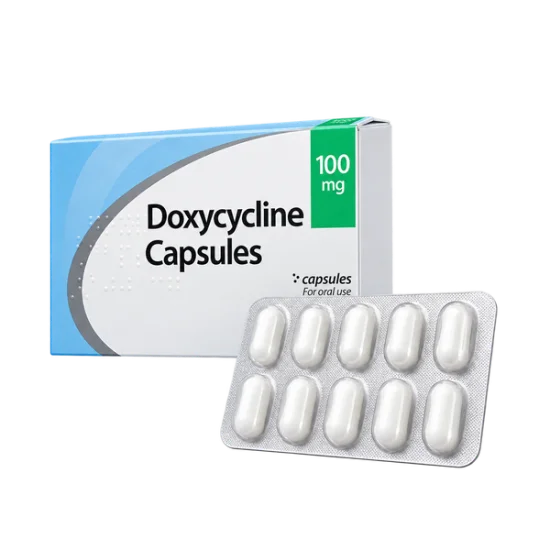
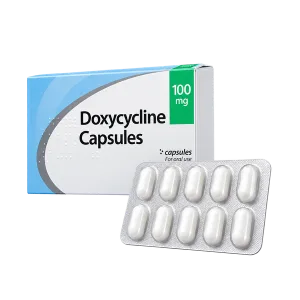
Doxycycline is the active ingredient in this 100 mg oral capsule. It belongs to the tetracycline antibiotic class and also has anti-inflammatory activity that can help manage inflammation around hair follicles.
Dosage and administration
Doxycycline is supplied here as 100 mg oral capsules. The exact regimen is individualised rather than chosen solely from the capsule strength. Prescribers consider the infection, its severity, the patient’s age, pregnancy status, liver function, and interacting medicines.
Common administration principles include:
- Take the capsule at the prescribed time and frequency.
- Swallow it whole with plenty of water.
- Remain upright for at least 30 minutes after taking it.
- Do not take it immediately before lying down or sleeping.
- Separate it from calcium, iron, zinc, magnesium, and aluminium-containing products.
- Complete the prescribed course unless the prescriber changes the plan.
- If a dose is missed, take it when remembered unless the next dose is near; do not double the dose.
The FDA prescribing information describes oesophageal irritation and ulceration as recognised risks, especially when doxycycline is taken with too little fluid or shortly before bed [2]. A persistent sensation of a tablet sticking, painful swallowing, or chest discomfort after a dose needs prompt medical assessment.
Food can sometimes improve stomach tolerance. The capsule should not be taken with milk, yoghurt, calcium-fortified drinks, or mineral supplements unless the timing has been separated appropriately.
Ingredients
Doxycycline is supplied as 100 mg capsules for oral use.
How it affects the body
Doxycycline enters susceptible bacterial cells and interferes with the ribosome, the structure bacteria use to make proteins. Without adequate protein production, bacterial growth slows or stops.
Doxycycline also has an anti-inflammatory effect that is separate from its direct antibacterial activity. It can reduce inflammatory signalling and the activity of enzymes involved in tissue damage.
Therapeutic indications
Doxycycline may be prescribed for susceptible respiratory, urinary, genital, skin, tick-borne, and other bacterial infections. The choice depends on the diagnosis, local resistance patterns, kidney and liver status, pregnancy status, and previous antibiotic exposure.
Lichen planopilaris is an inflammatory disorder affecting hair follicles on the scalp. Folliculitis decalvans is another chronic follicular condition that may cause pustules, crusting, tenderness, and progressive scarring hair loss. In both conditions, dermatologists may use doxycycline to reduce follicular inflammation and manage bacterial contribution when present.
Doxycycline is not a guaranteed hair-regrowth treatment. Scarring that has already destroyed a follicle cannot be reversed by an antibiotic. Treatment aims to reduce active inflammation and limit further damage, with the plan adjusted according to scalp findings and response.
The World Health Organization places doxycycline among antibiotics with important uses against a range of bacterial infections, while stressing that treatment should match the suspected or confirmed organism [1].
Common mistakes
Several everyday habits can interfere with treatment:
- Swallowing the capsule with a small sip of water.
- Taking it immediately before sleep.
- Drinking milk or a calcium-fortified shake at the same time.
- Taking iron, zinc, magnesium, or an antacid close to the dose.
- Spending long periods in direct sun without protection.
- Treating a viral illness with leftover antibiotic capsules.
- Stopping when symptoms improve without confirming the intended course.
- Doubling the next dose after a missed capsule.
- Ignoring painful swallowing or new chest discomfort.
- Assuming weight gain is a typical doxycycline reaction and overlooking another cause.
One subtle mistake is treating every stomach symptom by reaching for an antacid. Some antacids contain aluminium, magnesium, or calcium and can reduce doxycycline absorption. The timing of both products needs to be planned.
Another is opening the capsule to mix it into food. That can change how the dose is delivered and may increase contact with the mouth or throat. Swallowing the capsule whole is the safer routine.
When not to use it
Children younger than eight years are usually treated with alternatives because tetracyclines can affect developing teeth and bone, though specialist circumstances may alter that decision. Pregnancy and breastfeeding require individual review because fetal and infant considerations depend on timing, indication, and treatment alternatives.
People with liver disease, a history of severe antibiotic-associated diarrhoea, lupus, or significant reflux should provide that information before treatment. Severe diarrhoea can occur during or after antibiotics and may represent Clostridioides difficile infection.
When this is not for you
Doxycycline is not suitable for everyone. Use it only when prescribed. Ask a pharmacist when unsure. This treatment is not for you if:
- You have had a serious allergic reaction to doxycycline or another tetracycline.
- You are pregnant unless a specialist has judged that treatment is necessary.
- You are breastfeeding and the prescriber has identified a concern for the infant.
- The capsule cannot be swallowed safely.
- You have severe swallowing problems or a history of doxycycline-related oesophageal injury.
- You use oral isotretinoin or another systemic retinoid without medical supervision.
- You have a condition associated with raised intracranial pressure.
- You take interacting mineral supplements or antacids that cannot be separated from the antibiotic.
Possible side effects
Doxycycline is often tolerated well, though adverse effects can occur. Gastrointestinal symptoms are among the most frequent problems. The FDA and the UK's Medicines and Healthcare products Regulatory Agency (MHRA) identify nausea, vomiting, diarrhoea, abdominal discomfort, headache, rash, and photosensitivity among reported reactions.
Common or Manageable Reactions
Possible reactions include:
- Upset stomach, nausea, or loose stools
- Heartburn or pain behind the breastbone
- Headache
- Increased sensitivity to sunlight
- Mild skin rash or itching
- Vaginal or oral Candida overgrowth after antibiotic exposure
Photosensitivity can produce an exaggerated sunburn or a rash after ultraviolet exposure. The risk matters in the UAE, where strong sunlight can occur throughout the year. Use protective clothing, shade, and broad-spectrum sunscreen during treatment, especially during prolonged outdoor activity.
Heartburn after doxycycline is not simply ordinary indigestion in every case. It may reflect irritation of the oesophagus. Taking the capsule with water and remaining upright are practical measures that reduce this risk.
Candida may develop when antibiotic treatment alters normal bacterial populations. Symptoms can include oral white patches, vaginal itching, or an unusual discharge. These symptoms require assessment rather than self-treating with leftover medicines.
Reactions Requiring Urgent Medical Attention
Seek urgent assessment for:
- Difficulty breathing, facial swelling, or widespread hives
- Severe blistering or peeling skin
- Severe headache with blurred or double vision
- Persistent watery or bloody diarrhoea
- Painful swallowing or severe chest pain
- Yellowing of the skin or eyes
- Severe weakness, fainting, or an extensive rash with fever
Weight gain is not a typical direct adverse effect of doxycycline. A noticeable change in weight during treatment should be assessed in context, especially if it occurs with swelling, breathlessness, appetite change, or another new medicine.

Comparison
The choice between doxycycline and another approach depends on the organism, infection site, resistance risk, pregnancy status, and treatment goal. Antibiotic selection should follow clinical assessment rather than the broadest possible coverage.
| Approach | Main therapeutic role | Main limitation |
|---|---|---|
| Doxycycline, a tetracycline antibiotic | Treats susceptible bacteria and may reduce follicular inflammation | Photosensitivity, gastrointestinal irritation, and mineral interactions |
| Macrolide antibiotic | Alternative for selected bacterial infections or specific allergy situations | Resistance and drug interactions can restrict use |
| Topical antimicrobial or anti-inflammatory treatment | Useful when disease is localised to the skin or scalp | May be insufficient for deep, extensive, or systemic disease |
For lichen planopilaris or folliculitis decalvans, dermatologists may combine oral treatment with topical or procedural care when inflammation remains active. The correct plan depends on whether the dominant problem is infection, inflammation, scarring, or a combination of these processes.
Doxycycline is not automatically the best antibiotic for every infection. Culture results, local resistance data, allergy history, and the site of infection can change the preferred option.
What doctors say
In clinical practice, doctors usually judge doxycycline by three measures: whether the suspected organism is susceptible, whether the patient can take the capsule correctly, and whether the benefits outweigh the adverse effects. A 100 mg capsule is a strength, not a universal regimen.
Dermatologists may continue treatment for inflammatory scalp disease longer than they would for a short uncomplicated infection, but duration still depends on response and safety. Persistent inflammation, new pustules, or progressing hair loss can indicate that the treatment plan needs reassessment rather than automatic extension.
Doctors also look for practical causes of poor response. Taking doxycycline with an iron supplement, lying down after swallowing it, missing doses, or stopping after early improvement can all reduce the chance of success. The opposite problem occurs when a person continues an antibiotic after the intended course without review.
The National Institute for Health and Care Excellence links antibiotic stewardship with selecting the narrowest suitable treatment and avoiding unnecessary exposure [3]. That principle applies to doxycycline in skin disease as well as in other infections.
Comparison
Common questions
Which diet, exercise habits, or daily routines help or hinder doxycycline?
Taking the capsule with a full glass of water and staying upright helps reduce oesophageal irritation. Calcium-rich foods, mineral-fortified drinks, iron, zinc, magnesium, and antacids can hinder absorption when taken too close to doxycycline. NICE guidance from 2021 supports practical antibiotic use that avoids preventable administration problems . Exercise does not directly block absorption, though fever, dehydration, severe fatigue, or dizziness should limit strenuous activity.
Can doxycycline be taken with food or on an empty stomach?
Doxycycline can cause nausea, so food may improve stomach comfort for some people. Dairy products and calcium-fortified foods should be separated from the capsule because calcium can bind the antibiotic. FDA information from 2023 recognises gastrointestinal irritation and oesophageal injury as administration-related concerns . Water remains the preferred fluid, and the capsule should be swallowed whole rather than chewed or opened.
Can alcohol be used while taking doxycycline?
Alcohol is best limited during treatment, especially when infection symptoms, nausea, dizziness, or liver disease are present. The World Health Organization's 2022 antibiotic guidance supports avoiding behaviours that reduce adherence or worsen treatment tolerance. Occasional alcohol does not reliably make doxycycline ineffective, while heavy or repeated intake may affect liver enzymes and recovery. Alcohol should never replace water for swallowing the capsule.
Can doxycycline be combined with antacids, iron, zinc, or calcium supplements?
These products can bind doxycycline in the intestine and lower absorption. The FDA prescribing information from 2023 lists antacids and mineral products among interactions requiring separation or review . Calcium, iron, zinc, magnesium, aluminium, and bismuth are the main ingredients to identify. A clinician or pharmacist should set the timing when several medicines or supplements are used together.
Does doxycycline cause photosensitivity?
Yes, increased sensitivity to sunlight is a recognised doxycycline reaction. The European Medicines Agency's 2018 product information describes photosensitivity as a known safety concern for doxycycline and related tetracycline medicines [4]. Sunburn can develop faster than expected, even during routine outdoor activity. Protective clothing, shade, and broad-spectrum sunscreen reduce exposure, while blistering, widespread rash, or facial swelling requires urgent assessment.
Do you offer anonymous delivery?
Your order will be securely packed and shipped within 24 hours. This is exactly what your package will look like (images of an actual item sent). It has the size and look of a regular private letter (24x11x0.7 cm) and its contents cannot be seen.
Reviews: Doxycycline
The treatment was manageable when I separated it from my mineral supplement. I initially took both together and worried that the antibiotic was not helping. Heartburn appeared once when I lay down soon after the capsule and did not return after changing the routine.
The infection symptoms improved, but I developed loose stools near the end of the course. I did not have blood or severe pain, though the change was uncomfortable. My prescriber reviewed my other medicines and advised me what symptoms would need urgent attention.
Sources
- World Health Organization (2022). The WHO AWaRe (Access, Watch, Reserve) Antibiotic Book.
- U.S. Food and Drug Administration (2023). Doxycycline Hyclate Prescribing Information.
- National Institute for Health and Care Excellence (2021). Acne vulgaris: management (NG198).
- European Medicines Agency (2018). Summary of Product Characteristics (SmPC) — doxycycline-containing medicinal product.