Skip to content
Tetracycline
Active ingredient: Tetracycline

Tetracycline

Quality products
24/7 Support
Fast delivery
Delivery from 4 days
Select pack Package Per unit Price

Free delivery on orders from AED 860.00, free express delivery from AED 1,290.00

Secure Payments
Track your order
Best price guarantee

Tetracycline is intended for people with confirmed or strongly suspected bacterial infections. It helps control susceptible bacteria by interfering with the protein production they need to grow and reproduce.

Product information

Tetracycline, the active ingredient of Tetracycline, is a broad-spectrum tetracycline-class antibiotic supplied as oral tablets. It is used for infections caused by susceptible bacteria, including selected skin, respiratory, and systemic infections. The dose is decided individually, taking age, other medicines, and health conditions into account. It slows bacterial multiplication by blocking protein production inside the bacterial cell.[1]

Dosage and administration

Oral Administration

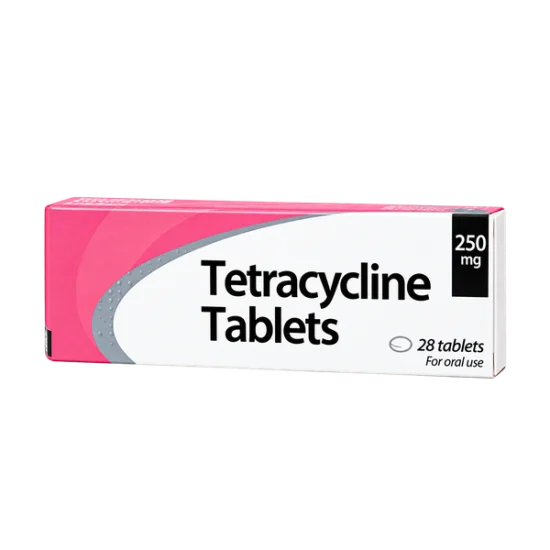
Tetracycline tablets are taken by mouth.

The dose is decided individually, taking age, other medicines, and health conditions into account.

  • Take the prescribed number of tablets at evenly spaced times each day.
  • Swallow each tablet whole with water.
  • Take it on an empty stomach when tolerated, usually at least one hour before or two hours after food.
  • Avoid milk, yoghurt, cheese, calcium-fortified drinks, and mineral supplements close to the dose.
  • Complete the prescribed course unless a clinician changes the plan.
  • If a dose is missed, take it when remembered unless the next scheduled dose is close. Do not take two doses together.

Food can reduce tetracycline absorption. For people with troublesome stomach upset, a clinician may adjust timing rather than leaving doses out.

Keep a simple phone reminder for each daily dose. Tetracycline often has more than one scheduled dose daily, and the most common treatment failure is uneven timing rather than lack of antibiotic activity.
Take Tetracycline with a full glass of water while sitting or standing. Remaining upright for at least 30 minutes reduces the chance of throat or oesophageal irritation.
Separate Tetracycline from antacids, iron, zinc, calcium supplements, bismuth products, and multivitamins by several hours. These products can bind the antibiotic in the gut and sharply reduce absorption.

Ingredients

Tetracycline on this page is supplied as oral tablets for systemic treatment. The medicine travels through the bloodstream after absorption and reaches tissues where susceptible bacteria are causing infection.

The dose is decided individually, taking age, other medicines, and health conditions into account. The oral route is useful when infection is not limited to a small skin area. It also means interactions with food, minerals, and other medicines matter more than they would with a local treatment.

How it affects the body

Tetracycline enters susceptible bacterial cells and binds to the 30S ribosomal subunit. Ribosomes are the cell’s protein-making machinery. By blocking aminoacyl-tRNA from reaching the ribosome, tetracycline prevents the bacteria from assembling proteins needed for growth and reproduction.[2]

Human cells do not use the same bacterial ribosome structure. This difference explains the antibiotic’s selective action, though side effects can still occur because the medicine also affects normal bacteria in the gut.

Therapeutic indications

Doctors use Tetracycline for infections where the organism is known, or expected, to be tetracycline-sensitive. Clinical use may include inflammatory acne, certain respiratory infections, selected genital infections, rickettsial diseases, and infections caused by organisms such as Chlamydia, Mycoplasma, or susceptible Staphylococcus species.

Its role in acne is usually linked to its antibacterial and anti-inflammatory effects. The American Academy of Dermatology includes oral tetracycline-class antibiotics among systemic options for moderate to severe acne when clinically appropriate.[3]

Common mistakes

The most frequent mistakes with Tetracycline are practical rather than dramatic. They can reduce absorption, increase irritation, or make side effects harder to recognise.

  • Taking tablets with milk, protein shakes, calcium drinks, or a multivitamin.
  • Lying down immediately after swallowing a tablet.
  • Stopping treatment after early improvement and keeping remaining tablets for later.
  • Taking two tablets together after forgetting a dose.
  • Spending long periods in strong sunlight without skin protection.
  • Assuming nausea means the antibiotic should be taken with dairy food.
  • Combining Tetracycline with isotretinoin without a prescriber reviewing both treatments.

One detail patients often miss: iron tablets taken for anaemia are a major absorption issue. Moving iron and Tetracycline apart in the day may be necessary for both treatments to work as intended.

When not to use it

Contraindications

  • Hypersensitivity to any of the tetracyclines.
  • Pregnancy, breastfeeding, and children under eight years old.
  • Known allergy to an allergen contained in the tablet formulation.
  • Significant kidney impairment, because tetracycline can accumulate.
  • Concurrent oral retinoids, such as isotretinoin, due to increased risk of raised pressure inside the skull.
  • Antacids, calcium, magnesium, iron, zinc, bismuth, or multivitamins, because they reduce absorption.
  • Warfarin or related anticoagulants, because anticoagulant monitoring may need adjustment.
  • Methoxyflurane anaesthesia, due to a serious kidney-toxicity interaction.
  • A prior individual-drug tetracycline antibiotic reaction, even if another antibiotic was tolerated later.

EMA guidance on antibacterial medicines supports matching treatment to infection severity, expected pathogens, and patient-specific safety risks.[5]

When this is not for you

This medicine is not for you if you have had hypersensitivity to any of the tetracyclines. A prior rash, facial swelling, wheezing, or severe allergic reaction after tetracycline, doxycycline, minocycline, or another related agent must be discussed before treatment.

Tetracycline is generally avoided during pregnancy, breastfeeding, and in children under eight years old. Exposure during tooth and bone development can cause permanent tooth discolouration and affect enamel formation.

Use sunscreen and cover exposed skin during treatment, even on hazy days. Photosensitivity from tetracycline can appear as an unexpectedly intense sunburn.

Possible side effects

Tetracycline is usually tolerated when used as prescribed, though gastrointestinal effects are common. Nausea, abdominal discomfort, vomiting, loose stools, and reduced appetite can occur. Some people develop photosensitivity, meaning skin may burn more easily after sunlight exposure.

A sore throat, painful swallowing, or chest discomfort after a tablet can signal oesophageal irritation. Severe or persistent diarrhoea needs medical assessment because antibiotics can disrupt gut bacteria and, rarely, allow Clostridioides difficile infection to develop.

Comparison

Antibiotic selection is based on the likely pathogen, infection site, allergy history, culture results, and safety factors. Penicillin-class medicines attack the bacterial cell wall, while Tetracycline blocks bacterial protein production. These different mechanisms explain why one class may be selected when another is unsuitable.

Feature Tetracycline Penicillin-class antibiotics
Main action Blocks protein synthesis at the 30S ribosome Disrupts bacterial cell-wall synthesis
Typical role Selected acne, atypical bacteria, rickettsial and susceptible bacterial infections Many susceptible streptococcal and other cell-wall-sensitive infections
Key limitation Absorption falls with calcium, iron, zinc, and antacids Allergy can limit use; resistance varies by organism

Tetracycline may be chosen when an infection involves atypical organisms that lack the usual cell-wall target for penicillins. Penicillins may be preferred for infections where they provide narrower, more targeted coverage. FDA prescribing information stresses that antibacterial treatment should follow the likely or proven susceptibility of the organism.[4]

What doctors say

In clinical practice, doctors look for a clear reason to choose Tetracycline rather than treating every fever, cough, or skin flare with an antibiotic. The key question is whether the likely bacterium is susceptible and whether oral tetracycline reaches the infected tissue at a useful level.

For acne, response is gradual rather than immediate. Reduced inflammatory lesions may take several weeks, while persistent nodules, scarring, or sudden worsening need reassessment. For acute bacterial infections, improvement in fever, pain, swelling, or discharge is often expected earlier, depending on the diagnosis.

Doctors also pay close attention to timing around food and supplements. A patient may take every tablet faithfully and still receive too little medicine if doses are regularly taken with milk, iron, or calcium.

Comparison

Ampicillin

Active ingredient: Ampicillin
250mg 500mg
From AED 344.00
pills
4 (3)

Chloramphenicol

Active ingredient: Chloramphenicol
500mg
From AED 829.90
pills
3.5 (3)

Ciplox

Active ingredient: Ciprofloxacin
500mg 250mg
From AED 344.00
pills
4.3 (5)

Cipro

Active ingredient: Ciprofloxacin
250mg 500mg 750mg
From AED 434.30
pills
3.9 (4)

Clindamycin

Active ingredient: Clindamycin
150mg 300mg
From AED 477.30
pills
4 (4)

Doxycycline

Active ingredient: Doxycycline
100mg 200mg
From AED 331.10
pills
3.5 (3)

Comparison table: Antibiotics

Common questions

Can Tetracycline tablets be split, crushed, or chewed?

Swallow Tetracycline tablets whole unless the prescriber has specifically advised a different method. Crushing or chewing can leave a bitter taste and may increase contact with the mouth and throat, which is unhelpful if irritation already occurs. The FDA prescribing information issued in 2015 advises administration with adequate fluids to reduce oesophageal irritation. A swallowing difficulty should be raised before treatment begins so a suitable oral option can be selected.

What should be discussed with a doctor before starting Tetracycline?

Discuss previous allergy to tetracyclines, pregnancy or breastfeeding status, kidney disease, and any history of raised intracranial pressure. List all medicines and supplements, with special attention to isotretinoin, warfarin, antacids, iron, calcium, magnesium, and zinc. WHO antimicrobial guidance from 2022 supports choosing antibiotics according to the infection, susceptibility patterns, and individual risk factors. Mentioning supplements matters because a mineral tablet can interfere as much as a prescription medicine.

Which concrete condition rules out Tetracycline treatment?

Pregnancy is a clear reason to avoid Tetracycline unless a specialist determines that no suitable alternative exists. Tetracyclines can deposit in developing teeth and bones, creating a risk of permanent tooth staining when exposure occurs during pregnancy or early childhood. The FDA’s 2015 tetracycline safety information describes this developmental risk. Children younger than eight years old are therefore generally not treated with Tetracycline.

Which symptoms mean Tetracycline should be stopped and urgent medical care is needed?

Stop treatment and seek urgent medical assessment for facial or throat swelling, wheezing, widespread hives, blistering rash, or trouble breathing. Severe headache with visual changes, repeated vomiting, or double vision may signal raised intracranial pressure, especially when retinoid medicines are involved. Severe watery or bloody diarrhoea, intense abdominal cramps, or persistent fever also needs prompt assessment because antibiotic-associated colitis can be serious. These safety warnings appear in FDA-reviewed prescribing information from 2015.

Do you offer anonymous delivery?

Your order will be securely packed and shipped within 24 hours. This is exactly what your package will look like (images of an actual item sent). It has the size and look of a regular private letter (24x11x0.7 cm) and its contents cannot be seen.

Reviews: Tetracycline

4
Based on 3 reviews
Leah, 50 Deira Several days
Verified
Rating: 4 out of 5

I used the 250 mg tablets for several days for an infected skin flare. The redness started settling after several days, but I had nausea when I took a tablet too close to breakfast. Taking it with water and keeping dairy separate made the rest of the treatment easier.

16 Oct 2026
Grace, 28 Al Barsha By the third week
Verified
Rating: 4 out of 5

My dermatologist prescribed 250 mg Tetracycline tablets for inflammatory acne. By the third week, I had fewer painful spots, though my skin became more sensitive during a daytime walk. Sunscreen and avoiding my calcium supplement near the dose helped.

28 Oct 2026
Rajesh, 37 Al Reem Island A few days
Verified
Rating: 4 out of 5

I noticed a burning feeling in my throat on the second day because I took the 250 mg tablet before bed. I changed to taking it earlier with a large glass of water, and that problem stopped. The stomach upset was still annoying for a few days.

14 Nov 2026

Sources

  1. World Health Organization (2022). The WHO AWaRe (Access, Watch, Reserve) antibiotic book.
  2. American Society for Microbiology (2001). Tetracycline Antibiotics: Mode of Action, Applications, Molecular Biology, and Epidemiology of Bacterial Resistance.
  3. American Academy of Dermatology (2024). Guidelines of care for the management of acne vulgaris.
  4. U.S. Food and Drug Administration (2015). Tetracycline Hydrochloride Capsules, USP: Prescribing Information.
  5. European Medicines Agency (2011). Guideline on the evaluation of medicinal products indicated for treatment of bacterial infections.
Get our free app Shop faster and track your orders 3.9 · 576 reviews Install