Skip to content
Mestinon
Active ingredient: Pyridostigmine

Mestinon

Quality products
24/7 Support
Fast delivery
Delivery from 4 days
Select pack Package Per unit Price

Free delivery on orders from AED 860.00, free express delivery from AED 1,290.00

Secure Payments
Track your order
Best price guarantee

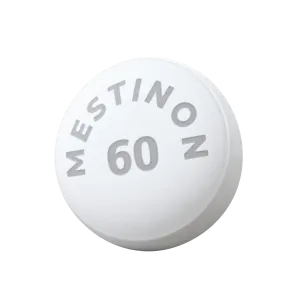
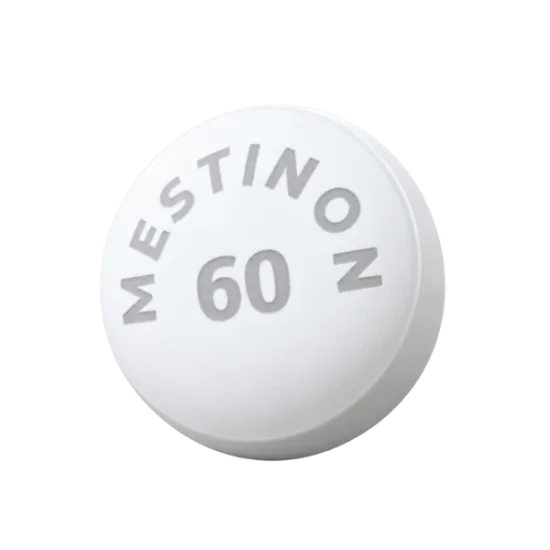
Pyridostigmine, the active ingredient of Mestinon, is a reversible cholinesterase inhibitor used mainly for muscle weakness caused by myasthenia gravis. Mestinon 60 contains pyridostigmine bromide in tablet form and helps improve communication between nerves and muscles.

Product information

Mestinon contains pyridostigmine bromide, a reversible cholinesterase inhibitor. Dosing differs between strengths and between users, so there is no single amount that suits everyone.

Dosage and administration

Mestinon tablets are taken by mouth. Because dosing differs between strengths and between users, there is no single amount that suits everyone. The prescriber selects the dose and interval according to muscle weakness, daily activity, swallowing needs, kidney function, adverse effects, and response over time.

Use the tablets according to the prescribed schedule:

  • Take each dose at the prescribed time.
  • Swallow the tablet with water.
  • Keep doses evenly spaced when a regular schedule has been prescribed.
  • Take doses consistently in relation to meals if food timing affects stomach symptoms.
  • Do not increase the amount because weakness returns before the next scheduled dose.
  • If a dose is missed, take it when remembered unless the next dose is near; do not double the next dose.

Some patients need a dose timed before meals when chewing or swallowing weakness is prominent. Others may need a schedule that covers morning movement, work, or evening activities. A neurologist may change the interval rather than simply raising the tablet strength.

Food does not replace the prescribed schedule. If nausea or abdominal cramping follows a dose, record the timing and discuss whether taking it with food fits the treatment plan.

Kidney impairment can increase exposure to pyridostigmine because the drug and its metabolites are cleared substantially through the kidneys. Older adults with reduced renal function may need closer dose review. Tablets should be swallowed as directed rather than crushed or altered without a specific instruction, since changing the tablet can affect practical dosing accuracy.

Ingredients

Mestinon contains pyridostigmine bromide, a reversible cholinesterase inhibitor. The tablet strength supplied on this page is presented as a tablet. Dosing differs between strengths and between users, so there is no single amount that suits everyone.

Pharmaceutical detail Mestinon 60
Active ingredient Pyridostigmine bromide
Drug class Reversible cholinesterase inhibitor
Strength and form Tablet

Pyridostigmine acts mainly outside the central nervous system because its quaternary ammonium structure limits passage across the blood–brain barrier. This helps explain why its clinical effects are concentrated in peripheral cholinergic pathways and neuromuscular junctions. The US National Library of Medicine drug label describes pyridostigmine bromide as the active substance in Mestinon tablets [1].

A practical distinction matters here: the tablet improves the availability of acetylcholine, but it does not directly stimulate the muscle fibre in the same way as a muscle-building agent. Its benefit depends on functional nerve terminals and an appropriate treatment plan.

How it affects the body

At a normal neuromuscular junction, a motor nerve releases acetylcholine. The messenger crosses a small gap and attaches to receptors on the muscle membrane, triggering contraction. Acetylcholinesterase then breaks down acetylcholine so the signal ends at the right time.

Myasthenia gravis reduces the number or function of available acetylcholine receptors. A normal nerve signal may therefore produce a weaker muscle response. Pyridostigmine temporarily inhibits acetylcholinesterase, allowing acetylcholine to remain active for longer in the junction.

The process can be understood in three steps:

  • A nerve releases acetylcholine.
  • Pyridostigmine slows acetylcholine breakdown.
  • More acetylcholine remains available to stimulate surviving muscle receptors.

This mechanism can improve strength without correcting the underlying autoimmune process. The NCBI clinical review on myasthenia gravis identifies acetylcholinesterase inhibition as a core symptomatic treatment approach [2].

Pyridostigmine differs from immunosuppressive treatment.

Immunosuppressants target the immune process over a longer period, while pyridostigmine provides symptomatic support. It also differs from central nervous system stimulants because its main action occurs at peripheral neuromuscular junctions.

Therapeutic indications

Mestinon is an oral tablet used in neurology to support muscle strength in people with myasthenia gravis. The product strength is 60 mg per tablet. Myasthenia gravis is an autoimmune neuromuscular disorder in which antibodies disrupt communication between motor nerves and skeletal muscles.

The result can be fluctuating weakness affecting the eyelids, facial muscles, speech, swallowing, neck, arms, legs, or breathing muscles. Weakness may vary during the day. Symptoms often become more noticeable after activity and may improve after rest. Mestinon does not remove the autoimmune cause. It can improve neuromuscular transmission and reduce daily weakness.

Clinical indications in neuromuscular disorders

Pyridostigmine is primarily used for symptomatic treatment of myasthenia gravis. A neurologist may adjust its schedule around the periods when weakness is most troublesome, such as before meals when chewing and swallowing are affected.

The response is not identical for every person. Some patients gain better control of limb weakness, while others notice the greatest benefit in speech, chewing, swallowing, or eyelid symptoms. Severe breathing difficulty or rapidly worsening swallowing requires urgent medical assessment rather than extra self-administered tablets.

Keep a brief record of when weakness appears and when gastrointestinal symptoms occur. This can help the prescriber separate insufficient symptom control from excessive cholinergic effects.

Common mistakes

Several practical errors can make Mestinon appear less helpful or produce avoidable adverse effects:

  • Taking extra tablets when weakness appears before the next scheduled dose
  • Changing the timing from day to day
  • Stopping suddenly without discussing the change with the prescriber
  • Ignoring diarrhoea, sweating, salivation, or muscle twitching after a dose increase
  • Forgetting to mention Mestinon before anaesthesia
  • Assuming every episode of weakness means the dose is too low
  • Failing to report kidney disease or a major change in urination
  • Treating swallowing or breathing deterioration at home with repeated doses

One easily missed detail is the difference between a planned schedule and symptom-led dosing. The prescribed interval is designed around the drug’s action and the patient’s daily pattern. Taking several doses close together can increase cholinergic effects without reliably restoring strength.

Another mistake is judging treatment only by arm or leg power. Speech, chewing, eyelid control, swallowing, and breathing are also clinically important.

When not to use it

Mestinon is not suitable for everyone. It should not be used in the presence of mechanical obstruction of the intestine or urinary tract because increased cholinergic activity may intensify contractions against the blockage.

This medication is not for you if you have:

  • A known allergy to pyridostigmine bromide or an excipient in the tablet
  • Mechanical intestinal obstruction
  • Mechanical urinary tract obstruction
  • A previous serious reaction to pyridostigmine

When this is not for you

Extra clinical caution is needed with asthma or other bronchospastic disease, slow heart rate, low blood pressure, peptic ulcer disease, thyroid disease, epilepsy, and impaired kidney function. These conditions do not always prevent treatment, but they can affect monitoring and dose selection.

Patients with swallowing or respiratory muscle weakness need an individual plan because deterioration can become urgent. Pregnancy and breastfeeding also require a specific benefit–risk assessment, including review of the mother’s disease control and the infant’s condition.

The drug may increase secretions and bronchial smooth-muscle activity. A person with poorly controlled asthma may therefore need closer observation when treatment begins or the dose changes.

Possible side effects

Pyridostigmine increases cholinergic activity. The same action that improves neuromuscular transmission can also stimulate muscarinic receptors in the gut, bladder, airways, eyes, and heart, as well as nicotinic receptors in skeletal muscle.

Possible effects include:

  • Abdominal cramps, nausea, vomiting, or diarrhoea
  • Increased saliva or sweating
  • More frequent urination
  • Watery eyes or blurred vision
  • Muscle twitching, cramps, or increased weakness
  • Slow heartbeat or dizziness
  • Wheezing or increased bronchial secretions

Digestive symptoms are among the most troublesome effects in routine use. They may be dose-related and can occur when the schedule is increased too quickly. Excessive sweating, marked salivation, pronounced diarrhoea, muscle fasciculations, or worsening weakness may indicate excessive cholinergic activity.

A serious concern is the difficulty of distinguishing undertreatment from excessive treatment. Both insufficient control of myasthenia gravis and excessive cholinergic activity can produce weakness. New breathing difficulty, inability to swallow saliva, fainting, or rapidly progressing weakness needs urgent medical attention.

Do not treat sudden worsening weakness by repeatedly taking extra tablets. Excess pyridostigmine can also produce weakness, and the two situations require clinical assessment.

Some patients notice that abdominal symptoms appear before they recognise any change in muscle strength. Others experience increased saliva or sweating first. The pattern and timing are useful information for dose review.

Comparison

Pyridostigmine and neostigmine both inhibit acetylcholinesterase, but their clinical use differs. Pyridostigmine is commonly used for ongoing oral symptomatic treatment of myasthenia gravis. Neostigmine has a shorter clinical role in some settings and is also used in supervised medical environments to reverse certain types of neuromuscular blockade.

Feature Pyridostigmine Neostigmine
Common clinical role Ongoing symptomatic support in myasthenia gravis Reversal of neuromuscular blockade and selected cholinergic indications
Administration Oral tablets are used for maintenance treatment Oral, injectable, or other forms may be used depending on indication
Practical profile Often suited to repeated daily symptom control Frequently selected when a more closely supervised or rapid effect is needed

The choice depends on the diagnosis, response, kidney function, swallowing ability, and treatment setting.

One cholinesterase inhibitor should not be substituted for another on a tablet-for-tablet basis because potency, absorption, duration, and dosage schedules differ.

What doctors say

In clinical practice, neurologists often assess Mestinon by function rather than by a single symptom score. Easier chewing, clearer speech late in the day, improved eyelid opening, or more stable walking may be more useful measures than a general impression of feeling better.

A physician also looks for a narrow balance. Too little pyridostigmine leaves weakness uncontrolled, while too much can cause diarrhoea, sweating, salivation, cramps, twitching, or weakness. The International Consensus Guidance for Management of Myasthenia Gravis supports symptom-directed treatment while recognising that long-term disease control may require additional strategies [3].

Dose changes are usually evaluated over several days rather than after one isolated tablet. A patient who feels worse during an infection, after poor sleep, or in extreme heat may need assessment for a trigger rather than an automatic increase in medication.

Long-term use can be appropriate when it remains beneficial and tolerable. Regular review becomes more important when symptoms change, kidney function declines, or new medicines are introduced.

Comparison

Artane

Active ingredient: Trihexyphenidyl
2mg
From AED 709.50
pills
4.2 (3)

Exelon

Active ingredient: Rivastigmine
3mg 6mg
From AED 176.30
pills
4.2 (3)

Mentat

Active ingredient: Mentat
60caps
From AED 434.30
bottles
3.8 (3)

Mestinon Current

Active ingredient: Pyridostigmine
60mg
From AED 438.60
pills
4.2 (5)

Neurontin

Active ingredient: Gabapentin
100mg 300mg 400mg 600mg 800mg
From AED 176.30
pills
3.3 (5)

Comparison table: Neurology

Common questions

Do you offer anonymous delivery?

Your order will be securely packed and shipped within 24 hours. This is exactly what your package will look like (images of an actual item sent). It has the size and look of a regular private letter (24x11x0.7 cm) and its contents cannot be seen.

Reviews: Mestinon

4.2
Based on 5 reviews
Imran, 36 Ajman Several weeks
Verified
Rating: 4 out of 5

My eyelids and chewing were the first things I noticed improving. I had loose stools during the first few days, so the neurologist adjusted the timing with meals.

6 Oct 2026
Mohammed, 37 Al Majaz Several weeks
Verified
Rating: 4 out of 5

The tablets helped me get through the morning more reliably. I still had evening fatigue, and taking an extra tablet on my own gave me stomach cramps, so I stopped changing the schedule myself.

15 Oct 2026
Vikram B., 54 Al Qusais Long-term
Verified
Rating: 5 out of 5

Walking felt steadier after the dose plan was settled. The benefit was practical rather than dramatic, and I had to remember the tablets at regular times.

23 Oct 2026
Waleed, 28 Madinat Zayed Several weeks
Verified
Rating: 4 out of 5

I noticed more saliva and sweating after the first adjustment. Those effects eased after the schedule changed, but the medicine did not remove all of my weakness.

31 Oct 2026
Rajesh, 54 Dubai Several weeks
Verified
Rating: 4 out of 5

It helped with chewing and speech on better days. During an infection my strength dropped quickly, and the clinic told me not to solve that by repeatedly increasing the tablets.

3 Nov 2026

Sources

  1. U.S. National Library of Medicine, DailyMed (2024). Mestinon—pyridostigmine bromide tablet prescribing information.
  2. StatPearls Publishing, NCBI Bookshelf (2024). Myasthenia Gravis.
  3. International Consensus Guidance for Management of Myasthenia Gravis (2021). International Consensus Guidance for Management of Myasthenia Gravis: 2020 Update.
Get our free app Shop faster and track your orders 3.9 · 576 reviews Install