After several weeks my ankles looked better and my shoes felt less tight. I still had occasional dizziness when standing, so my clinician checked my blood pressure and blood tests before making any change.
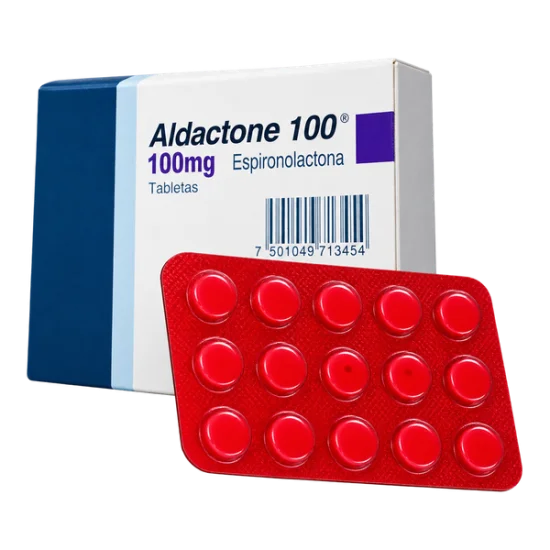
Aldactone helps people who need treatment for fluid retention, high blood pressure, heart failure, or selected hormonal skin and hair conditions. Its potassium-sparing action removes sodium and water while limiting potassium loss.
Product information
Aldactone is used for fluid retention, high blood pressure, heart failure, and excess aldosterone activity. Its active ingredient, spironolactone, is a potassium-sparing diuretic.
Dosage and administration
Aldactone tablets are taken by mouth. How much to use and how often depends on the purpose of treatment and is agreed with a doctor or pharmacist. The tablet should not be split, crushed, or used to create a different regimen unless the prescriber has specifically directed that approach.
Practical administration points include:
- Take the tablet with water.
- Use the same time of day consistently.
- Taking it with food may reduce stomach discomfort.
- Avoid changing the dose because swelling, blood pressure, or urine output seems better.
- If a dose is missed, take it when remembered unless the next scheduled dose is near; do not double the next dose.
- Maintain the fluid plan provided for the underlying condition.
- Arrange potassium and kidney-function testing when requested.
Do not compensate for a missed dose by taking two tablets together. This can increase dizziness, low blood pressure, and potassium-related risk.
Hot weather, heavy exercise, vomiting, and diarrhoea can change fluid balance quickly. A person taking Aldactone may need medical guidance during an illness that causes dehydration, especially if they also use an ACE inhibitor, an angiotensin receptor blocker, or an NSAID.
Ingredients
Aldactone contains spironolactone as its active ingredient. Spironolactone is a potassium-sparing diuretic that removes sodium and water while limiting potassium loss.
How it affects the body
Aldactone contains spironolactone, a potassium-sparing diuretic and mineralocorticoid receptor antagonist. Spironolactone blocks aldosterone receptors in the distal renal tubules, where aldosterone normally encourages sodium retention and potassium excretion.
By reducing aldosterone activity, spironolactone promotes the removal of sodium and water through urine. Potassium is retained more readily than with loop or thiazide diuretics. This explains both its clinical value and its main monitoring issue: potassium can rise too high in susceptible patients.
Aldactone is the branded form of spironolactone. Generic spironolactone contains the same active substance, although tablet appearance and inactive ingredients can differ between manufacturers. Clinical interchangeability depends on the prescribed strength, formulation, and local dispensing requirements.
The pharmacological action involves more than increased urination. Aldosterone blockade can reduce fluid congestion, lower blood pressure, and limit harmful cardiac remodelling in selected patients with heart failure. Spironolactone also has anti-androgenic activity, which explains its use in some dermatology and endocrinology settings. The European Medicines Agency describes mineralocorticoid receptor antagonism as a central feature of spironolactone’s therapeutic action [1]. The clinical effect depends on the underlying condition and treatment goal.
Therapeutic indications
The United States Food and Drug Administration recognises spironolactone for several conditions involving excess aldosterone, fluid accumulation, or elevated blood pressure. The exact treatment plan depends on kidney function, potassium levels, the underlying diagnosis, and other medicines.
Approved clinical uses include:
- Heart failure: Aldactone may be added for selected patients with reduced cardiac pumping function, especially when aldosterone-related fluid retention contributes to symptoms.
- Oedema: It can help manage fluid accumulation associated with cirrhosis, nephrotic syndrome, and other conditions in which aldosterone activity contributes to sodium retention.
- Hypertension: Spironolactone may be used when blood pressure remains high despite other treatment, especially when primary aldosteronism is suspected.
- Primary hyperaldosteronism: It can support diagnosis and treatment when the adrenal glands produce excessive aldosterone.
- Potassium conservation: In selected diuretic regimens, its potassium-sparing effect may be useful, though combination therapy requires laboratory monitoring.
| Indication | Therapeutic role | Main monitoring focus |
|---|---|---|
| Heart failure | Reduces aldosterone-driven sodium and water retention | Potassium, kidney function, blood pressure |
| Oedema | Promotes sodium and fluid excretion | Weight, swelling, renal function |
| Hypertension or primary hyperaldosteronism | Limits aldosterone-mediated blood pressure elevation | Potassium, blood pressure, renal function |
The FDA prescribing information supports these uses and sets out warnings relating to hyperkalaemia, renal impairment, and endocrine effects [2]. MOHAP and other national authorities may apply local prescribing and dispensing requirements.
Dermatological and Endocrinological Off-Label Applications
Spironolactone is also used outside its formal cardiovascular and fluid-balance indications. These applications are prescribed by clinicians when the anti-androgenic effect is appropriate for the patient’s condition.
Common specialist uses include:
- Hormonal acne in selected women.
- Androgenic alopecia, also called female pattern hair loss, when excess androgen signalling contributes to shedding.
- Hirsutism, or unwanted terminal hair growth related to androgen sensitivity.
- Polycystic ovary syndrome, sometimes described in clinical discussions as a polyendocrine metabolic ovarian syndrome or PMOS, when androgen-related symptoms require treatment.
Spironolactone reduces the effect of androgens at selected tissues and may reduce androgen-driven oil production or hair-follicle stimulation. It does not treat every cause of acne or hair loss. Improvement is gradual, and hormonal treatment often requires months of consistent use before the result can be assessed.
These uses require additional reproductive precautions. A clinician may assess menstrual history, pregnancy possibility, blood pressure, kidney function, and other treatments before prescribing. Dermatology guidance and endocrinology reviews support spironolactone’s anti-androgenic role in carefully selected patients [3].
Common mistakes
Several everyday errors can make treatment less predictable:
- Taking extra tablets after a high-salt meal or a day with more swelling.
- Using potassium supplements without reporting them.
- Treating potassium-based salt substitutes as ordinary table salt.
- Taking ibuprofen frequently for pain without mentioning it.
- Skipping blood tests because the tablets feel well tolerated.
- Stopping treatment abruptly when swelling improves.
- Taking the tablet at bedtime and then assuming the medicine caused unusually poor sleep.
- Continuing treatment through severe vomiting or diarrhoea without asking for specific guidance.
- Assuming that a normal home blood-pressure reading means potassium testing is unnecessary.
A person can have high potassium without obvious symptoms. Laboratory monitoring therefore remains useful even when blood pressure and swelling appear stable.
Another common mistake occurs with off-label hormonal treatment: judging the result after only a few days. Acne and hair-cycle changes usually cannot be assessed that quickly. The prescriber may need to review menstrual changes, blood pressure, potassium, kidney function, and other hormonal treatments before altering the plan.
When not to use it
This medicine is generally unsuitable or contraindicated in the following situations:
- Addison’s disease or other adrenal insufficiency, because aldosterone activity is already inadequate.
- Hyperkalaemia, because spironolactone can raise potassium further.
- Significant renal impairment or acute kidney injury, especially when potassium clearance is poor.
- Anuria, meaning the kidneys produce little or no urine.
- Previous serious hypersensitivity to spironolactone or an excipient in the tablet.
- Concomitant use of eplerenone or another mineralocorticoid receptor antagonist without specialist direction.
Medicines that can raise potassium or reduce kidney function deserve attention. These include ACE inhibitors such as lisinopril, angiotensin receptor blockers such as losartan, potassium supplements, potassium-containing salt substitutes, and some anti-inflammatory medicines. Aspirin and ibuprofen may alter kidney blood flow or reduce diuretic response, with greater concern in people who already have kidney disease.
The combination of spironolactone with NSAIDs such as ibuprofen can increase renal risk, while ACE inhibitors can add to the potassium-raising effect. The WHO and EMA both emphasise careful review of interacting medicines in patients receiving potassium-sparing diuretics [4].
When this is not for you
Not for you if: you have high potassium, severe kidney problems, produce little or no urine, have adrenal insufficiency, or have had a serious allergy to spironolactone unless a specialist gives specific guidance.
Extra caution is needed with diabetes, older age, chronic kidney disease, dehydration, and heart failure treated with several blood-pressure medicines. Pregnancy requires specialist review, especially when spironolactone is being considered for acne, hair loss, or other anti-androgenic purposes. Breastfeeding also requires an individual assessment.
Possible side effects
Aldactone can cause mild effects related to diuresis or hormonal activity. Dizziness, headache, increased urination, nausea, stomach discomfort, and tiredness may occur, especially when treatment begins or when the dose is increased.
Important adverse effects include:
- Hyperkalaemia: Excess potassium can cause muscle weakness, tingling, nausea, palpitations, or dangerous heart-rhythm changes.
- Low blood pressure: Light-headedness can occur when fluid loss is greater than expected.
- Reduced kidney function: Risk rises in people with chronic kidney disease, dehydration, or interacting medicines.
- Gynecomastia: Breast enlargement or tenderness can occur in men because spironolactone affects androgen and progesterone receptors.
- Menstrual changes: Irregular bleeding, breast tenderness, or changes in cycle pattern may occur in women.
- Headache and dizziness: These may be more noticeable during the first days of treatment.
Routine blood tests usually assess serum potassium and renal function. Testing becomes more important after starting treatment, after a dose change, during illness causing dehydration, and when another medicine affecting potassium is added. The FDA label identifies hyperkalaemia as a clinically significant risk requiring attention to kidney function and concomitant treatment [2].
Aldactone can increase urine output without producing a dramatic sensation. A patient may feel only mildly thirstier while still becoming dehydrated, especially in hot weather or during vomiting and diarrhoea. Severe weakness, fainting, a slow or irregular heartbeat, or very little urine requires urgent medical assessment.
Comparison
Aldactone differs from loop diuretics, thiazide diuretics, ACE inhibitors, and selective mineralocorticoid receptor antagonists. The best option depends on the diagnosis rather than the amount of urine produced.
| Medicine or class | Main action | Potassium tendency |
|---|---|---|
| Spironolactone, including Aldactone | Blocks aldosterone receptors and removes sodium and water | May increase potassium |
| Furosemide, including Lasix | Strong loop diuresis for substantial fluid overload | May lower potassium |
| Eplerenone | More selective mineralocorticoid receptor blockade | May increase potassium |
Aldactone and furosemide: Furosemide usually produces stronger, faster diuresis and is often used when significant congestion requires rapid fluid removal. It can lower potassium. Spironolactone has a slower, aldosterone-focused action and may be used alongside a loop diuretic in selected heart-failure regimens.
Aldactone and eplerenone: Both block mineralocorticoid receptors. Eplerenone is more selective and may cause fewer sex-hormone-related effects, while potassium elevation remains a concern. Treatment selection depends on indication, kidney function, tolerance, and local prescribing practice.
Aldactone and lisinopril: These medicines may be combined in cardiovascular care, but both can contribute to increased potassium or changes in kidney function. Blood tests are essential after treatment changes.
Aldactone and losartan: This combination can also increase potassium. It should not be adjusted independently.
Aldactone and aspirin or ibuprofen: NSAIDs can reduce kidney perfusion and weaken the response to diuretics. The risk is greater with dehydration, older age, or pre-existing renal impairment.
What doctors say
In clinical practice, prescribers usually judge spironolactone by the underlying goal rather than by urine volume alone. Less ankle swelling, improved breathing, lower blood pressure, or better control of aldosterone-related symptoms may indicate benefit.
A physician commonly checks baseline potassium and kidney function before treatment. Repeat tests are often arranged after initiation or dose adjustment, with timing determined by the patient’s cardiovascular and renal risk.
One practical point is frequently missed: spironolactone may remain useful even when the patient does not notice much extra urination. Its aldosterone-blocking effect can be clinically relevant without a dramatic bathroom change.
For hormonal acne or hair loss, expectations need a longer time frame. Early dryness, irregular bleeding, breast tenderness, or dizziness may appear before any skin or hair improvement. A clinician may reassess the balance between benefit and tolerability rather than increasing treatment quickly.
Comparison
Common questions
Can alcohol be used while taking Aldactone?
Alcohol may worsen dizziness, low blood pressure, and dehydration in people taking spironolactone. The NHS information reviewed in 2025 describes dizziness and fluid-balance effects as relevant considerations with diuretic treatment. Alcohol can also make it harder to recognise early symptoms of dehydration, especially in hot conditions. People with heart failure, liver disease, or fluid restrictions need more specific limits from their treating clinician.
Is Aldactone suitable for older adults?
Older adults may use spironolactone, but kidney function and potassium deserve closer attention. The American Geriatrics Society guidance available in 2025 lists medicines affecting renal function and electrolytes as important prescribing considerations in later life. Age-related reduction in kidney filtration can increase the chance of hyperkalaemia even when the person feels well. Dizziness and falls are also relevant if blood pressure drops after treatment begins.
Does Aldactone cause gynecomastia?
Gynecomastia is a recognised spironolactone effect caused by its hormonal activity. The FDA product information reviewed in 2025 describes breast enlargement and tenderness among endocrine adverse effects associated with treatment. The likelihood can increase with higher exposure and longer treatment, although it does not occur in every man. New breast enlargement, persistent pain, or a breast lump should receive clinical assessment.
What is the best time of day to take Aldactone?
Morning or early afternoon is often practical because spironolactone can increase urination. The British National Formulary entry reviewed in 2025 supports consistent daily timing and attention to diuretic-related urinary frequency. Taking it late at night may interrupt sleep. A prescribed schedule should take priority when the medicine is part of a more complex diuretic plan.
Can Aldactone be used during pregnancy or breastfeeding?
Pregnancy and breastfeeding require an individual review before spironolactone is used. The EMA safety information reviewed in 2025 highlights the importance of considering hormonal effects and the clinical reason for treatment. Spironolactone is often avoided for cosmetic or anti-androgenic purposes during pregnancy. The prescriber should decide whether the expected benefit justifies treatment and whether another approach is more suitable.
How long does one Aldactone dose keep working?
The diuretic effect develops over several hours and may continue through much of the day, while the full clinical response can take longer. The FDA pharmacology information reviewed in 2025 describes spironolactone as a medicine whose active metabolites contribute to its duration. The duration varies with kidney function, dose, treatment purpose, and other diuretics. Do not take an additional tablet because the expected urine increase is not immediate.
Do you offer anonymous delivery?
Your order will be securely packed and shipped within 24 hours. This is exactly what your package will look like (images of an actual item sent). It has the size and look of a regular private letter (24x11x0.7 cm) and its contents cannot be seen.
Reviews: Aldactone
My skin did not change during the first month. Later I noticed fewer deep breakouts, although my periods became less predictable and I needed a follow-up appointment to review the plan.
The tablet fitted into my morning routine, and I noticed less evening swelling. I was surprised that potassium testing mattered even when I felt normal.
I continued for several months before deciding whether it helped. Breast tenderness was annoying at first, and the dose was not changed until the side effects had been discussed.
Sources
- European Medicines Agency (2024). Summary of Product Characteristics (SmPC) — spironolactone
- U.S. Food and Drug Administration (2024). Aldactone (spironolactone) Prescribing Information
- American Academy of Dermatology (2023). Guidelines of care for the management of acne vulgaris
- World Health Organization (2019). Medication Safety in Polypharmacy