the prescribed eplerenone dose taken for several weeks after a cardiac review. He reported less ankle swelling but felt light-headed when standing during the first days. His clinician reviewed the blood-pressure readings and adjusted the wider treatment plan.
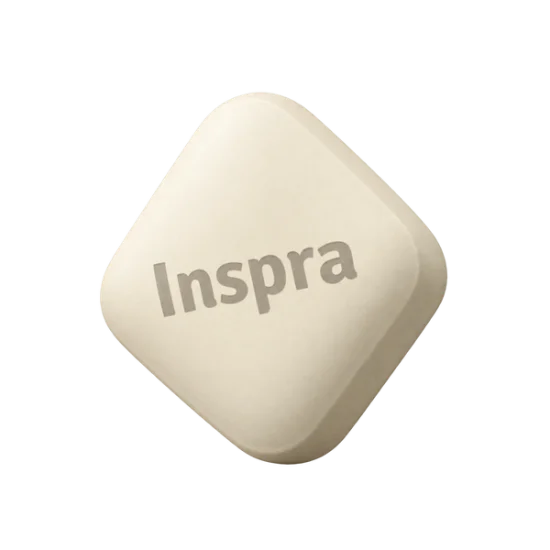
Patients with heart failure after a myocardial infarction or adults requiring aldosterone control may be prescribed Inspra. Its active ingredient, eplerenone, blocks mineralocorticoid receptors to limit sodium retention, potassium changes, and cardiovascular strain. It is taken as an oral tablet under individual medical supervision.
Product information
Inspra contains eplerenone, a selective aldosterone receptor antagonist used in cardiovascular medicine. Doctors prescribe it mainly for heart failure after myocardial infarction and for selected adults with hypertension when aldosterone-related fluid and blood-pressure effects require additional control. The medicine is taken orally as a tablet.
Eplerenone acts on the hormonal system that regulates sodium, water balance, potassium, and blood pressure. Its use requires attention to kidney function and serum potassium because excessive potassium can disturb the heart rhythm. The European Medicines Agency describes eplerenone as a mineralocorticoid receptor antagonist used in defined heart-failure settings [1].
The product is intended for adults whose clinical condition, kidney function, blood pressure, and current medicines have been assessed. It is not a medicine for casual self-treatment of swelling or high blood pressure.
Dosage and administration
The dose is decided individually, taking age, other medicines, and health conditions into account. Treatment commonly involves a starting dose followed by adjustment according to blood potassium, kidney function, blood pressure, and the reason for treatment.
- Take the tablet by mouth at the prescribed frequency.
- Swallow it with water.
- Take it at a consistent time each day.
- Do not change the amount without a prescriber’s instruction.
- Do not take potassium supplements or potassium-containing salt substitutes unless they have been specifically approved.
- Blood tests may be needed before treatment, soon after treatment begins, after dose changes, and during ongoing therapy.
- If a dose is missed, take it when remembered unless the next scheduled dose is near. Do not double the next dose.
The tablet should be swallowed whole unless a prescriber or pharmacist has specifically confirmed that another method is suitable. Crushing, chewing, or splitting can change how an oral tablet is handled and may make accurate dosing more difficult.
The treatment course may be long term when Inspra is being used for chronic heart failure or persistent cardiovascular risk. Continued use depends on potassium results, kidney function, blood pressure, symptoms, and the clinician’s assessment.
A missed dose does not justify taking two tablets together. An accidental extra dose should be reported promptly because excessive eplerenone exposure can increase potassium and lower blood pressure.
Ingredients
Composition and pharmaceutical class
The active ingredient is eplerenone. It belongs to the mineralocorticoid receptor antagonist class, sometimes described as a selective aldosterone receptor antagonist.
Eplerenone is the generic name associated with Inspra. The tablet formulation is designed for oral administration, with the individual strength and daily amount selected by the prescriber.
The dose is decided individually, taking the patient's age, other medicines, and health conditions into account. A higher tablet strength is not automatically more suitable, especially when kidney function or potassium levels are reduced.
How it affects the body
Aldosterone is a hormone produced by the adrenal glands. It signals the kidneys to retain sodium and water while promoting potassium excretion. In heart failure, excessive aldosterone activity can contribute to fluid retention, vascular strain, and structural changes in heart tissue.
Eplerenone binds selectively to mineralocorticoid receptors. By blocking these receptors, it reduces aldosterone-driven sodium retention and limits the accompanying expansion of fluid volume. This can support blood-pressure control and reduce hormonal stress on the heart.
The treatment does not remove fluid instantly. Its clinical value develops as part of a broader cardiovascular plan that may include other prescribed medicines, monitoring, dietary measures, and activity appropriate to the person’s condition.
Kidney and cardiovascular effects
Blocking aldosterone can reduce the tendency toward sodium and water retention. The same mechanism can reduce potassium excretion, which explains why hyperkalemia is the main laboratory concern.
Eplerenone is more selective for the mineralocorticoid receptor than spironolactone. This receptor selectivity means it has less hormonal activity at androgen and progesterone receptors, although individual tolerability still varies. Spironolactone remains a related therapeutic option in some heart-failure treatment plans, while eplerenone may be selected when hormonal adverse effects are a concern.
The FDA prescribing information describes potassium monitoring as a central part of eplerenone treatment, especially after initiation, dose changes, and changes in kidney function [2].
Therapeutic indications
Doctors prescribe it mainly for heart failure after myocardial infarction and for selected adults with hypertension when aldosterone-related fluid and blood-pressure effects require additional control. The product is intended for adults whose clinical condition, kidney function, blood pressure, and current medicines have been assessed.
Common mistakes
Several habits can reduce treatment safety or make the clinical response difficult to assess:
- Taking potassium supplements without telling the prescribing team.
- Using potassium-based salt substitutes at home.
- Taking ibuprofen or naproxen regularly without discussing kidney and heart risks.
- Doubling the next dose after a missed tablet.
- Stopping treatment after a single normal blood-pressure reading.
- Missing scheduled potassium or kidney-function tests.
- Continuing the same dose during severe vomiting, diarrhoea, or dehydration without seeking medication-specific advice.
- Assuming that absence of symptoms means monitoring is unnecessary.
- Taking tablets from two different prescriptions without confirming the total eplerenone amount.
A common practical error is confusing fluid restriction advice with dehydration prevention. Heart-failure plans differ between patients, so changing daily fluid intake independently can worsen symptoms or kidney function.
Another mistake is overlooking combination products. Cold remedies, sports drinks, electrolyte powders, herbal products, and painkillers may contain ingredients that affect blood pressure, kidney function, or potassium.
When not to use it
- Existing hyperkalemia.
- Severe kidney impairment or rapidly worsening renal function.
- Previous serious reaction to eplerenone.
- Concomitant treatment with strong CYP3A4 inhibitors, such as itraconazole or ketoconazole.
- Use of another potassium-sparing diuretic without a clear specialist plan.
- Potassium supplements or potassium-containing salt substitutes without medical approval.
- Type 2 diabetes with microalbuminuria, where the risk profile requires careful assessment.
- Significant dehydration or acute illness affecting kidney function.
When this is not for you
This medicine is not suitable for you without clinician review if you have high potassium, serious kidney problems, or have previously had a serious reaction to eplerenone. Tell your clinician before treatment if you take medicines that raise potassium, strong CYP3A4 inhibitors, or potassium-based salt substitutes. Pregnancy, breastfeeding, diabetes with microalbuminuria, dehydration, and acute illness require an individual medical decision.
Possible side effects
The most clinically significant adverse effect is hyperkalemia, meaning an abnormally high potassium concentration in the blood. It may produce weakness, unusual tingling, nausea, palpitations, or no obvious symptoms at all. Blood testing is therefore more reliable than symptoms for detecting the problem.
Possible adverse effects include:
- Increased blood potassium.
- Dizziness or light-headedness.
- Low blood pressure.
- Reduced kidney function or a rise in creatinine.
- Headache.
- Gastrointestinal discomfort.
- Fatigue.
- Cough or other symptoms related to the wider cardiovascular treatment plan.
The British National Formulary and regulatory prescribing information describe renal impairment and interactions affecting potassium as key factors in eplerenone tolerability. A small change in kidney function can have a larger effect when the patient is also dehydrated, taking anti-inflammatory medicines, or using another potassium-raising treatment.
Low blood pressure may be more noticeable when standing up quickly. Rising slowly from a chair and maintaining the fluid plan provided for the heart condition can reduce falls, but fluid intake should not be increased independently in people with heart failure.
One detail patients often miss is that potassium-containing salt substitutes can behave like supplements. Products marketed as low-sodium salt may contain potassium chloride and can raise potassium during eplerenone treatment.
Another practical issue is temporary illness. Vomiting, diarrhoea, fever, or poor fluid intake can alter kidney function and change how the body handles eplerenone. The prescribing team may need to review treatment during significant dehydration.

Comparison
The most relevant comparison is between selective and less selective mineralocorticoid receptor blockade. The choice depends on the diagnosis, kidney function, potassium level, previous treatment response, and adverse-effect profile.
| Treatment approach | Main pharmacological feature | Clinical consideration |
|---|---|---|
| Eplerenone | Selective mineralocorticoid receptor blockade | Useful when aldosterone control is needed with fewer sex-hormone receptor effects |
| Spironolactone | Mineralocorticoid receptor blockade with additional hormone-receptor activity | May cause breast tenderness, menstrual changes, or sexual adverse effects |
| Non-aldosterone diuretic therapy | Promotes sodium and water excretion through other kidney transporters | Can help fluid symptoms but does not provide the same receptor-level aldosterone blockade |
Eplerenone and spironolactone both require attention to potassium and renal function. A loop or thiazide-type diuretic works through a different mechanism and may be used for fluid control, but it is not a direct replacement for mineralocorticoid receptor blockade.
In clinical practice, doctors weigh the heart-failure indication against the risk of hyperkalemia. A patient who has developed breast tenderness on spironolactone may discuss eplerenone as an alternative, while a patient with unstable kidney function may require a different plan altogether.
What doctors say
In clinical practice, doctors usually judge Inspra by laboratory results as well as symptoms. A patient may feel no immediate change while the medicine is still contributing to long-term cardiovascular management. Potassium and creatinine often provide earlier information than day-to-day sensations.
A cardiologist will normally ask about dizziness, fainting, palpitations, swelling, reduced urine output, and recent illness. Those details can change the monitoring schedule or prompt a review of the wider treatment plan.
The most common preventable problem is unreported use of potassium products or anti-inflammatory painkillers. Patients may not consider these products relevant to a heart medicine, yet both can affect kidney handling of potassium.
Doctors also look at adherence patterns. Missing several doses and then taking extra tablets can produce less predictable blood-pressure effects than taking the prescribed amount consistently.
Comparison
Common questions
Can the Inspra tablet be split, crushed, or chewed?
The tablet should be swallowed as prescribed rather than crushed or chewed. FDA oral-tablet information for eplerenone, reviewed in 2023, supports administration by mouth with the prescribed schedule. Splitting may also make the intended amount less accurate unless the specific tablet has been approved for splitting. The EMA product information should guide formulation-specific handling [3]. A pharmacist can confirm the instructions for the specific product.
What should happen if the expected result does not come?
Do not increase the amount independently when swelling, blood pressure, or breathlessness does not improve. The FDA heart-failure evidence base, reviewed in 2023, supports assessing the wider regimen, kidney function, potassium, adherence, and the underlying diagnosis. Persistent breathlessness, fainting, chest pain, or rapidly worsening swelling needs urgent medical assessment. A planned review is more useful than taking extra tablets.
Can Inspra be combined with other medicines or supplements?
Combination with potassium supplements, potassium-sparing diuretics, or strong CYP3A4 inhibitors such as itraconazole may create a clinically significant risk. The EMA information for eplerenone, revised in 2024, describes interaction pathways involving potassium and drug metabolism. NSAIDs can add kidney stress, especially in people with heart failure or impaired renal function. Every supplement and non-prescription painkiller should be included in the medication review.
What should happen after a missed dose?
Take the missed tablet when remembered unless the next scheduled dose is close. WHO medication-use guidance published in 2023 supports avoiding a double dose when the next administration is due soon. Resume the regular schedule rather than trying to compensate with extra tablets. Repeated missed doses should be discussed because irregular use can make blood-pressure and heart-failure assessment less reliable.
Which diet, exercise, or habits help or hinder the result?
Follow the heart-failure or blood-pressure dietary plan provided for the individual condition, and avoid potassium-based salt substitutes unless approved. The WHO cardiovascular disease guidance published in 2023 supports suitable physical activity, reduced excess sodium, avoidance of tobacco, and attention to body weight when medically appropriate. Exercise should match functional capacity and current symptoms. Dehydration, binge alcohol use, severe dietary restriction, and unreviewed supplements can complicate treatment.
How soon can the effect become noticeable?
Some patients notice changes in blood pressure, swelling, or exercise tolerance within days to weeks, while the full clinical assessment may take longer. FDA-reviewed eplerenone evidence from 2023 supports follow-up based on blood pressure, symptoms, kidney function, and potassium rather than symptoms alone. Heart-failure improvement depends on the complete treatment plan, not one tablet in isolation. Lack of an immediate sensation does not prove that the medicine is ineffective, and worsening symptoms require prompt assessment.
Do you offer anonymous delivery?
Your order will be securely packed and shipped within 24 hours. This is exactly what your package will look like (images of an actual item sent). It has the size and look of a regular private letter (24x11x0.7 cm) and its contents cannot be seen.
Reviews: Inspra
the prescribed eplerenone dose used for heart failure for several months. He found the routine manageable once the tablet was linked to breakfast, although blood tests were inconvenient after a dose change. He said he had not realised that a potassium-based salt substitute could matter.
the prescribed eplerenone dose during several months of treatment, experienced increased fatigue and reduced appetite during a period of stomach illness. The treatment team arranged kidney and potassium testing and reviewed his medicines rather than allowing him to continue unchanged during dehydration.
Sources
- European Medicines Agency (2016). Summary of Product Characteristics — Eplerenone.
- U.S. Food and Drug Administration (2023). INSPRA (eplerenone) Prescribing Information.
- European Medicines Agency (2024). Eplerenone: Product Information.