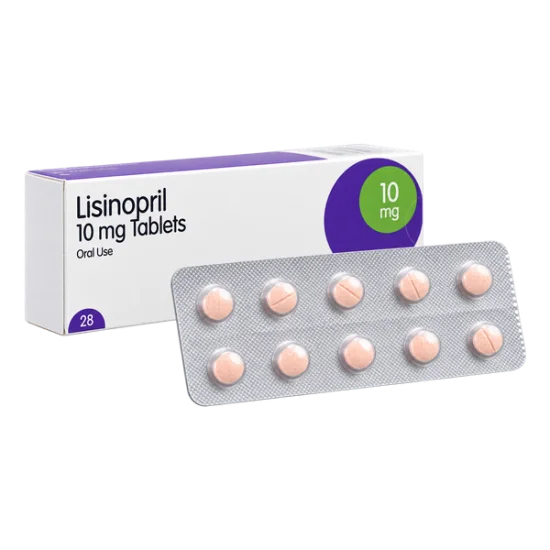
I used the 10 mg tablets after the regimen was confirmed. During the first week I felt slightly light-headed when standing, but that settled. My home readings became more consistent after several weeks.
Lisinopril
Lisinopril is an oral ACE inhibitor used under medical supervision for high blood pressure, heart failure, and selected patients recovering from a heart attack. It acts on the renin–angiotensin–aldosterone system to relax blood vessels and help lower blood pressure; the regimen for the chosen strength should be confirmed with a healthcare professional before starting.
Product information
Lisinopril belongs to the angiotensin-converting enzyme inhibitor class, also called an ACE inhibitor. It is taken orally as a tablet and acts on the renin–angiotensin–aldosterone system, a hormone pathway that influences blood-vessel tone, sodium retention, and blood pressure.
Dosage and administration
Lisinopril is supplied as an oral tablet. The regimen for the chosen strength must be confirmed with a healthcare professional before starting, because the appropriate plan depends on the indication, renal function, potassium level, age, blood-pressure readings, and previous treatment.
Typical administration principles include:
- Take the prescribed tablet by mouth at the same time each day.
- Swallow it with water.
- Take it with or without food unless the prescriber gives a different instruction.
- Do not change the dose because one reading is higher or lower than usual.
- Do not stop treatment abruptly without a specific clinical plan.
- If a dose is missed, take it when remembered unless the next scheduled dose is close; never double the next dose.
The chosen strength can be used within different treatment plans, but the correct regimen is not identical for every patient. People starting treatment after dehydration, vomiting, diarrhoea, intensive diuretic use, or a recent cardiovascular event may be more prone to an excessive blood-pressure drop.
Kidney function and serum potassium are commonly assessed before treatment and again after initiation or dose changes. Lisinopril is eliminated mainly through the kidneys, so impaired renal function can increase exposure and alter the dosing plan.
A missed dose does not usually justify taking two tablets together. If vomiting occurs soon after administration, repeating the dose without specific instructions can create an avoidable risk of low blood pressure.
Ingredients
The product contains lisinopril, an angiotensin-converting enzyme inhibitor. The exact amount of active ingredient per tablet should be confirmed with a healthcare professional before use.
How it affects the body
Lisinopril blocks angiotensin-converting enzyme, or ACE. This enzyme normally helps convert angiotensin I into angiotensin II, a powerful substance that narrows blood vessels and stimulates aldosterone release.
The sequence can be understood in four steps:
- Reduced ACE activity means less angiotensin II is formed.
- Arterial smooth muscle relaxes, widening blood vessels.
- Aldosterone stimulation falls, reducing signals for sodium and water retention.
- Blood pressure and cardiac workload may decrease.
ACE also breaks down bradykinin. Blocking ACE can therefore increase bradykinin activity, which helps explain why a persistent dry cough occurs in some patients. The same pathway is associated with the rare but serious reaction called angioedema, involving rapid swelling of the lips, tongue, face, or throat.
Lisinopril does not work by increasing urination in the same direct way as a diuretic. Its main action is hormonal and vascular. This distinction matters when a patient expects the tablet to produce an immediate change in fluid output.
Clinical response develops through a combination of early vascular relaxation and longer-term adjustment of blood-pressure control. The degree of benefit depends on the starting blood pressure, kidney function, salt intake, hydration, and other treatments.
Therapeutic indications
Lisinopril is used under medical supervision for high blood pressure, heart failure, and selected patients recovering from a heart attack. The U.S. Food and Drug Administration recognises these core uses in its prescribing information for lisinopril tablets [1].
Indications for Essential Hypertension
Hypertension means persistently raised pressure inside the arteries. Lisinopril lowers the resistance against which the heart pumps by relaxing arterial blood vessels. Reduced vascular resistance can lower systolic and diastolic blood pressure.
Blood-pressure treatment is usually assessed through repeated readings rather than one isolated measurement. Kidney function, potassium concentration, age, hydration, and other medicines influence the choice and adjustment of an ACE inhibitor. NICE guidance lists ACE inhibitors among established treatments for hypertension, with treatment selection tailored to the patient’s clinical profile [2].
Heart Failure and Post-Myocardial Infarction Care
Heart failure occurs when the heart cannot pump enough blood for the body’s needs without increased pressure or strain. By reducing angiotensin II activity and aldosterone release, lisinopril can reduce the workload placed on the heart and limit fluid-retaining signals.
After myocardial infarction, lisinopril may be prescribed for selected patients, especially when left-ventricular dysfunction or heart failure is present. It is not a replacement for emergency treatment after chest pain, breathlessness, fainting, or sudden weakness. The European Society of Cardiology includes renin–angiotensin system inhibition within evidence-based cardiovascular care pathways [3].
Common mistakes
Several practical mistakes can reduce benefit or increase risk:
- Taking extra tablets after a high home reading.
- Stopping treatment when blood pressure improves.
- Taking potassium supplements without reporting them.
- Using anti-inflammatory painkillers frequently while dehydrated.
- Ignoring a persistent dry cough.
- Failing to report vomiting, diarrhoea, or unusually poor fluid intake.
- Taking a missed dose together with the next scheduled dose.
- Measuring blood pressure immediately after exercise, caffeine, smoking, or climbing stairs.
- Assuming that no symptoms means hypertension has resolved.
A blood-pressure monitor can also give misleading results if the cuff is too small, the arm is unsupported, or the patient talks during the reading. Two readings separated by a short rest often provide a more useful pattern than one rushed measurement.
When not to use it
- You previously developed angioedema after an ACE inhibitor.
- You have hereditary or idiopathic angioedema.
- You are taking sacubitril/valsartan without the required treatment interval.
- You have severe low blood pressure, severe dehydration, or an unstable circulatory condition requiring urgent assessment.
Additional caution applies with kidney artery narrowing, chronic kidney disease, high potassium, dialysis, severe dehydration, or recent vomiting and diarrhoea. A previous kidney problem does not automatically exclude lisinopril, but it changes the monitoring plan.
Angioedema requires urgent medical attention. Swelling of the tongue or throat, difficulty breathing, wheezing, or rapidly worsening facial swelling should be treated as an emergency.
When this is not for you
This treatment is not for you if any of the following applies:
- You are pregnant, especially after the first trimester, because ACE inhibition can injure the developing fetus.
- You have a history of severe allergic swelling involving the tongue, throat, or airway.
Pregnancy requires a different blood-pressure strategy. If pregnancy occurs during treatment, the prescriber should be contacted promptly so that the regimen can be reviewed.
The UAE Ministry of Health and Prevention, WHO, and national clinical services place emphasis on monitoring blood pressure, renal function, and electrolytes when medicines affecting the renin–angiotensin system are used.
Possible side effects
Lisinopril is tolerated by many patients, but adverse effects can occur. The most recognisable effect is a dry, persistent cough. It may begin days or weeks after treatment starts and may continue until the medicine is stopped under medical direction.
Common or clinically relevant reactions include:
- Dizziness or light-headedness, especially after the first doses.
- Headache or fatigue.
- Dry cough.
- Nausea or mild gastrointestinal discomfort.
- Increased potassium.
- Changes in kidney function.
- A temporary fall in blood pressure.
Serious reactions include angioedema, severe hypotension, significant kidney deterioration, and marked hyperkalaemia. Hyperkalaemia may cause muscle weakness, unusual palpitations, or dangerous heart-rhythm changes, though it may also produce few early symptoms.
The cough is often mistaken for a cold that refuses to clear. A dry throat tickle without fever or mucus can be a useful clue, especially when it begins after an ACE inhibitor is started. Do not stop treatment independently; the clinician must decide whether to investigate another cause or change therapy.
Dizziness is more likely during dehydration, hot weather, acute illness, or concurrent diuretic use. In the UAE climate, fluid loss from sweating can make an ordinary dose feel stronger during illness or prolonged outdoor activity.
Comparison
Lisinopril is one active substance within the ACE inhibitor class. Other medicines in this class use different active substances, such as enalapril, fosinopril, quinapril, trandolapril, and benazepril. These medicines share a broad mechanism but differ in chemical structure, metabolism, duration, and suitability for individual patients.
Brand names are not interchangeable with active substances. A clinician or pharmacist must confirm that any substitution contains the same active ingredient and strength. Related medicines used in cardiovascular care may be chosen because of kidney function, liver function, previous cough, dose flexibility, or the patient’s wider treatment plan.
| Treatment category | Main mechanism | Practical distinction |
|---|---|---|
| Lisinopril | Direct ACE inhibition | Renal elimination; commonly administered once daily |
| Other ACE inhibitors | ACE inhibition using a different active substance | Metabolism and dosing plans vary by ingredient |
| Angiotensin receptor blockers | Block angiotensin II receptors | May be considered when ACE-inhibitor cough limits treatment |
Lisinopril is not automatically interchangeable with an angiotensin receptor blocker or a combined neprilysin/angiotensin receptor treatment. Switching requires a planned interval or dose adjustment in some circumstances.
What doctors say
In clinical practice, doctors usually assess the response to lisinopril through a pattern of blood-pressure readings rather than a single result. They also review kidney function and potassium after treatment begins or changes.
A clinician may explain that the tablet controls a cardiovascular process but does not remove the underlying tendency toward hypertension. Blood pressure can rise again if treatment is stopped, even when the patient feels well.
The main advantages are once-daily convenience, a well-established mechanism, and usefulness across hypertension, heart failure, and selected post-infarction settings. The main limitations are cough, the possibility of angioedema, potassium elevation, and the need for renal monitoring.
Treatment response can be affected by high sodium intake, missed doses, anti-inflammatory painkillers, untreated sleep apnoea, and incorrect home-measurement technique. Doctors also distinguish poor response from poor adherence, white-coat hypertension, and secondary causes of high blood pressure.
Comparison
Common questions
What should happen if the expected blood-pressure result does not come?
A partial response can reflect dose needs, salt intake, missed doses, kidney disease, interacting medicines, or an incorrect measurement technique. NICE guidance reviewed in 2023 recommends reassessing treatment response and clinical factors rather than changing antihypertensive therapy without a plan. Persistent readings above the agreed target, very low readings, fainting, or chest symptoms require prompt clinical review. Do not take an extra lisinopril tablet to correct one high measurement. A treatment review is safer than self-adjustment.
Can the lisinopril tablet be split, crushed, or chewed?
Swallow the tablet with water unless the prescribing clinician gives a different administration instruction. The FDA 2022 prescribing information for lisinopril tablets describes oral administration and does not support chewing as a way to improve its action. Splitting should only be used when the tablet is suitable for splitting and the prescribed regimen requires it; a scored line alone does not guarantee equal doses. Crushing or chewing can also make administration unpleasant and may lead to an incomplete dose.
Which condition rules out lisinopril completely?
A previous ACE-inhibitor-associated angioedema is a clear reason to avoid lisinopril. The FDA's 2022 safety information identifies angioedema as a serious risk, with swelling of the face, lips, tongue, or throat requiring urgent care. Pregnancy also rules out continued ACE-inhibitor treatment because fetal kidney injury and reduced amniotic fluid can occur. Severe dehydration, high potassium, or advanced kidney disease may require a different plan rather than automatic treatment initiation.
What is the best time of day to take lisinopril?
The best time is the time that supports consistent daily use and matches the confirmed regimen. NICE hypertension guidance from 2023 allows treatment timing to be individualised, while some patients prefer morning administration because dizziness can be monitored during waking hours. Others may take it later if that schedule improves adherence. Taking it at varying times or repeatedly changing between morning and evening makes blood-pressure patterns harder to interpret.
Which diet, exercise, or habits help or hinder the result?
Lower sodium intake, regular moderate activity, weight management, adequate sleep, and reduced alcohol exposure can support blood-pressure control. WHO guidance published in 2021 links sodium reduction and physical activity with improved cardiovascular risk management. Potassium-rich foods are not automatically appropriate for everyone taking lisinopril, because kidney impairment or high potassium can make dietary changes hazardous. Dehydration, frequent anti-inflammatory painkiller use, smoking, and missed tablets can work against treatment.
How does lisinopril differ from enalapril?
Both lisinopril and enalapril are ACE inhibitors, so both reduce angiotensin II formation. Lisinopril is active as administered and is eliminated mainly through the kidneys, while enalapril is converted in the body to an active metabolite. The FDA (2022) and EMA (2024) describe these as related medicines with different pharmacokinetic properties and individual dosing considerations. A switch should be prescribed rather than performed tablet-for-tablet, especially when kidney function, blood pressure, or previous cough is involved.
Do you offer anonymous delivery?
Your order will be securely packed and shipped within 24 hours. This is exactly what your package will look like (images of an actual item sent). It has the size and look of a regular private letter (24x11x0.7 cm) and its contents cannot be seen.
Reviews: Lisinopril
The tablet fitted easily into my morning routine. I noticed a dry cough after about a month, and it became irritating at night. My clinician reviewed the treatment rather than telling me to keep taking it unchanged.
I had no obvious symptoms from my high readings, so I underestimated the problem. I missed doses on busy days at first. Using a phone reminder helped me take it more regularly.
After a dose adjustment, I felt dizzy following exercise in hot weather. Drinking enough fluid and avoiding sudden standing helped, but the episode still needed to be reported.
My readings improved, but I did not feel any different, which made me question whether it was working. The follow-up measurements showed a clearer benefit than symptoms alone.
Sources
- U.S. Food and Drug Administration (2022). Zestril (lisinopril) tablets, prescribing information.
- National Institute for Health and Care Excellence (2023). Hypertension in adults: diagnosis and management, NICE guideline NG136.
- European Society of Cardiology (2023). 2023 ESC Guidelines for the management of acute coronary syndromes.