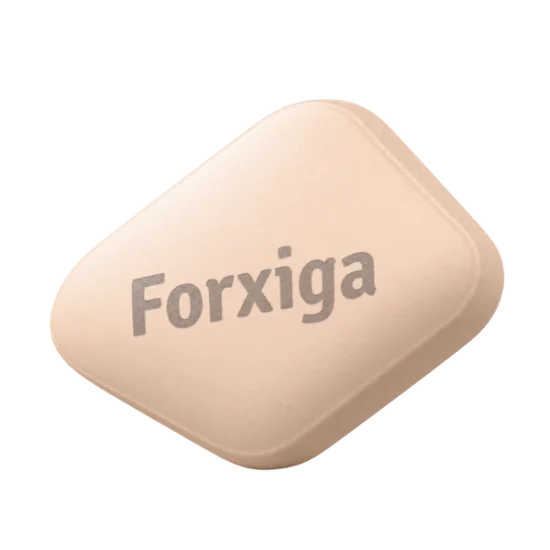
I took my prescribed tablet in the morning with breakfast. I noticed I was going to the bathroom more in the first week, then it settled. My glucose readings improved, but drinking water regularly made a real difference during workdays.
Dapagliflozin in Forxiga helps the kidneys pass excess glucose and sodium into the urine rather than returning them to the bloodstream. It is prescribed for adults with type 2 diabetes, heart failure, or chronic kidney disease. This tablet supports glucose control while also reducing strain on the heart and kidneys.
Product information
Forxiga contains dapagliflozin, a sodium-glucose co-transporter 2 (SGLT2) inhibitor. SGLT2 is a kidney protein that normally reabsorbs glucose and sodium from filtered urine back into the blood. Blocking it creates a controlled loss of glucose and sodium in urine.
Dosage and administration
Forxiga is taken by mouth as a tablet. The amount per intake is set individually for each person rather than being one fixed number. The prescribing clinician considers the treatment indication, kidney function, current glucose-lowering medicines, blood pressure, and use of diuretics.
- Take the prescribed tablet once daily at a consistent time.
- It may be taken with or without food.
- Swallow the tablet whole with water.
- If a dose is missed, take it when remembered on the same day unless the next dose is close. Do not take two doses together.
- Blood pressure, kidney function, hydration status, and blood glucose may need monitoring according to the condition being treated.
- If vomiting, diarrhoea, fever, or markedly reduced fluid intake occurs, medical advice is needed because dehydration can increase adverse effects.
A small early change in kidney blood-test results can occur after treatment begins. Clinicians interpret this alongside symptoms, blood pressure, fluid status, and the long-term kidney-protection goal. Stopping treatment solely because of one laboratory value, without clinical review, is a common error.
Ingredients
Forxiga contains dapagliflozin, a sodium-glucose co-transporter 2 (SGLT2) inhibitor. SGLT2 normally reabsorbs glucose and sodium from filtered urine into the blood. By blocking this protein, Forxiga supports the controlled loss of excess glucose and sodium in urine.
How it affects the body
Dapagliflozin works in the proximal renal tubules, the early part of the kidney’s filtering system. It inhibits SGLT2, reducing the reabsorption of glucose and sodium. More glucose leaves through urine, and more sodium reaches later parts of the kidney tubule.
That sodium signal helps restore tubuloglomerular feedback. In plain terms, it can reduce excessive pressure within the kidney’s filtering units, called glomeruli. This is one reason SGLT2 inhibitors can protect kidney function over time.
The mechanism also causes mild osmotic diuresis. Glucose in urine draws water with it, which can modestly reduce circulating fluid volume and blood pressure. This effect may help people with heart failure, though it can also cause dizziness in someone who is dehydrated or already taking strong diuretics.
Clinical trials such as DAPA-HF and DAPA-CKD established dapagliflozin as more than a glucose-lowering treatment. They showed meaningful reductions in heart-failure worsening and kidney outcomes in selected adult populations. The WHO has also highlighted the growing importance of integrated care for diabetes and its cardiovascular and renal complications. [2]
Therapeutic indications
Forxiga is used in three closely connected areas of care:
- Type 2 diabetes: to lower blood glucose alongside nutrition, physical activity, and other glucose-lowering treatments.
- Heart failure: to reduce the risk of worsening heart failure and cardiovascular death in appropriate adults.
- Chronic kidney disease: to slow kidney-function decline and reduce the risk of kidney failure or cardiovascular events in suitable patients.
This broad role reflects a change in cardiorenal care. Diabetes, heart failure, and chronic kidney disease often progress together because high glucose, raised pressure inside kidney filters, and fluid overload can damage blood vessels over time. Dapagliflozin acts through the kidney, yet its benefits extend beyond glucose readings. The European Medicines Agency recognises its use across these indications in appropriately selected adults. [1]
Therapeutic scope in cardiorenal and metabolic health
Forxiga does not replace insulin in type 1 diabetes. It is also not intended for treating diabetic ketoacidosis.
For people with type 2 diabetes, its glucose-lowering effect depends partly on kidney function because glucose must be filtered by the kidneys before it can be excreted. In heart failure and chronic kidney disease, clinicians assess the treatment goal differently. The focus may be fewer hospital admissions, reduced fluid burden, and slower loss of kidney function rather than a large fall in blood glucose alone.
Common mistakes
Several avoidable mistakes can make Forxiga harder to tolerate or less useful.
- Taking the tablet late in the evening: increased urination may disturb sleep.
- Drinking too little during hot weather or illness: this can worsen dizziness and dehydration.
- Ignoring genital symptoms: early treatment of a fungal infection is simpler than waiting until discomfort becomes severe.
- Stopping insulin independently: dapagliflozin does not replace the insulin required by people who need it.
- Treating urine glucose as a sign of treatment failure: urinary glucose is an expected pharmacological effect.
- Taking an extra tablet after a missed dose: doubling doses can increase adverse effects without restoring the missed benefit.
When not to use it
- Current or previous diabetic ketoacidosis.
- Type 1 diabetes.
- Severe dehydration or frequent episodes of low blood pressure.
- Active serious genital or urinary infection.
- Advanced kidney impairment where treatment is not appropriate for the intended indication.
- Use of insulin or sulfonylureas, because treatment adjustments may be needed to limit hypoglycaemia.
- Use of loop diuretics or several blood-pressure medicines, which may increase volume depletion.
- Heavy alcohol intake, very low-carbohydrate diets, prolonged fasting, or acute illness, all of which can increase ketoacidosis risk.
When this is not for you
Forxiga is not for you if you have a known allergy to dapagliflozin or any tablet ingredient.
Possible side effects
Forxiga is generally well tolerated, though its kidney-based action explains most unwanted effects. Genital fungal infections are among the more common reactions. Urinary tract infections, increased urination, thirst, and mild dizziness can also occur.
The medicine can be useful for people whose glucose treatment has caused weight gain or frequent low blood sugar. On its own, dapagliflozin has a low risk of hypoglycaemia because it does not force the pancreas to release insulin. The risk rises when it is combined with insulin or medicines that stimulate insulin release.
More serious reactions are uncommon but need prompt assessment:
- Diabetic ketoacidosis: nausea, vomiting, abdominal pain, deep or rapid breathing, marked tiredness, or confusion can occur even when glucose is not very high.
- Severe dehydration: fainting, severe dizziness, very low urine output, or inability to keep fluids down.
- Serious urinary or genital infection: fever, pelvic pain, back pain, swelling, severe tenderness, or spreading redness around the genital area.
- Low blood sugar: sweating, shaking, hunger, confusion, or palpitations when used with insulin or a sulfonylurea.
The FDA prescribing information describes ketoacidosis as an important warning for dapagliflozin and advises interruption during situations that predispose to it, such as acute illness or surgery. [3]
Comparison
Forxiga belongs to the SGLT2 inhibitor class. Other diabetes medicines lower glucose through different pathways, so the best choice depends on heart, kidney, weight, hypoglycaemia risk, and the medicines already being used.
| Treatment approach | Main mechanism | Practical distinction |
|---|---|---|
| Dapagliflozin | Increases urinary glucose and sodium excretion through SGLT2 inhibition | Supports heart and kidney outcomes in appropriate adults; may cause genital infections or volume depletion |
| Empagliflozin | SGLT2 inhibition | Similar kidney-based mechanism and cardiorenal role; selection depends on indication and individual clinical factors |
| Metformin | Reduces hepatic glucose production and improves insulin sensitivity | Often used as a foundation treatment for type 2 diabetes; gastrointestinal effects are common early on |
Metformin and dapagliflozin are frequently used together in type 2 diabetes because their mechanisms are different. Metformin primarily reduces glucose released by the liver, while dapagliflozin increases glucose removal through urine. Neither treatment should be viewed as interchangeable when heart failure or chronic kidney disease is part of the clinical picture.
DPP-4 inhibitors work by prolonging the activity of incretin hormones after meals. Sulfonylureas increase insulin release and can lower glucose effectively, though they carry a greater risk of hypoglycaemia and weight gain. SGLT2 inhibitors have a different advantage: their clinical role can extend to heart and kidney protection in eligible adults.
What doctors say
In clinical practice, doctors often value dapagliflozin because it can address more than one risk pathway at once. A patient with type 2 diabetes and albumin in the urine may have a different treatment priority from someone whose main problem is recurrent fluid-related heart-failure admissions.
The expected benefit also differs by condition. Glucose readings may improve fairly soon in type 2 diabetes, while heart and kidney protection is judged across months and years. Consistency matters because missed doses reduce the sustained kidney and cardiovascular effect.
Clinicians also ask practical questions that people may overlook: How much fluid do you drink? Have you had recurrent thrush? Are you following a ketogenic diet? Have you recently reduced insulin? These details can change whether dapagliflozin is suitable or whether temporary interruption is needed.
Comparison
Common questions
What should I discuss with a doctor before starting Forxiga?
Discuss your diabetes type, heart failure or kidney diagnosis, previous ketoacidosis, kidney function, blood-pressure treatment, and use of insulin or diuretics. Mention recurrent urinary or genital infections, reduced food intake, heavy alcohol use, and restrictive carbohydrate diets. The EMA’s 2025 product information for dapagliflozin identifies these factors because they can alter the risk of dehydration or ketoacidosis. A full medicine list also helps identify combinations that may increase low blood sugar or low blood pressure.
What is the best time of day to take Forxiga?
A consistent morning time is often practical because increased urination can occur. Food does not determine absorption, so the tablet may be taken with breakfast or without food. The FDA prescribing information updated in 2023 supports once-daily administration, with timing chosen to help adherence. If a clinician has set a different schedule for your individual regimen, follow that plan.
How does Forxiga differ from empagliflozin?
Both dapagliflozin and empagliflozin are SGLT2 inhibitors. They lower glucose by reducing kidney reabsorption of filtered glucose and can be used in cardiorenal care for appropriately selected adults. The 2023 European Society of Cardiology focused update places SGLT2 inhibitors among foundational therapies for heart failure, while the choice between agents depends on the approved indication, kidney function, tolerability, and the rest of the treatment plan. Their adverse-effect patterns are also similar, including genital infections and volume depletion.
Can Forxiga tablets be split, crushed, or chewed?
Forxiga tablets should be swallowed whole with water. Splitting, crushing, or chewing can make dosing less reliable and may be unsuitable for the tablet formulation. The EMA product information, revised in 2025, describes oral whole-tablet administration. Someone with swallowing difficulty should discuss a suitable approach with the prescriber rather than altering tablets independently.
Can Forxiga be used during pregnancy or breastfeeding?
Forxiga is not recommended during pregnancy, especially after the first trimester, because of potential effects on fetal kidney development. Breastfeeding is also not recommended because a risk to the infant cannot be ruled out. The EMA’s 2025 dapagliflozin information advises treatment review before conception or as soon as pregnancy is recognised. Alternative glucose-management plans can be selected for pregnancy when needed.
Can people under 18 use Forxiga?
Forxiga is intended for adult use in the indications discussed here. Paediatric use requires specialist assessment because treatment decisions for children and adolescents differ from adult cardiorenal and diabetes care. The EMA product information from 2025 sets out the approved population and indication-specific use. A child or adolescent with diabetes, heart failure, or kidney disease needs an individual plan from a paediatric specialist.
Do you offer anonymous delivery?
Your order will be securely packed and shipped within 24 hours. This is exactly what your package will look like (images of an actual item sent). It has the size and look of a regular private letter (24x11x0.7 cm) and its contents cannot be seen.
Reviews: Forxiga
The treatment fitted easily into my routine and I did not get low-sugar episodes. I had mild itching once and spoke to my clinician early, which was much less stressful than ignoring it.
My breathing felt more stable when walking, and I had fewer days with ankle swelling. The first few weeks included light-headedness when I stood up quickly, so my other medicines were reviewed.
I expected the tablet to replace everything else, which was wrong. My clinician explained that meals and activity still mattered. I also learned not to skip fluids after evening football.
The follow-up blood tests were reassuring after the early checks. I did have a urine infection during treatment, so I needed assessment and treatment before continuing my normal routine.
Sources
- European Medicines Agency (2025). Forxiga: Summary of Product Characteristics.
- World Health Organization (2023). Global report on hypertension: The race against a silent killer.
- U.S. Food and Drug Administration (2023). FARXIGA (dapagliflozin) Prescribing Information.