Night-time urination became less disruptive after the first couple of months. I still had some urgency, so the improvement was useful but not complete.
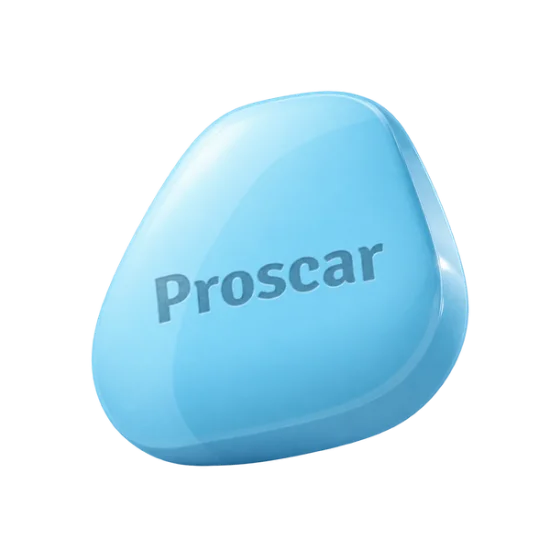
Proscar lowers the hormonal signal that contributes to prostate enlargement and urinary obstruction in men with benign prostatic hyperplasia (BPH). It is used for persistent lower urinary tract symptoms, with benefits developing gradually as prostate tissue responds.
Product information
Proscar is an oral tablet used in the medical management of benign prostatic hyperplasia. Finasteride belongs to the 5-alpha-reductase inhibitor class.
Dosage and administration
Proscar is taken orally as a tablet. The prescriber selects the strength and schedule for the individual patient, and treatment is intended for regular use rather than occasional symptom control.
Practical administration points include:
- Take the prescribed dose at approximately the same time each day.
- Swallow the tablet with water.
- Take it with or without food unless the prescriber gives a different instruction.
- Do not take extra tablets to accelerate prostate shrinkage.
- Continue treatment for the prescribed duration, even if symptoms fluctuate.
- If a dose is missed, take the next scheduled dose without doubling.
Clinical improvement is gradual. Some urinary symptoms may begin to change after several weeks, while the full effect can require several months of consistent treatment. Long-term therapy may be needed because prostate growth can resume after treatment stops.
Pregnant women, women who may become pregnant, and children should not handle crushed or broken Proscar tablets. Finasteride can be absorbed through the skin and may affect development of male external genitalia during pregnancy. Intact tablets should be handled appropriately, and any tablet that is broken should not be touched by a pregnant woman.
Ingredients
Proscar is an oral tablet containing finasteride, a 5-alpha-reductase inhibitor. It lowers the hormonal signal that contributes to prostate enlargement in men with benign prostatic hyperplasia.
How it affects the body
Finasteride belongs to the 5-alpha-reductase inhibitor class. This enzyme converts testosterone into dihydrotestosterone, also called DHT. DHT is a potent androgen involved in the growth and maintenance of prostate tissue.
By inhibiting 5-alpha-reductase, finasteride lowers DHT within the prostate. The prostate can then gradually become smaller, reducing pressure around the urethra.
The mechanism can be summarised simply:
- Testosterone is converted into DHT by 5-alpha-reductase.
- Finasteride blocks this conversion.
- Lower local DHT reduces stimulation of prostate tissue.
- Prostate volume may gradually decline.
- Urine flow and bladder-emptying symptoms may improve.
The effect is localised mainly to the prostate, but hormonal changes can contribute to sexual adverse effects in some patients. The U.S. Food and Drug Administration, the European Medicines Agency, and the Medicines and Healthcare products Regulatory Agency describe this class as a treatment for prostate enlargement, not as an immediate remedy for urinary urgency or acute obstruction [2].
Role of 5-alpha-reductase inhibition
Alpha-blockers and 5-alpha-reductase inhibitors act differently. An alpha-blocker relaxes smooth muscle around the bladder outlet and prostate, which can improve symptoms sooner. Finasteride works on the hormonal driver of prostate growth and may offer greater value when the prostate is enlarged.
This difference explains why a patient may not feel an immediate change after starting Proscar. The treatment works through tissue remodelling. Stopping after a short period may prevent the full benefit from appearing.
Therapeutic indications
Proscar is used when prostate-related obstruction is clinically relevant. It may reduce the risk of acute urinary retention over long-term treatment, though it does not remove every cause of urinary difficulty. Blood in the urine, painful urination, fever, sudden inability to urinate, or severe pelvic pain require prompt medical assessment because these symptoms can arise from conditions other than uncomplicated BPH.
Clinical trials and regulatory information describe finasteride-based therapy as a long-term approach for men with an enlarged prostate and related urinary symptoms [1].
Common mistakes
Several practical errors can reduce benefit or delay appropriate assessment:
- Stopping after a week because urinary flow has not changed
- Doubling the next dose after a missed tablet
- Assuming Proscar will relieve acute urinary retention
- Failing to mention Proscar before a PSA blood test
- Allowing a pregnant woman to handle a broken tablet
- Ignoring new breast changes, severe rash, facial swelling, or mood deterioration
- Treating painful urination or fever as ordinary BPH symptoms
- Comparing progress only with the previous day instead of tracking a longer pattern
- Assuming a lower libido must be caused solely by the medicine without considering diabetes, vascular disease, depression, or other treatments
A full bladder with inability to pass urine is an emergency. It requires immediate assessment rather than an additional dose.
When not to use it
Proscar is not suitable for everyone. The main exclusions and precautions relate to sex, age, pregnancy exposure, prostate diagnosis, liver function, and possible drug-related adverse effects.
Finasteride does not replace examination for prostate cancer. A clinician may assess urinary symptoms, perform a prostate examination, request PSA testing, and consider other investigations according to age, symptoms, and risk factors.
Finasteride is processed by the liver. Men with liver disease should provide relevant medical history before treatment, as impaired liver function may affect exposure to the medicine. The full medication list also matters, including products used for erectile symptoms, blood pressure, mood, or urinary problems.
When this is not for you
This treatment is not for you if
- You are a woman or a child.
- You are pregnant or may become pregnant and could handle crushed or broken tablets.
- You have had an allergic reaction to finasteride or any tablet component.
- You have sudden inability to urinate and need immediate relief.
- You have blood in the urine, severe pain, fever, or symptoms suggesting infection without medical assessment.
- You have symptoms that could indicate prostate cancer and have not undergone appropriate evaluation.
- You develop facial swelling, breathing difficulty, or a widespread allergic rash after taking it.
Do not donate blood while taking finasteride and for the period specified by the local blood-service policy after stopping. This precaution protects a pregnant recipient from inadvertent exposure.
Possible side effects
Finasteride is often tolerated without serious problems, but sexual adverse effects are clinically relevant. Reported reactions include reduced libido, erectile difficulty, reduced ejaculate volume, and ejaculation disorders. In controlled studies, these effects were reported in a minority of patients and often appeared during the first year of treatment [3].
Other possible reactions include:
- Breast tenderness or enlargement
- Skin rash or itching
- Testicular discomfort
- Depressed mood
- Rare allergic reactions, including swelling of the lips, face, or throat
Sexual symptoms may improve after treatment is stopped, although persistent symptoms have been reported in some patients. The available evidence does not allow every long-term symptom to be attributed to finasteride in every individual. A change in sexual function should be discussed promptly rather than ignored.
Finasteride lowers prostate-specific antigen, or PSA, levels. This reduction can affect how clinicians interpret prostate screening results. The treating clinician must know that the patient uses Proscar before interpreting a PSA result or comparing it with an earlier result.
Sexual function and hormonal tolerability
Finasteride does not act like testosterone replacement. It reduces conversion of testosterone to DHT, while testosterone itself remains present in the body. This distinction explains why the treatment can reduce prostate stimulation without producing the same hormonal profile as androgen-blocking medicines used in cancer care.
Sexual adverse effects may be more noticeable in men who already have erectile dysfunction, low libido, diabetes, vascular disease, depression, or relationship stress. These factors can overlap, so a new symptom needs individual assessment.
Mood changes require attention. Persistent low mood, loss of interest, or thoughts of self-harm need urgent medical support. The WHO recognises medication-related mood symptoms as a safety issue requiring prompt evaluation when they appear during treatment [4].

Comparison
BPH treatment is selected according to prostate size, symptom severity, urinary retention risk, general health, and the speed of relief required.
| Approach | Main action and expected role |
|---|---|
| Proscar and other 5-alpha-reductase inhibitors | Lower DHT stimulation, gradually reduce prostate volume, and support long-term reduction in obstruction risk |
| Alpha-blocker therapy | Relaxes smooth muscle around the bladder outlet and prostate, often improving flow sooner but without shrinking the prostate |
| BPH surgery or minimally invasive treatment | Removes or reshapes obstructive tissue when symptoms remain severe, complications develop, or medicines are insufficient |
Proscar may suit men who need prostate-directed treatment and can accept a gradual onset. Alpha-blockers may be favoured when rapid symptom relief is the priority, though dizziness, low blood pressure, and ejaculation changes can occur depending on the medicine.
Surgery may be considered when there is recurrent urinary retention, repeated urinary infection, bladder damage, kidney effects, severe bleeding, or persistent symptoms despite medical therapy. Surgical treatment can improve obstruction quickly, but it carries procedure-specific risks such as bleeding, infection, ejaculation changes, and the need for recovery.
The National Institute for Health and Care Excellence recommends matching BPH treatment to symptom severity, prostate findings, complications, and patient preference [5].
What doctors say
In clinical practice, doctors usually frame Proscar as a prostate-size treatment rather than a quick symptom reliever. The best candidates often have persistent BPH symptoms together with evidence that prostate enlargement contributes to obstruction.
A clinician will usually set expectations early. Urinary flow may not improve immediately. Sexual adverse effects may appear before prostate benefits become obvious. The treatment decision therefore balances symptom burden, prostate size, urinary retention risk, baseline sexual function, and preferences about long-term therapy.
Combination treatment with an alpha-blocker may be considered when symptoms need earlier relief while prostate-directed treatment takes effect. Such decisions depend on blood pressure, dizziness risk, other medicines, and the patient’s response.
Doctors also pay attention to treatment adherence. Missing tablets repeatedly can make the treatment appear ineffective even when the mechanism is appropriate. A sudden worsening of urinary symptoms should not be managed by taking extra Proscar.
Comparison
Common questions
Which diet, exercise, or habits support the result?
Reducing evening fluids, moderating caffeine, and limiting alcohol may reduce night-time urination or bladder irritation, although these habits do not shrink the prostate. Regular physical activity supports general urinary and cardiovascular health, while constipation control can reduce pelvic pressure. NICE guidance reviewed in 2024 supports lifestyle measures alongside treatment for lower urinary tract symptoms. These changes complement Proscar but do not replace the medicine’s hormonal action.
Can Proscar affect driving, concentration, or work with machinery?
Proscar is not generally recognised as a sedating medicine, so many patients can drive and work normally. Dizziness, weakness, mood changes, or visual symptoms can still affect individual performance, especially when other medicines are used at the same time. The EMA product information published in 2018 identifies adverse reactions that should guide personal caution during activities requiring full alertness. Avoid driving or operating machinery if symptoms impair concentration or coordination.
What should be done after a missed dose?
Take the next scheduled dose at the usual time and do not take two tablets together to compensate. A single missed dose is unlikely to reverse the long-term treatment effect, while repeated missed doses can reduce consistency. FDA patient information for finasteride published in 2014 advises against doubling after a missed dose. If missed doses occur frequently, a fixed daily routine or reminder may help.
What is the best time of day to take Proscar?
The most useful time is one that supports regular daily use, such as after breakfast or alongside another established routine. Proscar can generally be taken with or without food, and the time of day does not create an immediate urinary effect. The EMA product information from 2018 supports consistent administration according to the prescribed schedule. A patient who experiences dizziness or another reproducible symptom after dosing should discuss the timing with the prescriber rather than changing the dose independently.
Do you offer anonymous delivery?
Your order will be securely packed and shipped within 24 hours. This is exactly what your package will look like (images of an actual item sent). It has the size and look of a regular private letter (24x11x0.7 cm) and its contents cannot be seen.
Screening and PSA considerations
A baseline assessment helps distinguish BPH from other causes of urinary symptoms. PSA can be useful, but its interpretation changes during finasteride treatment because the medicine lowers PSA levels. A future increase from the treatment-adjusted baseline can require investigation.
Lifestyle support
Reducing evening fluids, moderating caffeine, and limiting alcohol may reduce night-time urination or bladder irritation, although these habits do not shrink the prostate. Regular physical activity supports general urinary and cardiovascular health, while constipation control can reduce pelvic pressure. NICE guidance reviewed in 2024 supports lifestyle measures alongside treatment for lower urinary tract symptoms. These changes complement Proscar but do not replace the medicine’s hormonal action.
Reviews: Proscar
The urinary stream improved gradually. I noticed reduced interest in sex and discussed it at my follow-up rather than stopping suddenly.
The first month felt unchanged, which was frustrating. By the later follow-up, starting urination was easier and I was waking less often.
I developed a sexual side effect and stopped only after speaking with the prescriber. The reason for my urinary symptoms needed more investigation because BPH was not obvious for my age.
Sources
- U.S. Food and Drug Administration (2014). Proscar (finasteride) prescribing information.
- European Medicines Agency (2018). Finasteride: European public assessment and product information.
- U.S. Food and Drug Administration (2014). Proscar clinical pharmacology and adverse reactions information.
- World Health Organization (2023). Pharmacovigilance: ensuring the safe use of medicines.
- National Institute for Health and Care Excellence (2019). Lower urinary tract symptoms in men: management.