My main issue had been waking twice at night and taking a long time to start. The night-time waking became less frequent, but the change was gradual rather than immediate. I still planned a medical check because my father had prostate problems.
Himplasia provides herbal support for men experiencing urinary changes linked with benign prostate enlargement. Its non-hormonal approach is intended to support normal urine flow, bladder emptying, and urogenital function while complementing appropriate medical assessment.
Product information
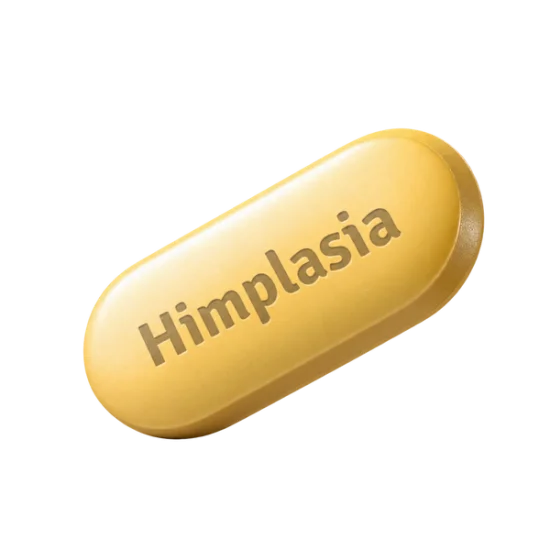
Himplasia is an herbal prostate-support product supplied as capsules. It is intended for adult men who want support for urinary comfort, bladder function, and prostate health, especially when age-related urinary changes are present.
Himplasia belongs to the herbal and Ayurvedic product category. Its formulation is intended to provide botanical support for prostate and urinary function rather than hormonal treatment.
Dosage and administration
The dose of Himplasia is decided individually, taking age, other medicines, and health conditions into account. Use the capsules according to the prescribed or product-specific directions.
Key administration principles include:
- Take the capsules by mouth.
- Use the same daily schedule when possible.
- Swallow capsules with water.
- Do not open or crush a capsule unless a qualified prescriber has specifically advised this.
- Avoid changing the amount because symptoms fluctuate.
- If a dose is missed, take the next scheduled dose rather than doubling the amount.
Consistency supports clearer assessment of tolerance and urinary response. A longer observation period may be needed for a chronic symptom pattern, while acute pain, fever, blood in urine, or urinary retention needs medical assessment rather than self-management.
Ingredients
Himplasia belongs to the herbal and Ayurvedic product category. Its formulation is intended to provide botanical support for prostate and urinary function rather than hormonal treatment.
Botanical Support for Bladder Function
The product is traditionally associated with support for normal bladder tone and urinary output. These terms describe the bladder’s ability to contract, relax, and empty in a coordinated way.
A useful practical point is that urinary symptoms do not always reflect the same biological problem. A weak stream can relate to prostate obstruction, reduced bladder contraction, urethral narrowing, medication effects, or neurological disease. The symptom alone cannot identify the cause.
How it affects the body
Botanical formulations may contain compounds with antioxidant, anti-inflammatory, or smooth-muscle-supporting activity. These effects are often discussed in relation to urinary tract function, though the clinical response to a herbal product can vary between individuals.
The phrase “normal urinary output” refers to the ability to pass urine without excessive difficulty, prolonged straining, or repeated interruption. It does not mean that a product should increase urine production like a diuretic.
BPH can narrow the urethral passage as prostate tissue enlarges around it. The bladder may then work harder to push urine through the narrowed channel. Over time, some men experience urgency, frequent urination, or residual urine after using the toilet.
Himplasia is designed to support this area of urinary health through a non-hormonal herbal approach. The intended benefit is functional support, not rapid mechanical reduction of prostate tissue.
Clinical guidance from the European Association of Urology places symptom severity, urinary retention risk, prostate assessment, and quality of life at the centre of BPH management [1]. A capsule-based herbal product may be considered for supportive care, yet persistent symptoms still require appropriate evaluation.
Therapeutic indications
Himplasia is positioned as a non-hormonal herbal formulation for men’s urogenital health. It may suit people seeking botanical support alongside regular monitoring of urinary symptoms. It should not be treated as a replacement for evaluation when symptoms are new, persistent, painful, or rapidly worsening.
BPH symptoms can overlap with urinary infection, bladder disease, urethral narrowing, prostatitis, and prostate cancer. A sudden inability to urinate requires urgent medical attention.
Common mistakes
Several practical mistakes can reduce the value of any prostate-support regimen:
-
Taking extra capsules after a difficult day. Urinary symptoms can vary with caffeine, alcohol, constipation, stress, and fluid timing. Doubling the amount does not provide a reliable correction.
-
Stopping after one or two doses. Supportive products require a consistent observation period, while severe symptoms should trigger assessment rather than repeated self-treatment.
-
Ignoring urinary retention. The inability to pass urine is urgent and should not be managed with additional capsules.
-
Assuming all urinary symptoms come from BPH. Infection, stones, bladder disorders, neurological conditions, and prostate disease can produce similar complaints.
-
Forgetting concurrent medicines. Blood-pressure treatment, anticoagulants, sedatives, and other products can alter tolerability or interact with botanical ingredients.
-
Restricting fluids too aggressively. Very concentrated urine can worsen irritation and does not correct prostate obstruction.
-
Using straining as a routine technique. Repeated forceful straining can increase discomfort and does not address the underlying cause of slow flow.
When not to use it
- A known allergy to Himplasia or any of its botanical components
- Previous severe reaction to an herbal product
- Acute urinary retention
- Blood in the urine without an established cause
- Fever, chills, or severe pain with urinary symptoms
- Known kidney disease or significant liver disease
- Planned urological surgery
- Use of several medicines that affect blood pressure, bleeding, or kidney function
- A history of complicated prostate or bladder disease
Men taking anticoagulants or antiplatelet medicines should establish compatibility before using any multi-herbal formulation. The same applies to people taking medicines for hypertension, diabetes, kidney disease, or urinary symptoms.
When this is not for you
Himplasia is not suitable for everyone. It is NOT for you if you have urinary retention, unexplained blood in the urine, fever with urinary symptoms, or severe pain; seek medical assessment instead.
A prostate-support capsule should not delay assessment of possible prostate cancer. BPH and prostate cancer are separate conditions, and urinary symptoms alone cannot distinguish them. The WHO emphasises that men with persistent lower urinary tract symptoms need appropriate clinical evaluation rather than relying only on traditional or complementary treatment [2].
Possible side effects
Himplasia is intended as a well-tolerated herbal product, yet “herbal” does not mean free from adverse effects. Possible problems include digestive discomfort, nausea, headache, dizziness, or an allergic reaction to a botanical component.
Stop using the product and obtain prompt medical assessment for facial swelling, breathing difficulty, widespread rash, severe abdominal pain, or fainting.
Symptoms requiring medical assessment include:
- Inability to pass urine
- Visible blood in the urine
- Fever or chills with urinary symptoms
- Severe pelvic or back pain
- Repeated urinary infections
- Rapid deterioration in urinary function
- New unexplained weight loss
Comparison
Himplasia uses a herbal, non-hormonal approach. Other approaches act through different mechanisms and may be selected when symptoms are moderate, severe, progressive, or associated with complications.
| Approach | Main action | Typical clinical role |
|---|---|---|
| Himplasia herbal support | Botanical support for urinary and urogenital function | Supportive use for selected adults with mild symptoms |
| Alpha-adrenergic treatment | Relaxes smooth muscle around the prostate and bladder outlet | Faster symptom relief when obstruction-related symptoms are prominent |
| Prostate-growth treatment | Reduces hormonal stimulation of prostate tissue over time | Men with demonstrable enlargement and a higher progression risk |
Herbal support may be attractive to men who prefer a non-hormonal option. Its limitations include variable response, less predictable symptom control, and the need to avoid assuming that symptom improvement proves the prostate is healthy.
Prescription approaches can provide stronger or more predictable effects in suitable patients, but they may cause dizziness, sexual adverse effects, blood-pressure changes, or other medicine-specific problems. The choice depends on prostate size, symptom burden, urinary flow, residual urine, blood-pressure status, and other health factors.
What doctors say
In clinical practice, doctors usually assess the pattern, severity, and progression of urinary symptoms before recommending any prostate-support product. A short symptom history helps distinguish mild lower urinary tract symptoms from warning signs that need investigation.
A clinician may ask about:
- Daytime urinary frequency
- Night-time urination
- Urgency
- Hesitancy
- Straining
- Stream interruption
- Dribbling after urination
- The sensation of incomplete emptying
- Pain, fever, or blood in the urine
The National Institute for Health and Care Excellence recommends structured assessment for men with lower urinary tract symptoms, including review of lifestyle factors, medicines, symptom severity, and red-flag features [3].
Comparison
Common questions
How does Himplasia differ from prescription prostate treatments?
Himplasia uses a non-hormonal herbal approach intended to support urinary and urogenital function, while prescription treatments act through defined pharmacological pathways such as smooth-muscle relaxation or reduction of prostate-growth stimulation. The EMA distinguishes traditional herbal use from medicines supported by indication-specific clinical evidence . The practical difference in 2026 is that prescription treatment may be more predictable for moderate symptoms or confirmed obstruction. Himplasia should not be used as a reason to delay evaluation when symptoms are persistent or progressive. A clinician can help determine whether supportive care is appropriate.
What should be done after a missed dose?
Take the next scheduled dose and do not double the amount to compensate. The NHS's 2024 medicines guidance advises avoiding extra doses after many missed oral medicines because doubling can increase adverse effects without restoring a stable treatment pattern [4]. This principle is sensible for Himplasia unless an individual prescriber has given different instructions. If missed doses become frequent, link the capsule to a regular daily activity such as breakfast or brushing the teeth.
Which diet, exercise, and habits can help or hinder the result?
Caffeine, alcohol, constipation, large evening drinks, and prolonged inactivity can aggravate urinary symptoms in some men. The WHO supports healthy diet and physical activity as part of general non-communicable disease prevention, though these habits do not directly remove prostate enlargement. A practical approach in 2026 is to reduce personal triggers, maintain ordinary hydration, stay active, and track whether symptoms improve. Severe symptoms should not be attributed to lifestyle alone.
How long does a course last, and is long-term use acceptable?
The duration of Himplasia use is decided individually, taking age, other medicines, and health conditions into account. Long-term use should be reviewed if symptoms continue, because persistent urinary complaints may require examination, urine testing, prostate assessment, or measurement of residual urine. NICE guidance from 2023 supports reassessment when symptoms change or treatment does not provide adequate control . Continued use is not a reason to ignore new pain, fever, blood in urine, or inability to urinate.
Can Himplasia affect driving, concentration, or work with machinery?
Himplasia is not intended to impair concentration, but dizziness, weakness, allergy, or an unexpected reaction can occur with any orally used product. The European Medicines Agency advises that people should avoid driving or operating machinery when a medicine causes symptoms that reduce alertness or coordination . The safest practical approach in 2026 is to assess personal tolerance before undertaking safety-critical work. Extra caution is appropriate when Himplasia is used alongside medicines that lower blood pressure or cause drowsiness.
Do you offer anonymous delivery?
Your order will be securely packed and shipped within 24 hours. This is exactly what your package will look like (images of an actual item sent). It has the size and look of a regular private letter (24x11x0.7 cm) and its contents cannot be seen.
Product Form and Use in Daily Care
Himplasia is supplied in bottles containing capsules. The product form supports routine oral administration, which may be convenient for men who prefer a daily capsule rather than a topical or procedural approach.
Capsules should be kept dry and stored according to the product-specific directions. Avoid leaving them in excessive heat or humidity, such as in a bathroom with frequent steam.
Lifestyle and Daily Habits
Lifestyle measures can support urinary comfort:
- Limit caffeine if it increases urgency.
- Reduce alcohol when it worsens night-time urination.
- Maintain regular physical activity.
- Avoid prolonged constipation.
- Keep a healthy body weight.
- Spread fluids across the day.
- Empty the bladder without repeated straining.
Exercise does not shrink the prostate directly. It can support general metabolic health and may help some men manage urinary symptoms through improved mobility and bladder habits.
Reviews: Himplasia
I was too young to assume it was prostate enlargement, so I did not continue without getting checked. The capsules were easy to take, but I noticed mild stomach discomfort during the first few days. The assessment found that my symptoms needed a different explanation.
I reduced coffee after lunch and stopped drinking large amounts late at night. After several weeks, I felt less urgency and slept better. The improvement was useful, although my urine stream was still weaker than it used to be.
I expected a quick result and became frustrated during the first week. The capsules did not help enough with straining, so I arranged a clinical review instead of increasing the dose. That was the right decision for me.
The capsule routine was simple, and I tolerated it without a noticeable problem. My symptoms seemed linked to late caffeine and poor sleep, so changing those habits made as much difference as the product. I would not use it for blood in the urine or severe pain without urgent assessment.
Sources
- European Association of Urology (2025). Guidelines on the Management of Non-neurogenic Male Lower Urinary Tract Symptoms, including Benign Prostatic Obstruction.
- World Health Organization (2019). WHO global report on traditional and complementary medicine 2019.
- National Institute for Health and Care Excellence (2023). Lower urinary tract symptoms in men: management.
- NHS (2024). Medicines information: missed or forgotten doses.