Al Barsha, used the prescribed 1 mg tablet daily for several months: “The crown looked less sparse after a few months, but I initially expected faster change. I had no obvious sexual symptoms, although I kept monthly photos because the bathroom mirror was not reliable.”
Finasteride
Adult men with androgenetic alopecia may use Finasteride to slow patterned scalp hair loss. Finasteride reduces conversion of testosterone to dihydrotestosterone (DHT), the hormone involved in follicle miniaturisation. Continued treatment may help preserve existing hair and support regrowth in affected scalp areas.
Product information
Finasteride is a 5-alpha-reductase inhibitor used for male pattern baldness. The active pharmaceutical substance is finasteride, a selective inhibitor of type II 5-alpha-reductase.
Dosage and administration
Finasteride pills are taken orally according to the regimen confirmed before starting. The tablet should be swallowed as directed, with the same daily routine where possible. Do not change the frequency, double a missed dose, or use a higher-strength tablet to accelerate hair growth.
Treatment response develops slowly. Early treatment aims to stabilise shedding before visible density improves. Some men notice reduced hair loss after several months, while visible regrowth can require longer continued use. Hair loss generally returns gradually after treatment stops because the underlying androgen sensitivity remains.
A missed dose should not be replaced with an extra tablet. Resume the established schedule unless a prescriber gives different instructions.
Important administration points include:
- Take only the prescribed regimen.
- Swallow the pill rather than crushing or chewing it unless a prescriber gives a specific alternative.
- Do not share Finasteride with another person.
- Keep the treatment routine consistent.
- Track scalp photographs at intervals of several months rather than judging progress from daily shedding.
- Report sexual symptoms, mood changes, breast changes, or allergic reactions.
Finasteride does not work by immediately stopping every shed hair. Older hairs still complete their natural cycle, so shedding may continue during the early treatment period.
Ingredients
Finasteride pills are taken by mouth. The active pharmaceutical substance is finasteride, a selective inhibitor of type II 5-alpha-reductase at the dose used for male pattern baldness. Other finasteride regimens are used in urology for benign prostatic hyperplasia, where the treatment objective and dose are different.
How it affects the body
The enzyme 5-alpha-reductase converts testosterone into dihydrotestosterone, commonly called DHT. Finasteride inhibits this conversion, reducing DHT exposure in the scalp.
DHT can gradually shorten the growth phase of susceptible follicles. The affected hairs become finer, grow for less time, and may eventually become difficult to see. This process explains the typical recession at the temples and thinning at the crown in male pattern baldness.
Finasteride acts on the hormonal pathway rather than directly stimulating blood flow around each follicle. The goal is to slow hair loss and maintain follicles that are still active. Results depend on the extent of follicle miniaturisation, treatment consistency, and the individual response.
DHT is a normal androgen, but genetically sensitive follicles can react to it differently. The follicle becomes progressively smaller, producing shorter and thinner hairs. Finasteride lowers the relevant DHT signal, which can slow this cycle.
Hair growth is slow. A follicle does not return to full size immediately after DHT levels fall.
Therapeutic indications
The FDA-approved hair-loss indication applies to adult men with androgenetic alopecia. Clinical studies have shown preservation of scalp hair and improvement in hair counts for some users during continued treatment [1].
Finasteride is usually considered when the pattern suggests androgenetic hair loss and the patient accepts a systemic hormonal treatment.
Common mistakes
Several practical mistakes can make treatment appear unsuccessful or increase avoidable risk:
- Stopping after a few weeks because visible regrowth has not appeared.
- Taking extra tablets after a missed dose.
- Switching between hair-loss and prostate regimens without supervision.
- Crushing tablets without considering exposure risk for pregnant household members.
- Failing to mention Finasteride before PSA testing.
- Taking another person’s treatment.
- Assuming every type of shedding is male pattern baldness.
- Ignoring persistent depression, suicidal thoughts, breast changes, or sexual symptoms.
- Judging density under different lighting, hair lengths, or camera angles.
- Using an erectile-dysfunction medicine without disclosing nitrate or alpha-blocker treatment.
One overlooked issue is diagnostic delay. Rapid shedding after illness, major stress, weight loss, or nutritional deficiency may be telogen effluvium rather than DHT-driven hair loss. Finasteride does not correct those causes.
When not to use it
- You are pregnant, could become pregnant and may handle broken or crushed tablets.
- You have a known allergy to finasteride or an excipient in the formulation.
- You are under 18 years of age.
- You have significant liver disease.
- You are being evaluated for prostate disease.
- You have had an allergic reaction to a previous finasteride product.
Finasteride is not a contraceptive. It does not protect against sexually transmitted infections, and it should not be used to treat erectile dysfunction.
When this is not for you
This treatment may not be suitable if you are pregnant or might be exposed to the medicine through broken or crushed tablets. It is also not appropriate to start without medical assessment if you are under 18, have sudden or unexplained hair loss, a history of depression or suicidal thoughts, breast symptoms, liver disease, or a previous allergic reaction to Finasteride. Tell your clinician about medicines that affect sexual function or mood and about any planned prostate evaluation.
Possible side effects
Finasteride is often tolerated without major problems, yet sexual and psychiatric adverse effects require a clear discussion before treatment. Reported sexual effects include reduced libido, erectile dysfunction, reduced ejaculate volume, and difficulty reaching ejaculation. The product information also describes breast tenderness or enlargement and allergic reactions in some patients [2].
The reported frequency varies between studies and may be influenced by age, sexual health, anxiety, other medicines, and the underlying condition. Some men notice symptoms soon after starting. Others report no change.
Sexual Health Impact and Hormonal Adaptations
Problems getting an erection and less interest in having sex are recognised concerns. The term impotence is sometimes used for erectile dysfunction, although clinicians generally prefer the more specific description of erection difficulty.
Symptoms may improve during continued treatment or after discontinuation, but persistent symptoms have also been reported. A continuing problem deserves clinical review rather than automatic attribution to Finasteride. Blood-vessel disease, diabetes, depression, relationship stress, and other medicines can produce similar symptoms.
Low mood, depression, and suicidal thoughts require prompt attention. The UK Medicines and Healthcare products Regulatory Agency advised that depressed mood and suicidal thoughts should be discussed as potential risks of finasteride, with urgent help required for thoughts of self-harm [3].
Seek urgent medical help for suicidal thoughts, severe depression, facial or tongue swelling, breathing difficulty, or a widespread blistering rash.
Other possible adverse effects include:
- Reduced volume of semen.
- Testicular discomfort.
- Breast pain, tenderness, or a new lump.
- Rash, itching, or swelling.
- Dizziness or palpitations in an individual reaction.
- Changes in mood or anxiety.
A breast lump, nipple discharge, or persistent breast enlargement needs medical assessment. These findings are uncommon, but they should not be dismissed as a routine treatment effect.

Comparison
Finasteride, Dutasteride, and Minoxidil work through different pharmacological pathways. Finasteride reduces conversion of testosterone to DHT. Dutasteride inhibits more than one 5-alpha-reductase isoenzyme and can produce broader DHT suppression. Minoxidil is a topical or oral hair-growth agent that acts through a different mechanism and does not block testosterone conversion.
| Treatment category | Main mechanism | Typical clinical consideration |
|---|---|---|
| Finasteride | Reduces conversion of testosterone to DHT | Oral option for adult men with androgenetic alopecia |
| Dutasteride | Inhibits type I and type II 5-alpha-reductase | May produce stronger DHT suppression but requires specialist assessment |
| Minoxidil | Promotes hair growth through a separate follicular pathway | Topical administration avoids systemic DHT suppression but can cause scalp irritation |
Minoxidil may be selected when a non-DHT-blocking approach is preferred, or it may be used as part of a broader treatment plan.
Dutasteride is not simply a stronger version for self-directed substitution. Its wider enzyme inhibition and longer persistence in the body affect how clinicians assess suitability, adverse effects, and treatment planning.
What doctors say
In clinical practice, physicians usually frame Finasteride as a maintenance treatment rather than a short course. The benefit depends on continued suppression of the hormonal pathway, so stopping treatment removes the pharmacological effect over time.
A dermatologist will first assess whether the pattern fits androgenetic alopecia. The examination may include the temples, frontal hairline, crown, hair shaft diameter, scalp inflammation, and the pattern of shedding. Blood tests or dermatology referral may be appropriate when the loss is diffuse, abrupt, painful, or associated with other symptoms.
The best candidates are adult men with a recognisable pattern of gradual thinning and realistic expectations. Finasteride may preserve hair more reliably than it creates dense regrowth in areas where follicles have been inactive for a long period.
Clinicians also ask about mood history and sexual health before treatment. That discussion is not a prediction that adverse effects will occur; it creates a baseline for judging new symptoms accurately.
Comparison
Common questions
Can the Finasteride tablet be split, crushed, or chewed?
Finasteride tablets should be swallowed according to the prescribed instructions rather than split, crushed, or chewed. Handling broken tablets creates an exposure concern for pregnant women, especially when the tablet coating is damaged. FDA prescribing information available in 2024 describes this pregnancy-related handling precaution. A pharmacist or prescriber should determine whether a particular tablet can be divided safely.
Can people under 18 use Finasteride?
Finasteride for male pattern baldness is intended for adult men, not routine use in children or adolescents. The hormonal pathway is involved in sexual development, so treatment in younger patients requires a specific specialist indication. The UK product information available in 2023 describes paediatric use as outside the hair-loss indication. A young person with hair loss needs assessment for the underlying cause rather than self-treatment.
What should happen if the expected hair result does not come?
The first step is to review treatment duration, adherence, diagnosis, and the pattern of hair loss. Hair stabilisation and regrowth develop gradually, and daily shedding alone does not measure the final response. FDA clinical information reviewed in 2024 supports assessment over months rather than judging treatment after a short interval. A dermatologist can reassess the scalp when progression continues or the pattern is atypical.
What should be discussed with a doctor before starting Finasteride?
Discuss current medicines, previous depression or suicidal thoughts, sexual function, liver disease, breast symptoms, and any planned PSA testing. Explain whether the hair loss is sudden, patchy, painful, or associated with scalp scaling. NICE guidance supports sharing relevant medical and medicine information before starting a prescription treatment. The regimen for the selected strength should also be confirmed before the first dose.
Can Finasteride be used during pregnancy or breastfeeding?
Finasteride should not be used by pregnant women, and pregnant women should not handle crushed or broken tablets. The concern relates to possible effects on the development of male external genitalia. WHO medication-safety guidance from 2017 treats fetal exposure to hormonal agents as a specific risk requiring avoidance. Breastfeeding decisions require medical assessment because the hair-loss indication is not intended for women.
Which condition rules out Finasteride?
A known allergy to finasteride is a direct reason to avoid treatment. Pregnancy or the possibility of fetal exposure through handling broken tablets also rules out routine use. The FDA label available in 2024 lists hypersensitivity reactions as a contraindication and describes pregnancy precautions. Sudden unexplained hair loss is not a pharmacological contraindication, but it is a reason to obtain a diagnosis before starting.
Do you offer anonymous delivery?
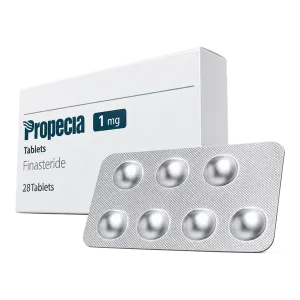
Your order will be securely packed and shipped within 24 hours. This is exactly what your package will look like (images of an actual item sent). It has the size and look of a regular private letter (24x11x0.7 cm) and its contents cannot be seen.
Reviews: Finasteride
Abu Dhabi, used the prescribed 1 mg tablet daily for several months: “Shedding seemed steadier after the early period. I noticed reduced interest in sex and stopped the treatment after discussing it with my doctor. The symptom improved, but the decision was more complicated than I expected.”
Dibba Al-Fujairah, used the prescribed 1 mg tablet daily for several months: “The main benefit was slowing further loss rather than dramatic regrowth. I also had to remind my clinic that I was taking Finasteride before a PSA test.”
Ruwais, used the prescribed 1 mg tablet daily for several months: “I became frustrated during the first months because the hairline looked unchanged. Later photographs suggested less progression, but I developed low mood and sought medical advice instead of continuing automatically.”
Sources
- U.S. Food and Drug Administration (2024). PROPECIA (finasteride) tablets: Prescribing Information
- Electronic Medicines Compendium (2023). Propecia 1 mg film-coated tablets: Summary of Product Characteristics
- Medicines and Healthcare products Regulatory Agency (2024). Finasteride: reminder of the risk of psychiatric side effects and of suicidal ideation