Skip to content
Pradaxa
Active ingredient: Dabigatran etexilate

Pradaxa

Quality products
24/7 Support
Fast delivery
Delivery from 4 days
Select pack Package Per unit Price

Free delivery on orders from AED 860.00, free express delivery from AED 1,290.00

Secure Payments
Track your order
Best price guarantee

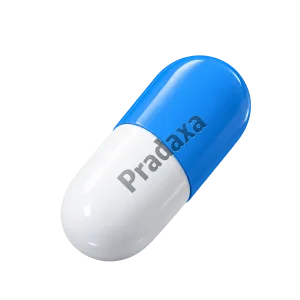
Adults with non-valvular atrial fibrillation or a risk of venous thromboembolism may be prescribed Pradaxa capsules. Its active substance, dabigatran etexilate, directly inhibits thrombin and reduces the formation of harmful blood clots.

Product information

Pradaxa is an oral anticoagulant containing dabigatran etexilate, which is converted in the body to active dabigatran. Dabigatran belongs to the direct oral anticoagulant group, also called DOACs.

Dosage and administration

Pradaxa is taken by mouth as capsules. The regimen depends on the reason for treatment, kidney function, age, bleeding risk, and other medicines.

Pradaxa Dosages and Strengths

Pradaxa is supplied as capsules in different strengths. The precise strength and frequency are selected by the prescriber or anticoagulation service. How much to use and how often depends on the purpose of treatment and is agreed with a doctor or pharmacist.

Treatment decisions may take account of:

  • Atrial fibrillation or venous thromboembolism as the indication.
  • Kidney function measured through creatinine clearance.
  • Age and frailty.
  • Previous gastrointestinal bleeding or other haemorrhage.
  • Use of antiplatelet medicines or P-glycoprotein inhibitors.
  • Recent surgery, invasive procedures, or trauma.
  • The need to change from another anticoagulant.

A standard adult regimen cannot be applied safely to every patient. The same capsule strength may be appropriate for one person and unsuitable for another.

Dabigatran is not adjusted by guessing from a previous prescription. Kidney function can change after dehydration, infection, hospitalisation, or acute illness, so a previously suitable regimen may need review.

Administration Guidelines

Pradaxa capsules are taken orally.

  • Swallow each capsule whole with water.
  • Do not chew, crush, open, or sprinkle the capsule contents over food.
  • The capsules may be taken with or without food.
  • Take doses at consistent times when the prescribed regimen is twice daily.
  • Keep the capsules in their original protective packaging until needed because moisture can affect dabigatran capsules.
  • Do not transfer the capsules into a weekly pill organiser unless a pharmacist has confirmed that the storage arrangement protects them from moisture.

Opening a Pradaxa capsule can substantially increase dabigatran exposure. That may raise the risk of serious bleeding. This is a specific formulation issue, not a minor administration preference.

Patients sometimes open capsules when swallowing is difficult. With Pradaxa, that habit can change the amount absorbed and should be avoided.

Dosage Adjustments for Renal Impairment

Dabigatran is eliminated mainly through the kidneys. Reduced renal clearance can increase drug exposure and prolong anticoagulant activity.

Kidney function is assessed using creatinine clearance, often abbreviated as CrCl. The value is different from a simple serum creatinine result because it also reflects factors such as age, body size, and sex.

Clinical principles include:

  • Severe renal impairment can make dabigatran unsuitable.
  • A creatinine clearance below the relevant threshold is generally a contraindication for atrial fibrillation use under standard product information.
  • Moderate renal impairment may require a reduced regimen or selection of another anticoagulant, depending on the indication and local guidance.
  • Older adults require careful renal assessment because kidney function may decline without obvious symptoms.
  • Acute kidney injury can rapidly increase dabigatran exposure.

Renal testing is relevant before treatment and during longer-term therapy when clinical circumstances change. Vomiting, diarrhoea, poor fluid intake, fever, and hospital admission can all justify earlier review.

The FDA prescribing information links dabigatran exposure and bleeding risk to renal function, especially when kidney clearance is reduced [2].

Ingredients

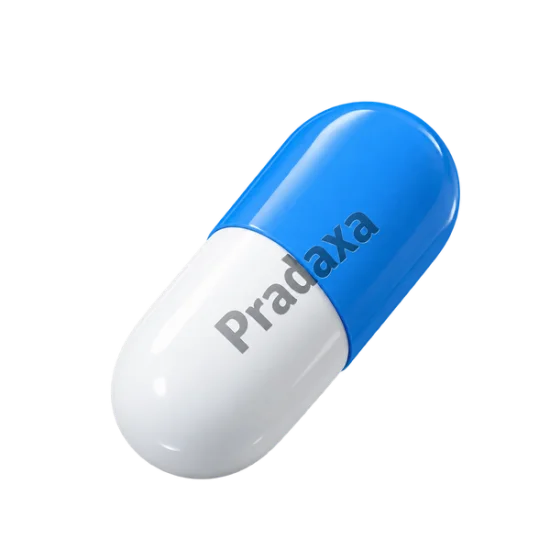
Pradaxa contains dabigatran etexilate, which is converted in the body to active dabigatran. Dabigatran is a direct oral anticoagulant that directly inhibits thrombin and reduces the formation of harmful blood clots.

How it affects the body

Dabigatran is a potent, competitive, reversible direct thrombin inhibitor. Thrombin is an enzyme that changes fibrinogen into fibrin, the protein strands that form the structural mesh of a blood clot.

By inhibiting thrombin, dabigatran reduces several stages of clot formation:

  • Conversion of fibrinogen into fibrin.
  • Growth of an existing fibrin clot.
  • Thrombin-driven amplification of the coagulation cascade.
  • Activity of both free thrombin and thrombin attached within a developing clot.

The effect is anticoagulation rather than dissolution of an established clot. Pradaxa helps reduce new clot formation and clot extension; it does not act as a thrombolytic medicine that rapidly breaks down an existing blockage.

Dabigatran etexilate is the prodrug form. After oral administration, it is converted to dabigatran, the active molecule responsible for thrombin inhibition. The medicine is cleared largely through the kidneys, which explains why renal function has a major role in treatment selection. The European Medicines Agency describes dabigatran as a direct thrombin inhibitor in its Pradaxa product information [1].

Therapeutic indications

Pradaxa has several established anticoagulation uses. The appropriate indication must be confirmed before treatment because the treatment duration and regimen vary substantially between conditions.

Non-valvular atrial fibrillation

Atrial fibrillation creates irregular atrial contractions. Blood can stagnate in the atria, especially in the left atrial appendage, and form a clot that may travel to the brain or another organ.

Dabigatran is used for stroke and systemic embolism prevention in adults with non-valvular atrial fibrillation when anticoagulation is clinically indicated. Risk assessment commonly considers age, previous stroke, heart failure, hypertension, diabetes, vascular disease, and other established factors.

Venous thromboembolism

Venous thromboembolism includes deep vein thrombosis and pulmonary embolism. A deep vein clot often forms in the leg or pelvis. If part of it travels to the lungs, it becomes a pulmonary embolism.

Pradaxa may be used for treatment and prevention of recurrent venous thromboembolism after the initial management phase has been completed with an appropriate anticoagulant plan.

Prevention after orthopaedic surgery

Major hip or knee replacement surgery increases the risk of venous clot formation. Dabigatran may be used for postoperative prophylaxis in selected adults after elective orthopaedic procedures.

The prescription depends on surgical timing, haemostasis, renal function, mobility, and the clinician’s chosen anticoagulation plan.

Common mistakes

Several everyday errors can reduce protection or increase bleeding risk:

  • Opening the capsule because swallowing is difficult.
  • Taking an extra capsule after forgetting whether a dose was taken.
  • Using ibuprofen or naproxen for pain without checking the bleeding risk.
  • Stopping Pradaxa before dental work without an agreed plan.
  • Failing to mention Pradaxa before surgery or an invasive procedure.
  • Assuming that a normal INR means the medicine is inactive.
  • Continuing treatment during a serious illness without reporting dehydration or reduced urine output.
  • Keeping capsules in a humid bathroom.
  • Taking Pradaxa together with another anticoagulant during a transition without clear timing instructions.

If a dose is missed, the correct action depends on how close it is to the next scheduled dose. A missed dose should not automatically be replaced with two capsules.

Keep a written dosing record or use a reminder that records each completed dose. This is more reliable than trying to reconstruct the day from memory after a busy shift or overnight sleep.

When not to use it

Important contraindications and precautions include:

  • Active clinically significant bleeding.
  • A lesion or condition carrying a major risk of serious bleeding.
  • Severe renal impairment.
  • Mechanical prosthetic heart valves.
  • Severe liver disease associated with impaired clotting.
  • A known serious allergic reaction to dabigatran etexilate or a capsule ingredient.
  • Concurrent use of another anticoagulant outside a planned supervised transition.
  • Recent major surgery or invasive procedures without an agreed perioperative plan.

Pradaxa can interact with medicines that affect P-glycoprotein, the transport system involved in dabigatran absorption and elimination. Dronedarone, ketoconazole, ciclosporin, tacrolimus, and some other medicines may require avoidance or careful adjustment, depending on kidney function and the treatment indication.

Bleeding risk rises when Pradaxa is combined with aspirin, clopidogrel, non-steroidal anti-inflammatory drugs, thrombolytics, or another anticoagulant. These combinations may be appropriate in selected cases, but they require a specific clinical reason and monitoring plan.

When this is not for you

This medication is not for you if you have an active pathological bleed, severe renal impairment that falls below the permitted threshold, or a mechanical prosthetic heart valve requiring a different anticoagulation strategy.

Pregnancy and breastfeeding require an individual anticoagulation assessment. Dabigatran is not automatically the preferred option in pregnancy.

Possible side effects

Bleeding is the main safety concern with Pradaxa. It can occur from the nose, gums, urinary tract, digestive tract, skin, or another site.

Common or clinically recognised adverse effects include:

  • Dyspepsia, meaning indigestion or upper-abdominal discomfort.
  • Heartburn-like symptoms.
  • Easy bruising.
  • Nosebleeds.
  • Gum bleeding.
  • Anaemia caused by blood loss.
  • Blood in the urine.
  • Gastrointestinal bleeding.

Dyspepsia can be frustrating because it may appear as burning, reflux, or a heavy feeling after taking a capsule. Taking the capsule with food may reduce stomach discomfort for some people, while the anticoagulant effect remains active.

Seek urgent medical attention for:

  • Vomiting blood or material resembling coffee grounds.
  • Black, tarry stools.
  • Red urine or heavy vaginal bleeding.
  • Severe or persistent headache.
  • Sudden weakness, confusion, speech difficulty, or collapse.
  • Bleeding that does not stop with firm pressure.
  • A fall or blow to the head while anticoagulated.
  • Severe allergic swelling, breathing difficulty, or widespread rash.
A small bruise is not equivalent to a major haemorrhage, but rapidly enlarging bruises, repeated nosebleeds, or unusual tiredness can signal clinically relevant blood loss and need review.

Comparison

Anticoagulants differ in their targets, monitoring requirements, duration of action, and reversal options. The best choice depends on the clinical setting rather than on a single feature.

Anticoagulant approach Main pharmacological feature Monitoring and reversal considerations
Pradaxa, dabigatran Direct thrombin inhibitor; oral administration Routine INR monitoring is not used; idarucizumab is a specific reversal agent for dabigatran
Apixaban or rivaroxaban Direct factor Xa inhibitors; oral administration Routine INR monitoring is not used; reversal strategy depends on the medicine and clinical setting
Warfarin Vitamin K antagonist; oral administration Regular INR testing is required; vitamin K and clotting-factor replacement may be used when clinically indicated

Warfarin has a longer-established monitoring system and can be adjusted using INR results. It is still used in clinical situations where a DOAC is unsuitable, including certain mechanical heart valve settings.

Dabigatran has a specific reversal agent, idarucizumab, which binds dabigatran and neutralises its anticoagulant effect. Emergency reversal is reserved for serious bleeding or urgent procedures under hospital supervision.

Heparin, enoxaparin, and dalteparin are injectable anticoagulants. They may be preferred during pregnancy, around some procedures, during hospital treatment, or when rapid adjustment is required.

What doctors say

In clinical practice, doctors focus first on the reason anticoagulation is needed and the patient’s bleeding risk. A medicine that protects against stroke can cause harm if kidney function, interacting medicines, or active bleeding are overlooked.

A physician will usually want to establish:

  • The diagnosis requiring anticoagulation.
  • Previous bleeding and anaemia.
  • Kidney and liver function.
  • Current prescription and non-prescription medicines.
  • Any planned dental work, endoscopy, surgery, or invasive procedure.
  • Whether the patient can swallow capsules whole.
  • The patient’s ability to follow a regular schedule.

The RE-LY trial established important evidence for dabigatran in atrial fibrillation, while later regulatory guidance has refined patient selection, renal restrictions, and bleeding management [3].

A practical clinical point is that routine INR testing does not measure Pradaxa activity in the same way it measures warfarin. A normal INR does not prove that dabigatran has no anticoagulant effect. In an emergency, clinicians may use specialised laboratory tests alongside the timing of the last dose and kidney function.

Comparison

Plavix

Active ingredient: Clopidogrel
75mg
From AED 219.30
pills
4.3 (4)

Pradaxa Current

Active ingredient: Dabigatran etexilate
110mg 150mg 75mg
From AED 460.10
capsules
4 (5)

Prasugrel

Active ingredient: Prasugrel
10mg 5mg
From AED 331.10
pills
4.1 (5)

Comparison table: Blood thinners

Common questions

Does Pradaxa cause stomach pain or indigestion?

Dyspepsia and upper-abdominal discomfort are recognised adverse effects of dabigatran. The EMA product information, revised in 2023, describes gastrointestinal symptoms and bleeding as important safety considerations for Pradaxa in adults. Taking the capsule with food may help some people tolerate the medicine, but opening or chewing the capsule is unsafe. Persistent pain, black stools, vomiting blood, or marked weakness requires urgent assessment. Patients should report persistent digestive symptoms to their prescriber or pharmacist.

Can alcohol be used while taking Pradaxa?

Alcohol does not provide reliable protection from clotting and can increase bleeding risk when consumed heavily with an anticoagulant. The WHO’s 2023 alcohol guidance supports limiting alcohol exposure because alcohol can contribute to falls, liver injury, poor adherence, and bleeding-related harm. Occasional alcohol may be assessed differently from repeated heavy drinking, but binge drinking is unsafe during anticoagulation.

What is the best time of day to take Pradaxa?

The best time is the schedule prescribed for the indication, taken consistently each day. The EMA describes dabigatran as an oral medicine that may be taken with or without food, while the interval between doses should remain as even as practical . A morning-and-evening routine may help when the prescription requires twice-daily administration. The capsule should be swallowed whole with water.

What should happen after a missed Pradaxa dose?

A missed dose should be handled according to the time remaining before the next scheduled dose. The FDA Pradaxa prescribing information states that a missed dose may be taken when remembered if the next dose is not close; two doses should not be taken together . The correct interval can depend on the prescribed schedule, so uncertainty should be resolved through the prescribing service or pharmacist rather than corrected with an extra capsule.

What happens when Pradaxa is stopped, and does it need tapering?

Pradaxa does not usually require a gradual taper in the way some medicines do. The concern is the loss of anticoagulant protection after stopping, which can raise the risk of stroke or recurrent venous thromboembolism if the underlying indication remains active. NICE guidance published in 2021 supports planned transitions between anticoagulants when treatment must continue, rather than unsupervised interruption .

Can Pradaxa affect driving, concentration, or machinery work?

Pradaxa does not usually impair concentration in the manner of a sedative. The EMA product information does not identify routine driving impairment as a direct pharmacological effect of dabigatran . Driving or machinery work becomes unsafe if bleeding causes dizziness, weakness, fainting, severe anaemia, or neurological symptoms. A fall or head injury while anticoagulated requires prompt medical assessment, even when the person initially feels well.

Do you offer anonymous delivery?

Your order will be securely packed and shipped within 24 hours. This is exactly what your package will look like (images of an actual item sent). It has the size and look of a regular private letter (24x11x0.7 cm) and its contents cannot be seen.

Reviews: Pradaxa

4
Based on 5 reviews
Omar, 45 Bur Dubai After several weeks
Verified
Rating: 5 out of 5

Bur Dubai, described taking Pradaxa for atrial fibrillation. After several weeks, he felt reassured by the regular routine and had no major bleeding, although mild indigestion appeared after some doses.

8 Oct 2026
Ahmed N., 60 Dibba Al-Fujairah
Verified
Rating: 3.5 out of 5

Dibba Al-Fujairah, reported that the treatment fitted easily into his morning and evening schedule. He disliked bruising on his forearms and arranged a medication review rather than stopping the capsules himself.

18 Oct 2026
Vikram R., 49 Al Nahda
Verified
Rating: 4 out of 5

Al Nahda, used Pradaxa during treatment for a venous clot. He said the capsules were simple to swallow and felt less anxious once the purpose of anticoagulation had been explained, though occasional nosebleeds were inconvenient.

20 Oct 2026
Arjun, 27 Hatta The first part of treatment
Verified
Rating: 3.5 out of 5

Hatta, found the first part of treatment difficult because of stomach discomfort. Symptoms improved when he took the capsule with a meal, but he still needed advice about painkillers after a sports injury.

30 Oct 2026
Rajesh R., 48 Fujairah
Verified
Rating: 4 out of 5

Fujairah, had been changed from another anticoagulant. He appreciated not needing routine INR appointments, yet found the transition stressful because the timing of the final old medicine and first Pradaxa dose had to be followed precisely.

5 Nov 2026

Sources

  1. European Medicines Agency (2023). Pradaxa: European public assessment report and product information.
  2. U.S. Food and Drug Administration (2024). Pradaxa (dabigatran etexilate mesylate) Prescribing Information.
  3. New England Journal of Medicine (2009). Dabigatran versus Warfarin in Patients with Atrial Fibrillation.
Get our free app Shop faster and track your orders 3.9 · 576 reviews Install