Deira, gave his dog the prescribed dose for 5 days after a veterinary assessment: “The course was easy to administer when mixed as directed. His appetite improved during the following week, but the veterinarian still requested a stool check rather than assuming the problem was solved.”
Fenbendazole
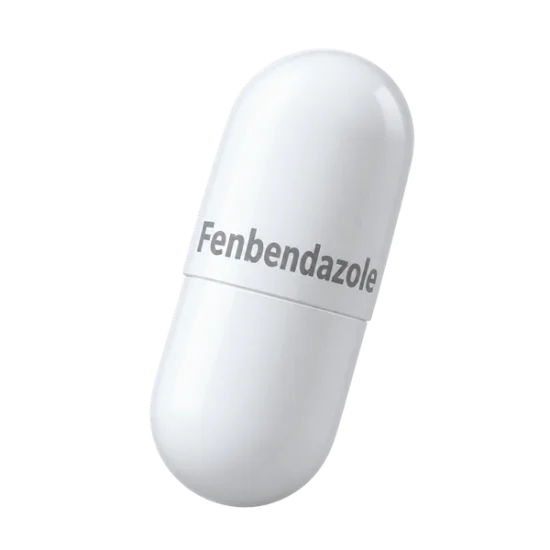
Fenbendazole capsules are intended for veterinary parasite control in animals. Their benzimidazole action interferes with tubulin and microtubule formation, disrupting the parasite’s energy metabolism.
Product information
Fenbendazole disrupts the energy metabolism of intestinal worms and other susceptible parasites. Fenbendazole capsules are intended for veterinary parasite control, with use determined by the animal species, body weight, parasite, and veterinary treatment plan. Its benzimidazole action interferes with tubulin and microtubule formation inside the parasite.
Dosage and administration
Fenbendazole capsules are administered orally to the animal. The amount and frequency depend on the purpose of use and are agreed with a doctor or pharmacist. For veterinary treatment, the responsible professional should match the regimen to the animal species, body weight, parasite diagnosis, and product instructions.
Do not estimate the dose by copying a schedule intended for another species. A capsule is not automatically suitable for every dog, cat, horse, farm animal, or exotic species.
Practical administration points include:
- Confirm the animal species before treatment.
- Weigh the animal as accurately as possible.
- Use the prescribed number of capsules and treatment days.
- Give the capsules by the intended oral route.
- Avoid opening, crushing, or mixing capsules unless the veterinary professional has confirmed that method.
- Record each administered dose to prevent accidental duplication.
- Arrange reassessment when symptoms continue after the planned course.
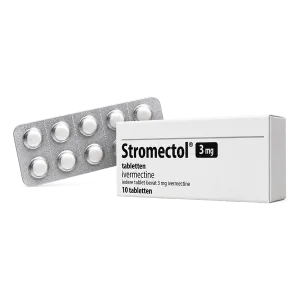
For equine paste systems, oral syringes are calibrated for weight-based dosing. A syringe delivering 120 mg of ivermectin may be designed for a specific body-weight range, but that does not determine the correct use of fenbendazole capsules. Paste and capsule formulations should be treated as separate dosage systems.
Common Administration Errors
A missed dose should not be replaced automatically with a double dose. The correct response depends on the product schedule, the animal species, and the time since the missed administration.
How it affects the body
Fenbendazole belongs to the benzimidazole class of anthelmintics. Veterinary clinicians use this class against selected gastrointestinal nematodes and other susceptible internal parasites in animals. Fenbendazole capsules are not a human deworming treatment, and people should not take them for self-treatment.
The drug binds to tubulin, a structural protein required for microtubule formation. Microtubules support cell division, nutrient absorption, and intracellular transport inside the parasite. When these structures are disrupted, the worm cannot maintain normal cellular activity. This disruption can reduce nutrient use and cellular renewal. The resulting damage contributes to loss of parasite viability.
Cellular Disruption and Energy Depletion
Fenbendazole interferes with the energy metabolism of the parasite in several connected steps:
- Tubulin binding damages the parasite’s microtubule system.
- Nutrient uptake becomes impaired.
- Cellular transport and division slow down.
- Glycogen and energy reserves become depleted.
- The parasite loses its ability to maintain vital functions and is eliminated from the gastrointestinal tract.
The process is selective because benzimidazoles bind more strongly to parasite tubulin than to mammalian tubulin. The precise activity depends on the parasite species, developmental stage, treatment schedule, and susceptibility pattern. Veterinary references describe fenbendazole and related compounds as broad-spectrum anthelmintics, though “broad-spectrum” does not mean that every parasite responds to every course.[1]
Therapeutic indications
Fenbendazole-sensitive parasites can include selected gastrointestinal nematodes in horses and other veterinary species. The exact approved spectrum depends on the product, host animal, parasite strain, and jurisdiction.
In equine parasite control, veterinary discussions may include:
- Pinworms, including Oxyuris equi
- Strongyloides westeri
- Trichostrongylus axei
- Parascaris equorum
- Large strongyles
- Other susceptible gastrointestinal strongyles
- Selected lungworms in appropriate veterinary protocols
Fenbendazole does not automatically control cestodes. Tapeworms require an active ingredient with established cestocidal activity, such as praziquantel in suitable equine products. The same distinction applies to bots and some parasite stages, which may require another drug class or a different treatment plan.
Developmental Stages and Species Differences
Activity against adult and larval stages can vary. Some treatments act well against adult intestinal worms but provide limited activity against encysted or inhibited stages. This is one reason why a veterinary examination and parasite assessment can be more useful than repeating the same anthelmintic on a fixed calendar.
Parascaris equorum deserves special attention in young horses because resistance to benzimidazoles has been reported in some populations. Strongyles also vary in susceptibility between farms and regions. A negative or low fecal egg count does not prove that every parasite stage has been removed.
Common mistakes
Several practical mistakes can lead to poor results:
- Giving a horse dose to a dog or another animal.
- Using the animal’s estimated weight instead of a measured weight.
- Treating every symptom as a worm infection.
- Repeating fenbendazole after treatment failure without testing for resistance.
- Assuming that fenbendazole controls tapeworms, bots, and every roundworm species.
- Combining fenbendazole with ivermectin or praziquantel without a defined veterinary plan.
- Giving a second dose after the animal spits out part of the first dose without estimating what was swallowed.
- Failing to record treatment dates.
- Ignoring persistent symptoms after parasites should have responded.
- Using a veterinary product for a person.
When not to use it
Veterinary treatment also requires caution when:
- The animal has a known hypersensitivity to benzimidazoles.
- The animal is severely ill, dehydrated, or unable to swallow.
- The animal is pregnant or nursing and the species-specific safety information does not support use.
- The animal is very young or significantly underweight.
- Severe liver disease or unexplained weight loss is present.
- The animal is receiving several medicines with overlapping gastrointestinal or hepatic effects.
- The suspected parasite may be resistant to fenbendazole.
- The diagnosis is uncertain and symptoms could reflect obstruction, poisoning, infection, or another urgent condition.
Specific drug interactions depend on the animal and concurrent medicines. A veterinary professional should review the complete treatment list before administration, especially when the animal receives corticosteroids, immunosuppressants, anticonvulsants, or other medicines that affect the liver.
When this is not for you
Fenbendazole is not suitable for you if you are considering taking a veterinary capsule for a human illness. Human self-treatment is not an established use, and veterinary capsules should not be substituted for a human-prescribed antiparasitic medicine.
Possible side effects
Veterinary anthelmintics can cause adverse effects even when used for an appropriate indication. Fenbendazole may be tolerated by many animals, but gastrointestinal upset, reduced appetite, vomiting, diarrhoea, or lethargy can occur. The risk profile changes with species, age, health status, dose, parasite burden, and concurrent treatment.
In heavily infected animals, clinical deterioration can sometimes reflect parasite death, intestinal inflammation, obstruction, or another disease rather than a simple medicine reaction. Persistent diarrhoea or weakness needs assessment rather than repeated deworming.
More serious concerns include:
- Marked weakness or collapse
- Facial swelling or breathing difficulty
- Repeated vomiting
- Bloody diarrhoea
- Severe abdominal pain or colic
- Neurological signs
- Inability to eat or drink
- Sudden deterioration in a young or debilitated animal
Use in pregnancy, lactation, very young animals, or animals with liver disease requires species-specific veterinary assessment. The Merck Veterinary Manual describes anthelmintic selection as dependent on parasite biology, host factors, and resistance, rather than on a single universal schedule.[3]
Comparison
Veterinarians compare anthelmintics by parasite target, resistance status, duration of activity, and the animal’s treatment history. Fenbendazole is a benzimidazole. Moxidectin and ivermectin belong to the macrocyclic lactone class. Praziquantel is used mainly for cestodes.
| Class or active substance | Primary target | Practical limitation |
|---|---|---|
| Fenbendazole | Susceptible nematodes | Resistance can reduce activity |
| Ivermectin or moxidectin | Several susceptible nematodes and arthropods | Resistance and toxicity risks require species-specific dosing |
| Praziquantel | Cestodes and tapeworms | Does not replace a nematode-focused treatment |
Benzimidazoles can be useful when the local parasite population remains susceptible. Macrocyclic lactones offer a different mechanism and may cover parasite groups outside the usual benzimidazole range. Praziquantel fills a different role because its principal target is the tapeworm group.
Rotation between drug classes should not mean changing products without evidence. Repeated exposure to one class can select resistant parasites, while unnecessary switching may provide no benefit. Veterinary parasite-control guidance supports treatment decisions based on fecal egg count data, animal risk, age, pasture conditions, and known local resistance.
Moxidectin may provide longer residual activity than some other options, yet longer activity also creates prolonged selection pressure when resistant parasites are present. The choice therefore involves trade-offs, not a universal ranking of one class above another.
Combination Anthelmintic Formulations and Multi-Active Treatments
Fenbendazole is one anthelmintic class. Other veterinary products combine different active substances to cover parasite groups that respond through different biological mechanisms. A combination treatment may include a benzimidazole, a macrocyclic lactone such as ivermectin, or praziquantel, though these ingredients are not interchangeable and should not be combined without veterinary direction.
Fenbendazole targets tubulin and energy use inside susceptible nematodes. Ivermectin acts on glutamate-gated chloride channels and related neuromuscular pathways in susceptible parasites. This can produce neuromuscular blockage, paralysis, and death of the parasite. Praziquantel acts mainly against cestodes, including tapeworms, by disrupting the integrity of their tegument and disturbing calcium regulation.
| Active substance | Main mechanism | Main parasite group |
|---|---|---|
| Fenbendazole | Tubulin disruption and energy depletion | Susceptible nematodes |
| Ivermectin | Neuromuscular chloride-channel effects | Several nematodes and arthropods |
| Praziquantel | Tegument injury and calcium disturbance | Cestodes, including tapeworms |
Synergistic Action of Ivermectin and Praziquantel
A multi-active equine formulation can broaden parasite coverage when its ingredients have complementary targets. Ivermectin may address susceptible roundworms, bots, and other organisms, while praziquantel is used for cestodes. Fenbendazole contributes activity against susceptible nematodes.
This does not mean that every three-ingredient product has the same spectrum. Product-specific dosing, species restrictions, age limits, and resistance patterns remain decisive. A formulation containing 120 mg of ivermectin, for example, cannot be treated as equivalent to a fenbendazole capsule or used as a substitute without matching the animal’s weight and veterinary instructions.
The American Association of Equine Practitioners recommends targeted parasite control rather than routine, indiscriminate treatment of every horse at identical intervals. Fecal egg counts and local resistance patterns help guide the choice of active ingredient.[2]

What doctors say
In clinical practice, veterinarians usually focus on three questions: which parasite is present, whether the animal needs treatment now, and whether the selected active ingredient remains useful on that property or in that region.
A fecal egg count can support treatment decisions, but it does not detect every parasite stage or every possible cause of gastrointestinal disease. A horse with weight loss, colic, coughing, poor coat quality, or persistent diarrhoea may need diagnostic testing beyond a dewormer.
Veterinary prescribing patterns have moved away from automatic whole-herd or whole-yard treatment at fixed short intervals. Targeted treatment reduces unnecessary exposure and helps preserve activity against susceptible parasites. The WHO is not the primary authority for individual veterinary dosing; species-specific regulatory information and veterinary parasitology guidance are more appropriate for this product category.[4]
Comparison
Common questions
How long does one dose of Fenbendazole keep working?
Fenbendazole does not provide one fixed duration of protection for every animal or parasite. Its activity depends on the species, parasite stage, treatment schedule, and reinfection pressure from the environment. Veterinary guidance from the AAEP in 2024 supports targeted parasite management rather than assuming that one dose prevents future infection. A new exposure can occur soon after treatment.
What should happen if the expected result does not come?
Do not automatically repeat the course or increase the amount. The parasite may be resistant, the diagnosis may be incorrect, or the animal may have another gastrointestinal condition. The American Association of Equine Practitioners (AAEP) guidance from 2025 supports reassessment with fecal testing and, where appropriate, a fecal egg count reduction test. Severe weakness, colic, breathing difficulty, or bloody diarrhoea requires urgent veterinary care.
Can Fenbendazole be used in animals under 18 months?
Age limits are species-specific, so there is no single answer for every young animal. Puppies, foals, kittens, calves, and other juvenile animals have different dosing, safety, and parasite risks. The EMA’s 2024 veterinary-medicine information evaluates products according to the target species and approved indication, rather than applying one age rule across all animals. A young animal with diarrhoea, poor growth, or weakness needs a defined veterinary plan.
Can alcohol be used while taking Fenbendazole?
Alcohol should not be given to animals at any time. For people, veterinary fenbendazole is not an appropriate self-treatment, so alcohol-combination advice does not establish human safety. The FDA’s 2024 veterinary-drug guidance focuses instead on species, dose, concurrent medicines, and liver health. Keep the animal away from alcoholic drinks and alcohol-containing household products.
Which diet, exercise, or habits help or hinder the result?
Accurate weighing, hygienic manure management, appropriate pasture practices, and treatment records support parasite control. Exercise does not remove intestinal worms and should be reduced when an animal is weak, painful, dehydrated, or showing colic signs. Feeding changes should follow veterinary advice, especially when vomiting or diarrhoea is present. The AAEP’s 2024 guidance supports combining management practices with targeted anthelmintic use.
Which symptoms mean stopping and seeking urgent help?
Stop further dosing and seek urgent veterinary care for collapse, breathing difficulty, facial swelling, repeated vomiting, severe abdominal pain, colic, bloody diarrhoea, seizures, or marked weakness. These signs may indicate an allergic reaction, toxicity, obstruction, severe infection, or another emergency. The FDA’s 2024 veterinary drug safety framework requires adverse-event assessment in the context of species and product use. Do not give a replacement dose while severe symptoms are developing.
Do you offer anonymous delivery?
Your order will be securely packed and shipped within 24 hours. This is exactly what your package will look like (images of an actual item sent). It has the size and look of a regular private letter (24x11x0.7 cm) and its contents cannot be seen.
Reviews: Fenbendazole
Ruwais, used the prescribed dose for 5 days as part of a veterinary parasite plan for a horse: “The horse tolerated the treatment, with only softer manure for a short time. The follow-up count was more useful than the first impression because the stable had seen worming failures before.”
Mussafah, used the prescribed dose for 5 days and reported a mixed experience: “I expected the stomach symptoms to disappear immediately. They did not, and repeating the capsules was not advised. Further testing showed that worms were not the only possible cause.”
Bur Dubai, administered the prescribed dose for 5 days to an older animal: “The capsules were accepted with the approved feeding method, and there was no obvious reaction. The veterinarian adjusted the plan around the animal’s weight and other medicines.”
Dubai Marina, used the prescribed dose for 5 days in a parasite-control schedule based on testing: “The first course did not produce the expected change. The later fecal egg count suggested reduced sensitivity, so the clinician selected another treatment approach.”
Sources
- FDA (2024). Animal Drugs @ FDA — fenbendazole veterinary product labeling
- American Association of Equine Practitioners (2024). Internal Parasite Control Guidelines
- Merck Veterinary Manual (2025). Anthelmintic Drugs in Animals
- World Health Organization (2017). Guideline: preventive chemotherapy to control soil-transmitted helminth infections in at-risk population groups