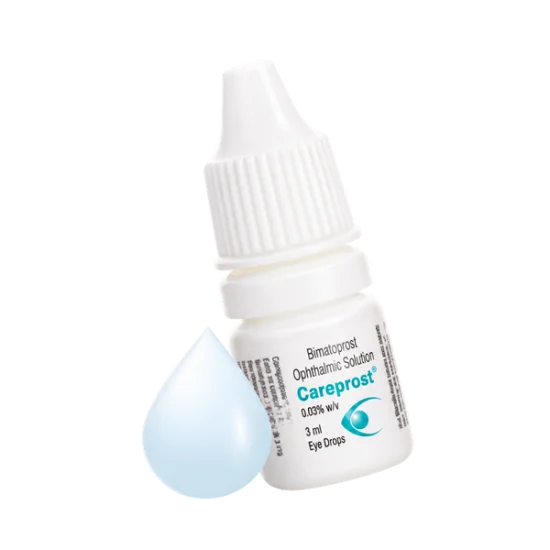
My lashes looked longer by the second month, not in the first few weeks as I expected. I used a very small amount at night and stopped getting solution on my cheek after switching to a thin applicator.
Bimatoprost, the active ingredient of Careprost, is a prostamide eye-drop treatment used in ophthalmology to lower raised intraocular pressure. It is also used under specialist direction for sparse eyelashes because it can extend the eyelash growth phase, leading to longer, fuller and darker lashes over time.
Product information
Bimatoprost, the active ingredient of Careprost, is a prostamide eye-drop treatment used in ophthalmology to lower raised intraocular pressure. It is also used under specialist direction for sparse eyelashes because it can extend the eyelash growth phase, leading to longer, fuller and darker lashes over time.
Dosage and administration
Careprost has two very different clinical contexts: lowering eye pressure and specialist-directed management of eyelash hypotrichosis. The route, target area and monitoring needs differ.
- For raised intraocular pressure: the prescribed amount is placed into the conjunctival sac, the small space between the lower eyelid and the eye. The lower eyelid is gently pulled down to create this space.
- For eyelash growth: solution is placed along the skin of the upper eyelid margin using a sterile single-use applicator when directed by an eye specialist.
- For both uses: wash hands before application and avoid allowing the bottle tip to touch the eye or surrounding skin.
- For contact lenses: remove lenses before use. Reinsert them only after at least 15 minutes, because preservatives in ophthalmic solutions may be absorbed by soft lenses.
- For missed applications: do not compensate with extra drops. Resume the planned regimen at the next usual application.
| Treatment purpose | Application site | Main clinical aim |
|---|---|---|
| Ocular hypertension or glaucoma | Conjunctival sac | Lower intraocular pressure |
| Eyelash hypotrichosis | Upper eyelid margin | Support lash length, thickness and darkness |
A common mistake is placing eyelash solution on the lower eyelid. It can migrate into the eye and does not improve eyelash results. Another mistake is applying more because progress seems slow. More solution does not accelerate follicle cycling and can increase local irritation.
Ingredients
Careprost is a sterile ophthalmic solution containing bimatoprost. Bimatoprost belongs to the ocular prostaglandin analogs, a group of medicines that reduce intraocular pressure by improving fluid drainage from the eye.
The term prostamide describes bimatoprost’s pharmacological activity. It acts on receptors involved in the movement of aqueous humour, the fluid produced inside the eye. When this fluid drains more effectively, eye pressure falls.
For ophthalmic use, bimatoprost is prescribed for ocular hypertension and open-angle glaucoma. Raised pressure can damage the optic nerve gradually and may do so without pain or early visual symptoms. The European Glaucoma Society lists prostaglandin-related eye drops among the principal topical options for lowering intraocular pressure. [1] The National Institute for Health and Care Excellence (NICE) also addresses pressure-lowering treatment in glaucoma.
Active ingredient profile
Bimatoprost is a topical prostamide with two clinically relevant effects. Inside the eye, it supports aqueous-humour outflow. At the eyelash margin, it can influence follicle activity and pigmentation.
Careprost is supplied in a bottle as ophthalmic drops. The intended regimen is set individually by the treating eye specialist, since the appropriate approach differs between pressure management and eyelash treatment.
How it affects the body
Eyelashes follow a repeating cycle: anagen is the active growth stage, catagen is the transition stage, and telogen is the resting and shedding stage. Bimatoprost can prolong anagen and increase the proportion of follicles remaining in active growth.
The visible change is gradual. Existing lashes need time to grow longer, while new lashes enter and remain in anagen for longer. Some people also notice darker lashes, probably because bimatoprost can increase melanin production within the hair follicle.
Local vascular supply and follicular signalling may both contribute to this response. The mechanism is not simply increased blood flow; the key clinical effect is altered eyelash-cycle behaviour. The FDA prescribing information for bimatoprost used in eyelash hypotrichosis describes increased lash length, thickness and darkness with continued topical use. [2]
Therapeutic indications
For ophthalmic use, bimatoprost is prescribed for ocular hypertension and open-angle glaucoma.
It is also used under specialist direction for sparse eyelashes because it can extend the eyelash growth phase, leading to longer, fuller and darker lashes over time.
Common mistakes
Several avoidable habits reduce tolerability or create uneven results.
- Using more than directed: extra solution may run onto surrounding skin and does not make lashes grow faster.
- Treating redness as proof that the drops are working: persistent redness is an adverse effect, not a treatment target.
- Sharing a bottle: ophthalmic solutions are personal medical products. Sharing can spread infectious organisms.
- Touching the dropper to the eye: this can contaminate the bottle and irritate the cornea.
- Applying drops over makeup: residue may carry solution away from the lash line and increase skin exposure.
- Stopping glaucoma treatment when the eye feels normal: high intraocular pressure is often silent.
- Ignoring iris or eyelid colour changes: these should be documented and discussed with an ophthalmologist.
One useful habit is to take a clear baseline photograph of the eye area before specialist-directed eyelash treatment begins. It makes gradual pigmentation, eyelid contour changes or uneven lash growth easier to recognise.
When not to use it
- active eye infection, including conjunctivitis or eyelid infection;
- uveitis or previous recurrent eye inflammation;
- a damaged cornea, severe dry eye or corneal disease;
- absent natural lens, torn posterior lens capsule or recognised risk factors for macular oedema;
- pregnancy or breastfeeding;
- current treatment with another prostaglandin analog eye drop;
- use of eye-pressure medicines, where combined effects need monitoring;
- recent eye surgery or a planned ophthalmic procedure.
Using two prostaglandin-related drops together can produce unpredictable pressure effects and more local adverse reactions. People using several eye medicines should separate them by at least five minutes unless their ophthalmologist gives a different schedule.
When this is not for you
Careprost is not for you if you have had a serious allergy to bimatoprost or another ingredient in the ophthalmic solution.
Possible side effects
The most common local effect of bimatoprost is conjunctival hyperaemia, meaning visible eye redness from widened surface blood vessels. Burning, itching, dryness, tearing, a foreign-body sensation and blurred vision shortly after instillation can also occur.
Periorbital pigmentation may develop with repeated exposure around the eyelids. Skin at the application area can become darker. Bimatoprost may also cause longer, denser or darker eyelashes, including in unintended areas exposed to the solution.
Iris pigmentation is the safety point that deserves special attention. Brown pigment within the coloured part of the eye may increase gradually, especially in people with mixed-colour irises. This change can be permanent even after treatment ends. The EMA product information for bimatoprost also describes potential changes to eyelid tissues and the area around the eye. [3]
Possible effects include:
- eye redness or irritation;
- itching of the eyelids or eye surface;
- dry-eye discomfort;
- temporary blurred vision after application;
- eyelid or surrounding-skin darkening;
- increased eyelash growth;
- deepening of the upper eyelid sulcus, making the eye area appear more hollow in some long-term users;
- unequal cosmetic changes if only one eye receives treatment.
Seek urgent ophthalmic assessment for eye pain, a marked fall in vision, light sensitivity, pus-like discharge, severe swelling, a suspected allergic reaction, or a sudden new visual disturbance. These symptoms need assessment because they can indicate infection, inflammation, corneal injury or a pressure-related problem rather than routine drop irritation.
Comparison
Bimatoprost-based eye drops are pharmacologically related to other prostaglandin-pathway treatments used for glaucoma. The practical distinction is usually the intended treatment target rather than a completely different biological action.
| Approach | Main mechanism | Typical clinical focus |
|---|---|---|
| Bimatoprost ophthalmic solution | Enhances aqueous-humour outflow; affects eyelash follicles | Raised intraocular pressure and specialist-directed eyelash treatment |
| Other prostaglandin analog eye drops | Enhance aqueous-humour outflow through related pathways | Raised intraocular pressure |
| Non-prostaglandin pressure-lowering drops | Reduce fluid production or improve drainage by another route | Raised intraocular pressure when clinically appropriate |
For glaucoma, the preferred medicine depends on baseline eye pressure, optic-nerve findings, corneal health, other eye drops, asthma history, heart rhythm and tolerability. Bimatoprost is often chosen for strong pressure-lowering potential, though redness and periocular changes can limit comfort for some users.
For eyelashes, the response is cosmetic and temporary. Lashes gradually return toward their previous appearance after treatment stops because the follicle cycle is no longer being extended. This differs from glaucoma care, where stopping a pressure-lowering drop can allow intraocular pressure to rise again.
What doctors say
Eye specialists focus first on the reason for treatment. For glaucoma or ocular hypertension, the target is sustained pressure reduction with regular assessment of the optic nerve and visual field. A pressure reading that improves once does not establish long-term protection.
For eyelashes, clinicians usually set expectations around gradual change rather than rapid transformation. The product works through the hair-growth cycle, so early over-application is a frequent source of irritation without better results.
Doctors also watch for a detail that is easy to miss in a mirror: deepening of the eyelid crease or loss of fullness around the eye. This can be subtle at first. Reporting changes early allows the treatment plan to be reviewed before cosmetic effects become more pronounced. Baseline photographs can help clinicians compare subtle changes over time. Patients should report new asymmetry or hollowing at follow-up.
The WHO identifies glaucoma as a major cause of irreversible vision loss, which is why pressure-lowering treatment needs consistent ophthalmic follow-up rather than symptom-based use. [4]
Comparison
Common questions
Is Careprost suitable for people under 18?
Careprost should only be used in people under 18 when an ophthalmologist has made an individual clinical decision. Bimatoprost has established ophthalmic uses, yet cosmetic eyelash treatment in minors needs extra caution because eye development, diagnosis and treatment goals differ. The FDA’s 2023 bimatoprost prescribing information limits eyelash-hypotrichosis use to adults. A child or teenager with raised eye pressure needs specialist assessment rather than self-directed drop use.
How long does one Careprost application keep working?
The local pharmacological effect begins after application, but the clinically relevant duration depends on why bimatoprost is being used. For intraocular pressure, it is prescribed as a regular regimen because pressure control must be maintained over time. For eyelashes, one application does not create an immediate visible change; follicles respond across repeated growth cycles. EMA product information updated in 2024 describes bimatoprost as a long-term ophthalmic treatment requiring adherence to the prescribed schedule.
What happens after stopping Careprost, and is tapering needed?
Eyelash changes gradually diminish after stopping because follicles return to their usual growth-cycle pattern. Tapering is generally not required for cosmetic eyelash use, though the individual plan should come from the clinician supervising treatment. For glaucoma or ocular hypertension, stopping may allow intraocular pressure to rise again, so treatment should not be discontinued without an ophthalmologist’s plan. The European Glaucoma Society’s 2021 guidance treats ongoing pressure control as central to preventing optic-nerve damage.
How soon do Careprost results become noticeable?
For eyelash use, early visible changes commonly require several weeks because lashes must complete part of their anagen growth phase. More obvious improvement may take months of consistent, carefully targeted application. For eye pressure, the response is measured with tonometry rather than judged by how the eye feels, since raised pressure often causes no symptoms. The FDA documented eyelash changes over a structured treatment period in its 2023 prescribing information.
What should be discussed with a doctor before starting Careprost?
Discuss glaucoma, ocular hypertension, uveitis, dry eye, previous eye surgery, corneal disease, contact-lens use and every eye medicine currently used. Mention mixed-colour irises, because iris darkening may be permanent. Pregnancy, breastfeeding and a history of macular oedema also need individual assessment. The WHO’s 2019 World report on vision emphasises early specialist assessment for conditions that threaten sight, including glaucoma. [4]
Can Careprost affect driving, concentration or work with machinery?
Bimatoprost does not usually impair concentration directly, but temporary blurred vision may occur immediately after application. Do not drive, operate machinery or perform visually demanding work until vision is clear. If blur persists, pain develops, or vision changes repeatedly after use, urgent eye assessment is appropriate. EMA product information from 2024 lists transient visual disturbance among effects that can affect practical tasks after instillation.
Which symptoms mean Careprost should be stopped and reviewed urgently?
Stop using the drops and seek urgent medical review for severe eye pain, sudden vision loss, intense light sensitivity, marked swelling, facial rash, breathing difficulty, injury to the eye or discharge suggesting infection. A painful red eye with reduced vision is not a routine adjustment effect. New flashes, floaters or a curtain-like shadow in vision also require urgent assessment. The WHO’s 2019 World report on vision stresses the importance of prompt evaluation for acute visual symptoms.
Do you offer anonymous delivery?
Your order will be securely packed and shipped within 24 hours. This is exactly what your package will look like (images of an actual item sent). It has the size and look of a regular private letter (24x11x0.7 cm) and its contents cannot be seen.
Reviews: Careprost
The pressure readings improved at my follow-up visits. My eyes were red in the mornings during the first fortnight, then it settled, although I still used lubricating drops at a separate time.
There was a visible difference, but I developed mild darkening near one eyelid because I was not wiping away excess liquid. The change faded slowly after I became more careful.
I noticed longer lashes around week nine and needed less mascara. I found that applying it after skincare was a mistake because it spread too easily, so I changed the order.
I did not feel pressure in my eyes before treatment, so consistency took effort. The routine became easier when I linked it to brushing my teeth, and my ophthalmologist monitored the redness and eye pressure.
Sources
- European Glaucoma Society (2021). Terminology and Guidelines for Glaucoma, 5th Edition.
- U.S. Food and Drug Administration (2023). LATISSE (bimatoprost ophthalmic solution) prescribing information.
- European Medicines Agency (2024). Lumigan: EPAR product information.
- World Health Organization (2019). World report on vision.