The redness did not disappear completely, yet the raised lesions settled. I needed to avoid fragranced products because they made my face feel hot and tight.
Ivermectin, the active ingredient in Soolantra, is a topical antiparasitic and anti-inflammatory treatment for inflammatory lesions of rosacea. The cream is intended for adults with facial papules and pustules linked to rosacea. Applied once daily under an individually confirmed regimen, it helps reduce inflammatory activity and improve skin comfort over time.
Product information
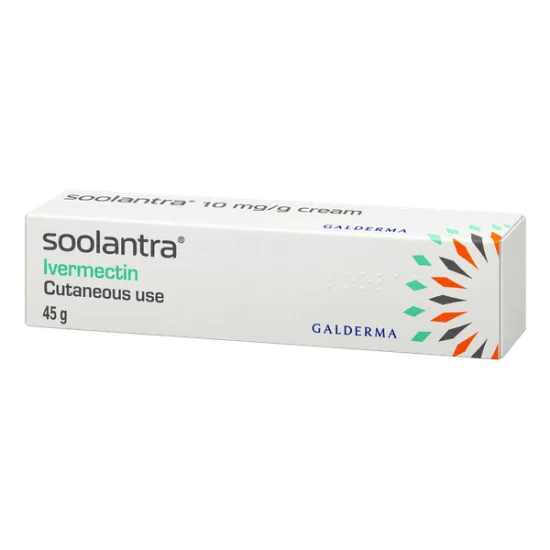
Soolantra is a prescription topical cream containing ivermectin for the treatment of inflammatory lesions associated with rosacea. Ivermectin belongs to the avermectin group.
Dosage and administration
Soolantra is applied to the affected facial areas as a thin layer once daily, with the exact regimen confirmed by a healthcare professional before starting. It is generally used on clean, dry skin. Avoid contact with the eyes, lips, and mucous membranes.
Application and Dose Planning
The regimen for the chosen strength must be confirmed with a healthcare professional before starting. Soolantra is used on the facial areas affected by rosacea, normally as a thin layer once daily.
Practical Application
- Cleanse the face with a mild product.
- Pat the skin dry without rubbing.
- Apply a thin layer to the affected facial areas.
- Avoid the eyes, eyelids, lips, and inside of the nose.
- Wash the hands after application.
- Allow the cream to absorb before applying other skincare products.
Do not apply extra cream to compensate for slow improvement. A thicker layer does not produce a faster response and may increase irritation. Do not use the cream on broken, infected, or severely inflamed skin unless the treatment plan specifically covers that area.
The treatment course is determined by the prescribing clinician. Some people require continued use for sustained control, while others need reassessment if lesions remain active or recur soon after improvement.
Apply the next scheduled amount when appropriate and continue with the established once-daily routine. Do not apply twice as much cream or make two applications close together. If missed applications become frequent, place the treatment beside an established evening routine, such as cleansing, while keeping the tube away from children. The FDA prescribing information supports avoiding extra topical doses after a missed application, and the 2026 product information should be checked for updates.
Ingredients
The cream is supplied in a tube for cutaneous use. The product presentation contains 45 g of cream.
How it affects the body
Ivermectin has anti-inflammatory activity and also acts against certain microscopic mites that may contribute to inflammation in rosacea-prone skin. The exact cause of rosacea is complex. Vascular reactivity, innate immune activity, skin-barrier changes, environmental triggers, and Demodex proliferation may all contribute. Soolantra does not work by bleaching facial redness or by peeling the skin. Its role is more targeted: reduce inflammatory lesions through local ivermectin activity.
Therapeutic indications
Soolantra is a prescription topical cream containing ivermectin for the treatment of inflammatory lesions associated with rosacea. Rosacea is a chronic facial skin condition that may cause persistent redness, papules, pustules, burning, stinging, and increased sensitivity to cosmetic products. Soolantra focuses on the inflammatory component rather than acting as a general moisturiser or cosmetic redness cover. Symptoms can vary from day to day. Clinical assessment helps distinguish rosacea from similar conditions.
Its use is directed toward facial rosacea lesions, not every type of acne, rash, eczema, or facial irritation.
Clinical treatment usually has two aims:
- Reduce raised inflammatory lesions, including papules and pustules.
- Calm the recurring inflammatory process that makes facial skin reactive.
Rosacea often fluctuates. Heat, sunlight, alcohol, spicy food, emotional stress, and irritating skincare may worsen symptoms in some people. Soolantra does not remove every possible trigger, so skincare habits remain relevant during treatment.
Targeted Management of Inflammatory Rosacea
The European Medicines Agency describes topical ivermectin as a treatment for inflammatory lesions of rosacea in adults [1].
Improvement is gradual.
The cream should not be used as an emergency treatment for sudden facial swelling, severe allergic symptoms, or an eye emergency. Rosacea involving the eyelids or eyes needs separate medical assessment because ocular rosacea may require additional treatment.

Common mistakes
Several practical errors can reduce tolerability or make the treatment difficult to evaluate:
- Applying a thick layer in the hope of faster improvement.
- Using the cream more than once daily without instruction.
- Applying it directly after hot water or vigorous exfoliation.
- Spreading it over the eyelids or too close to the eyes.
- Adding several new serums, acids, scrubs, or masks at the same time.
- Stopping after a few days because the skin has not changed.
- Continuing despite facial swelling, blistering, or severe burning.
- Sharing the tube with another person.
- Treating acne, eczema, or perioral dermatitis with Soolantra without a confirmed diagnosis.
Soolantra should not be mixed with moisturiser in the palm before application. This can dilute the amount of cream and make the dose uneven across the face.
A further mistake is judging the treatment only by redness. Inflammatory bumps may improve before persistent background redness does. Track the number of new papules and pustules as well as facial colour.
When not to use it
- Known allergy to ivermectin or any component of the cream.
- Previous severe reaction to a topical treatment.
- Active eye symptoms, eyelid inflammation, or visual changes.
- Broken skin, open wounds, or a suspected skin infection on the application area.
- Pregnancy or planned pregnancy.
- Breastfeeding.
- Use in a person under 18 years of age.
- A facial eruption that has not been assessed as rosacea.
The product is intended for cutaneous use. Do not swallow it, apply it inside the mouth, or place it inside the nose. Keep it away from children and avoid transferring the cream to the eyes through unwashed hands.
Pregnancy and breastfeeding require an individual assessment because the benefit of treatment must be balanced against available safety information. The prescribing professional should know about pregnancy, breastfeeding, planned conception, and all topical or oral medicines being used.
The WHO describes ivermectin as a medicine with established antiparasitic activity, while topical rosacea treatment uses a local formulation with a different clinical purpose [4]. This distinction matters when discussing oral ivermectin, which should not be substituted for Soolantra without a medical decision.
When this is not for you
Soolantra may not be for you if the diagnosis is uncertain, the eyes are involved, or you have an allergy to ivermectin or an ingredient.
Possible side effects
Topical ivermectin is commonly tolerated, though the treated skin may react during the first part of therapy. Reported reactions include burning, irritation, dryness, itching, and redness at the application site. These effects may be mild and temporary, but persistent or worsening symptoms need assessment.
The most useful distinction is between manageable irritation and a possible allergic reaction.
Potential local reactions include:
- Burning or stinging.
- Dryness or scaling.
- Itching.
- Redness.
- Contact dermatitis.
- Worsening sensitivity to skincare products.
Stop applying the cream and seek urgent medical help for facial swelling, difficulty breathing, widespread hives, blistering, or rapidly developing skin peeling. These symptoms may indicate a serious hypersensitivity reaction.
The FDA prescribing information identifies application-site reactions among possible adverse effects and provides safety information for topical ivermectin [3]. Avoid applying the cream to the eyes. If accidental eye contact occurs, rinse thoroughly with clean water.
One detail patients often miss: stinging may come from a cleanser or sunscreen applied before Soolantra, not from the cream alone. Keeping the rest of the routine unchanged makes the cause easier to identify.
Comparison
Difference from Other Topical Approaches
Some rosacea treatments focus on vascular redness, while others target inflammation or bacterial-related processes. Soolantra is aimed at inflammatory papules and pustules. A person with mainly persistent background redness may need a different treatment strategy from someone with frequent inflammatory bumps.
| Treatment approach | Main target | Practical distinction |
|---|---|---|
| Topical ivermectin | Inflammatory rosacea lesions and related mite activity | Applied locally as prescribed |
| Vascular-directed treatment | Persistent facial redness | May not address papules or pustules |
| Oral anti-inflammatory treatment | More extensive or resistant inflammation | Requires systemic safety assessment |
The choice depends on lesion type, severity, previous treatment response, skin sensitivity, and whether the eyes are involved. Combining treatments without a planned regimen can increase irritation and obscure which product is helping.
Clinical trials reviewed by the FDA found improvement in inflammatory rosacea lesions with once-daily topical ivermectin compared with vehicle cream [2].
What doctors say
Dermatologists generally assess three features before choosing a rosacea treatment: the type of lesions, the extent of facial involvement, and the degree of skin sensitivity. Soolantra fits patients whose main problem is inflammatory papules or pustules rather than isolated flushing alone.
A clinician will also ask about eye discomfort, gritty eyes, recurrent styes, eyelid crusting, and light sensitivity. These symptoms may indicate ocular involvement and can change the treatment plan.
Treatment expectations should remain realistic. Rosacea is often chronic, so improvement does not always mean permanent removal of the condition. A stable skincare routine, trigger awareness, and consistent application can support longer-term control.
The National Institute for Health and Care Excellence recognises the need to match rosacea treatment to the dominant clinical pattern and to review response over time [5]. If lesions continue to increase after a reasonable treatment period, the diagnosis and regimen may need reassessment.
Common questions
Can Soolantra be used during pregnancy or breastfeeding?
Pregnancy and breastfeeding should be discussed with the prescribing professional before Soolantra is started. The EMA evaluates medicines according to available human and pharmacological safety data, and topical exposure still requires an individual benefit–risk decision based on the 2026 product information. A clinician may consider the severity of rosacea, the treatment area, previous responses, and other products being used. Do not start, stop, or restart the cream during pregnancy without a specific treatment plan.
Can Soolantra be used by anyone under 18?
Soolantra is intended for adult rosacea treatment, so use in people under 18 requires a clinician’s assessment. Facial papules in adolescents may arise from acne, perioral dermatitis, irritation, or another condition with a different treatment plan. The WHO advises that age, formulation, route, and indication must be considered when medicines are used in younger patients, consistent with the 2026 product information. Do not apply the cream to a child or teenager unless a qualified prescriber has selected it for that person.
What should be discussed with a doctor before starting Soolantra?
Tell the doctor about ivermectin allergy, previous reactions to topical creams, pregnancy, breastfeeding, eye symptoms, and all medicines or skincare treatments used on the face. Mention burning, gritty eyes, recurrent eyelid inflammation, or visual symptoms because rosacea may involve the eyes. A clinician should also confirm that the eruption is inflammatory rosacea rather than acne, eczema, contact dermatitis, or perioral dermatitis. The American Academy of Dermatology recommends discussing the dominant rosacea symptoms and known triggers when selecting treatment, alongside review of the 2026 product information.
What should be done after a missed application?
Apply the next scheduled amount when appropriate and continue with the established once-daily routine. Do not apply twice as much cream or make two applications close together. If missed applications become frequent, place the treatment beside an established evening routine, such as cleansing, while keeping the tube away from children. The FDA prescribing information supports avoiding extra topical doses after a missed application, and the 2026 product information should be checked for updates.
Do you offer anonymous delivery?
Your order will be securely packed and shipped within 24 hours. This is exactly what your package will look like (images of an actual item sent). It has the size and look of a regular private letter (24x11x0.7 cm) and its contents cannot be seen.
Supportive Skincare for Rosacea-Prone Skin
Rosacea care works best when the treatment routine is simple. A gentle cleanser, a fragrance-free moisturiser, and broad-spectrum sunscreen can reduce unnecessary irritation while Soolantra addresses inflammatory lesions. Products with strong fragrance, abrasive particles, high concentrations of exfoliating acids, or astringent alcohol may increase stinging in sensitive skin.
Specialised skincare should be judged by formulation and tolerability rather than by the number of products in a range. A product marketed for eczema, acne, perioral dermatitis, or redness may still irritate rosacea-prone skin if it contains drying or sensitising ingredients.
| Skincare approach | Possible role | Main limitation |
|---|---|---|
| Gentle cleanser and moisturiser | Supports comfort and the skin barrier | Does not treat inflammatory rosacea lesions alone |
| Fragrance-free sunscreen | Helps reduce ultraviolet-triggered irritation | Some filters or textures may sting sensitive skin |
| Exfoliating or drying products | May reduce surface oil in some acne patterns | Can worsen burning, peeling, or redness in rosacea |
The American Academy of Dermatology recommends gentle cleansing, moisturising, and sun protection as part of rosacea care. These measures support treatment tolerance, but they do not replace a prescribed topical therapy when inflammatory lesions are present.
Skin Barrier Support
The outer skin barrier helps limit water loss and protects against irritants. Excessive cleansing, scrubbing, frequent product changes, or repeated use of drying ingredients can make the barrier feel tight and uncomfortable.
One practical pattern is to introduce only one new skincare product at a time. If burning begins after several products are added together, identifying the cause becomes difficult. Keeping the routine stable also makes it easier to judge how Soolantra is tolerated.
Reviews: Soolantra
I noticed fewer inflamed spots after several weeks. The cream felt comfortable most evenings, although sunscreen sometimes caused more stinging than Soolantra.
The bumps around my cheeks became less frequent, and makeup stopped catching on dry areas. The first week brought mild itching, so I simplified my cleanser and moisturiser.
The routine was easy to follow, and my skin looked calmer after consistent use. I became impatient during the first two weeks and nearly applied extra cream, but that only made the dryness worse.
Sources
- European Medicines Agency (2015). Soolantra: product information, including the Summary of Product Characteristics and package leaflet.
- PubMed (2014). Efficacy and safety of ivermectin 1% cream in treatment of papulopustular rosacea: results of two randomized, double-blind, vehicle-controlled pivotal studies.
- U.S. Food and Drug Administration (2014). Soolantra Cream — Prescribing Information.
- World Health Organization (2021). WHO Model List of Essential Medicines, 22nd list.
- National Institute for Health and Care Excellence (2024). Rosacea: management — Clinical Knowledge Summary.