Skip to content
Motilium
Active ingredient: Domperidone

Motilium

Quality products
24/7 Support
Fast delivery
Delivery from 4 days
Select pack Package Per unit Price

Free delivery on orders from AED 860.00, free express delivery from AED 1,290.00

Secure Payments
Track your order
Best price guarantee

Motilium tablets are taken by mouth before meals to help relieve nausea, vomiting, and upper digestive discomfort. They contain domperidone, which supports stomach emptying and blocks dopamine signals involved in nausea.

Product information

Motilium is an oral tablet medicine containing domperidone as its active ingredient. It belongs to the dopamine-receptor antagonist and antiemetic categories and is used for short-term relief of nausea and vomiting.

Dosage and administration

The dose is decided individually, taking age, other medicines, and health conditions into account. For people who are prescribed Motilium:

  • Use only the dose and frequency selected for the individual.
  • Administration before meals, when absorption is more predictable.
  • Use the shortest practical course unless a prescriber gives a specific reason for a different plan.

European regulatory guidance restricts domperidone to the lowest effective dose for the shortest possible duration because cardiac risk rises with higher exposure and prolonged treatment [2]. Children and adolescents require separate medical assessment; adult tablet dosing must not simply be applied to them.

If a dose is missed, take it when remembered if the next scheduled dose is not close. Skip the missed dose when the next dose is due soon. Do not take two doses together to compensate.

A person with kidney impairment may need a lower frequency, especially during repeated treatment. Liver disease can also affect suitability. The dose must be reconsidered when other medicines are started, stopped, or changed.

Keep a written record of the time each dose is taken when multiple daily doses are prescribed. This reduces accidental double dosing, especially when nausea disrupts normal meal and sleep routines.

Ingredients

Motilium contains domperidone as its active ingredient. Domperidone is classified as a dopamine-receptor antagonist and antiemetic. An antiemetic is a medicine used to reduce nausea and vomiting.

Domperidone mainly acts outside the brain. It influences dopamine receptors involved in gastrointestinal movement and the vomiting response. The product is supplied as oral tablets, with 30 tablets in the described presentation.

The medicine is intended for short-term relief of nausea and vomiting associated with delayed gastric emptying or impaired upper gastrointestinal movement. It is not suitable for every person with nausea, especially when symptoms may come from intestinal obstruction, gastrointestinal bleeding, or a cardiac condition.

Domperidone is usually taken before food because meals can delay absorption. Taking it after a large meal may make the timing of its effect less predictable.

How it affects the body

Domperidone helps coordinate movement through the upper digestive tract. It can increase the movement of the stomach and support the passage of food into the small intestine. This action may reduce the sensation of fullness, nausea, and vomiting when slowed gastric emptying contributes to the symptoms.

The medicine also blocks dopamine receptors in the chemoreceptor trigger zone, an area involved in initiating vomiting. Domperidone has limited passage across the blood–brain barrier compared with some centrally acting antiemetics, so movement-related neurological effects may be less prominent than with certain alternatives. Cardiac effects remain clinically relevant because domperidone can prolong the QT interval in susceptible people [1].

Therapeutic indications

The medicine is intended for short-term relief of nausea and vomiting associated with delayed gastric emptying or impaired upper gastrointestinal movement.

Motilium may be used when nausea or vomiting is linked to an upper gastrointestinal motility problem. It does not treat every cause of vomiting. Severe abdominal pain, blood in vomit or stool, persistent fever, marked dehydration, or abdominal swelling requires urgent medical assessment rather than repeated self-treatment. Recurrent symptoms warrant review of the underlying cause. Repeated self-treatment can delay diagnosis.

The main potential benefit is symptom relief alongside improved gastric movement. The main limitation is its cardiac safety profile, which makes patient selection and treatment duration important.

Common mistakes

Several practical errors can reduce benefit or increase risk:

  • Taking extra tablets because the first dose did not provide immediate relief.
  • Using the medicine for several weeks without reassessing the cause of symptoms.
  • Taking it with a medicine that prolongs the QT interval.
  • Ignoring faintness, palpitations, or a new irregular heartbeat.
  • Taking the tablet after a heavy meal when it was prescribed before meals.
  • Using adult tablet doses for a child or low-weight adolescent.
  • Forgetting to mention kidney disease, liver disease, or recent diarrhoea.
  • Continuing treatment despite blood in vomit, black stools, severe abdominal pain, or marked abdominal swelling.

A common misunderstanding is that a larger dose will necessarily control nausea better. Domperidone’s cardiac risk can increase with higher exposure, while the underlying cause of nausea remains untreated.

Another mistake involves missed doses. Taking two tablets together can create an unnecessary peak concentration. The safer approach is to omit a late dose when the next scheduled dose is near.

When not to use it

It should not be used in the following situations unless a specialist has provided a specific plan:

  • Known prolonged QT interval or a history of torsades de pointes.
  • Significant heart failure or clinically important bradycardia.
  • Moderate or severe liver impairment.
  • Low potassium or low magnesium that has not been corrected.
  • Suspected gastrointestinal obstruction, perforation, or bleeding.
  • Allergy to domperidone or an excipient in the tablet.
  • Concomitant treatment with medicines that strongly inhibit CYP3A4 and prolong the QT interval.

Examples of medicines that may create serious interaction concerns include certain systemic azole antifungals, macrolide antibiotics, some antiarrhythmics, and selected medicines used for psychiatric or infectious conditions. The exact interaction depends on the substance and dose, so a complete medicine list is needed before treatment.

Antacids and medicines that reduce stomach acid may affect the timing of oral domperidone absorption. They should not automatically be taken at the same time as Motilium without a clear dosing plan. Herbal products and supplements also deserve review when they affect heart rhythm, electrolytes, or liver enzymes.

When this is not for you

Motilium is not suitable for people with certain cardiac, gastrointestinal, hepatic, or medication-related risks. Not for you if you have a prolonged QT interval, significant heart disease, uncorrected electrolyte abnormalities, or suspected gastrointestinal obstruction or bleeding.

Pregnancy requires individual assessment. Breastfeeding requires individual assessment. Domperidone can increase prolactin and pass into breast milk; the possible benefit must be weighed against maternal cardiac risk and potential effects on the infant.

Before treatment, list prescription medicines, non-prescription products, supplements, and recent antibiotics. Interaction screening can fail when only regular medicines are mentioned and a short antibiotic course is left out.

Possible side effects

Common or clinically recognised adverse effects include:

  • Dry mouth.
  • Headache.
  • Abdominal cramps.
  • Diarrhoea.
  • Increased prolactin levels.
  • Breast tenderness or milk production unrelated to breastfeeding.
  • Changes in menstrual bleeding.
  • Rare movement-related symptoms, such as abnormal muscle contractions.

Raised prolactin may cause breast enlargement, breast discomfort, or unexpected milk secretion. These effects should be reported if they persist or become troublesome.

Stop taking domperidone and obtain urgent medical care for fainting, a rapid or irregular heartbeat, chest discomfort, severe dizziness, or a seizure. Palpitations after a dose should not be dismissed as ordinary indigestion.

European and UK safety reviews identified a small but serious risk of ventricular arrhythmia and sudden cardiac death, with greater concern in older adults, people with existing heart disease, and people taking interacting medicines [3]. The risk-benefit decision is therefore different for a 69-year-old with cardiac disease than for a younger adult without those risk factors.

One practical detail patients sometimes miss: vomiting and diarrhoea can lower potassium and magnesium, which may increase arrhythmia risk. Repeated vomiting needs assessment rather than repeated doses of an antiemetic.

Seek urgent help for fainting or a new irregular heartbeat after taking Motilium. Do not take another dose while waiting for medical advice if a serious rhythm symptom has appeared.

Comparison

Motilium and a properly manufactured generic domperidone tablet contain the same active pharmaceutical ingredient: domperidone. The active ingredient and strength are the central pharmacological features. Excipients, tablet appearance, and packaging may differ between manufacturers.

Option Active ingredient and mechanism Practical distinction
Motilium Domperidone 10 mg; dopamine-receptor antagonist with prokinetic and antiemetic action Brand presentation supplied as oral tablets
Generic domperidone Domperidone; the same therapeutic mechanism when supplied at the same strength Manufacturer and inactive ingredients may differ

A generic formulation is designed to provide the same active substance at the stated strength. It should not be assumed that every tablet with a similar name has identical excipients or release characteristics. Motilium tablets described here contain domperidone 10 mg per tablet.

The choice between a branded presentation and a generic formulation may depend on the prescribed product, excipient sensitivity, previous tolerability, and local clinical practice. Neither option removes the need to screen for QT prolongation, interacting medicines, kidney or liver disease, or electrolyte abnormalities.

What doctors say

In clinical practice, doctors generally use domperidone for a defined symptom problem rather than as a routine daily digestive aid. The treatment decision often centres on three points: the cause of nausea, the expected duration of symptoms, and the person’s cardiac risk.

A prescriber may review previous fainting, palpitations, heart disease, family history of sudden cardiac death, kidney function, liver function, and electrolyte disturbances. Clinicians may also consult the U.S. Food and Drug Administration (FDA) and the National Institute for Health and Care Excellence (NICE) when reviewing safety information. This assessment becomes more relevant when the patient is older or takes several medicines.

Doctors also distinguish nausea caused by delayed gastric emptying from nausea caused by infection, migraine, pregnancy, bowel obstruction, medication toxicity, or an acute abdominal condition. Domperidone may relieve the symptom without treating the underlying cause.

A useful clinical expectation is modest and specific: the medicine may reduce nausea and support upper gastrointestinal movement during a short course. It should not become a substitute for investigating recurring vomiting, unexplained weight loss, persistent reflux, or progressive swallowing difficulty.

Common questions

How does Motilium differ from the closest alternative by active substance or mechanism?

Motilium contains domperidone, which blocks dopamine receptors and supports upper gastrointestinal motility. Other antiemetic medicines may act mainly through serotonin, histamine, muscarinic, or neurokinin pathways, so their sedation, movement-related effects, and interaction profiles differ. The European Medicines Agency reviewed domperidone’s restricted use in 2014 because of its cardiac risks [4]. The best option depends on the cause of nausea, age, medical history, and concurrent treatment.

How long does a Motilium course last, and is long-term use acceptable?

Domperidone is generally intended for the shortest practical course, with many regulatory recommendations limiting treatment to about seven days. A longer course should not be continued independently because cumulative exposure may increase cardiac risk and can delay investigation of persistent symptoms. The NHS describes domperidone as a short-term treatment for nausea and vomiting, with duration determined by the treating clinician [5]. The NHS page cited here was updated in 2023. If nausea continues after a short course, the underlying diagnosis needs review rather than automatic continuation.

What happens when Motilium is stopped, and does it need tapering?

Domperidone does not usually require tapering after a short course because it is used for symptom control rather than long-term withdrawal management. The European Medicines Agency addressed domperidone use in 2014. Nausea may return if the original cause remains present, but that does not mean the dose should be restarted automatically. Stopping after the planned course avoids unnecessary exposure to cardiac and hormonal adverse effects. Persistent symptoms after stopping should prompt assessment of the underlying gastrointestinal or systemic condition.

Which diet, exercise, or habits can help or hinder the result?

Smaller meals, adequate fluid intake, and avoiding large fatty meals may reduce gastric discomfort during nausea. Alcohol can worsen dehydration and may make dizziness harder to recognise. Gentle activity can be reasonable when tolerated, while strenuous exercise is unsuitable during active vomiting or significant dehydration. Domperidone does not replace treatment for food poisoning, bowel obstruction, severe reflux, or another underlying illness. The NHS guidance cited here is dated 2023.

Can Motilium be combined with medicines or supplements that affect heart rhythm?

Domperidone should not be combined casually with medicines known to prolong the QT interval or with strong CYP3A4 inhibitors. Examples include some macrolide antibiotics, systemic azole antifungals, and antiarrhythmic medicines; the exact risk depends on the substance and the patient’s health. Supplements can also matter if they alter electrolytes, heart rhythm, or liver enzyme activity. A full medicine and supplement review is needed before combining products, especially in older adults or people with kidney, liver, or heart disease. The European Medicines Agency issued relevant domperidone safety recommendations in 2014.

Do you offer anonymous delivery?

Your order will be securely packed and shipped within 24 hours. This is exactly what your package will look like (images of an actual item sent). It has the size and look of a regular private letter (24x11x0.7 cm) and its contents cannot be seen.

Available Product Formulations and Packaging Quantities

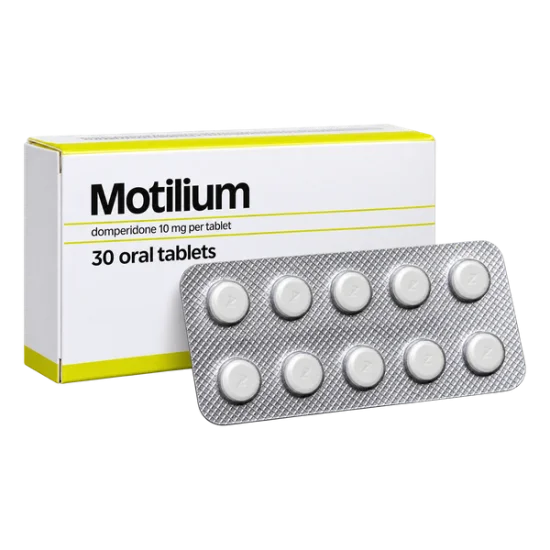
Motilium is supplied in tablet form. The described presentation contains 30 oral tablets, with 10 mg of domperidone in each tablet.

Pack size does not set treatment duration. The course depends on the reason for treatment, symptom response, age, other medicines, and individual cardiac risk.

Do not alter the tablet by crushing or chewing it unless a prescriber or pharmacist has confirmed that this is suitable. A tablet-splitting decision also depends on whether an accurate dose can be obtained and whether the tablet is scored.

Count the planned treatment days before starting. A 30-tablet presentation can last longer or shorter than one week depending on the individually selected schedule, so pack size should not be used to set the course.

Reviews: Motilium

3.9
Based on 5 reviews
Faisal, 69 Al Barsha Five days
Verified
Rating: 4.5 out of 5

The nausea settled by the second day and I could eat breakfast again. I also had heart tablets, so the medicine list was checked first. That part mattered more to me than taking it quickly.

6 Oct 2026
Anjali, 31 Khor Fakkan Three days
Verified
Rating: 3.5 out of 5

It helped with the queasy feeling after meals. I noticed a dry mouth and mild cramps, but both stopped after the course ended. I would not have taken extra tablets when one dose felt slow.

17 Oct 2026
Joseph, 54 Al Khawaneej Not specified
Verified
Rating: 2.5 out of 5

My vomiting improved, but I developed a fluttering sensation in my chest on the second day. I stopped and sought urgent advice. The symptom was more concerning than the stomach problem.

20 Oct 2026
Hina, 35 Kalba Four days
Verified
Rating: 4 out of 5

The tablets made eating easier during a short stomach illness. I still felt tired, and they did not fix the diarrhoea. The benefit was limited to the nausea.

30 Oct 2026
Yousef, 42 Bur Dubai One week
Verified
Rating: 5 out of 5

I felt less full after meals and had fewer episodes of nausea. The first dose after a large meal seemed slower, so I followed the pre-meal timing afterwards. I did not continue beyond the planned week.

2 Nov 2026

Sources

  1. European Medicines Agency (2014). Domperidone-containing medicines: referral under Article 31 of Directive 2001/83/EC.
  2. European Medicines Agency (2014). CMDh confirms recommendations on restricting use of domperidone-containing medicines.
  3. Medicines and Healthcare products Regulatory Agency (2014). Domperidone: risks of cardiac side effects.
  4. European Medicines Agency (2014). Motilium and associated names: referral outcome and restrictions on use.
  5. NHS (2023). Domperidone: about domperidone and how to take it.
Get our free app Shop faster and track your orders 3.9 · 576 reviews Install
