Skip to content
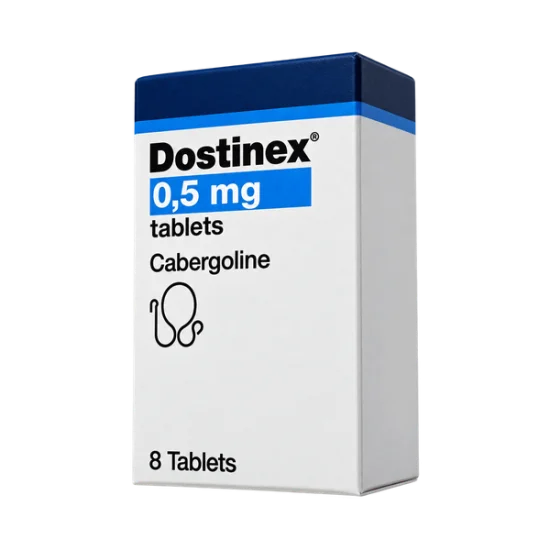
Dostinex
Active ingredient: Cabergoline

Dostinex

Quality products
24/7 Support
Fast delivery
Delivery from 4 days
Select pack Package Per unit Price

Free delivery on orders from AED 860.00, free express delivery from AED 1,290.00

Secure Payments
Track your order
Best price guarantee

Adults with hyperprolactinaemia, including people with prolactin-related menstrual changes, milk discharge, infertility, or a prolactin-secreting pituitary adenoma, may be prescribed Dostinex. Dostinex contains cabergoline, a dopamine receptor agonist that lowers excess prolactin production in the pituitary gland. Restoring prolactin towards the target range can support reproductive hormone function and relieve prolactin-related symptoms.

Product information

Dostinex is an oral cabergoline treatment for hyperprolactinaemia. Prolactin is a pituitary hormone involved in lactation, yet persistently raised concentrations can suppress ovulation, disrupt menstrual cycles, lower testosterone, and affect fertility.

Dosage and administration

  • Swallow the prescribed dose with water.
  • Taking it with a meal or a snack may reduce nausea.
  • Keep doses on the same planned days each week.
  • Dose increases are usually separated by at least several weeks.
  • Do not take an extra tablet to compensate for a missed dose.
  • Hormone blood tests guide whether the regimen needs adjustment.

A higher dose is not automatically better. Cabergoline’s effect can persist for days, so changing the schedule too quickly can create avoidable adverse effects without improving control.

Choose two repeatable weekly dose days rather than tying doses to a changing work rota. Patients often miss intermittent medicines because they do not fit a daily routine.

Missed-dose approach

If a scheduled dose is missed, take the next planned dose at its usual time unless the prescriber has provided a different individual plan. Doubling doses can increase nausea, dizziness, fainting, and blood-pressure effects.

One common mistake is treating a weekly medicine like a daily tablet. The intended spacing matters.

Ingredients

Dostinex contains cabergoline, a long-acting dopamine receptor agonist with strong activity at D2 dopamine receptors on pituitary lactotroph cells, the cells responsible for prolactin release. The regimen for the chosen strength should be confirmed with a healthcare professional before starting.

How it affects the body

Cabergoline stimulates dopamine D2 receptors on prolactin-producing pituitary cells. Dopamine is the body’s natural brake on prolactin release. When cabergoline activates this pathway, prolactin secretion falls. The FDA prescribing information identifies cabergoline as a treatment for hyperprolactinaemic disorders. [1] This effect lowers circulating prolactin.

Cabergoline is also an ergot-derived medicine. That class matters because fibrotic reactions and heart-valve concerns have been reported, mainly with prolonged exposure to much higher doses used in Parkinson’s disease.

A small but useful detail: cabergoline can cause light-headedness when standing up quickly, especially after the first doses. Rising from bed in stages can reduce the risk of a sudden dizzy spell.

Therapeutic indications

Dostinex is often the first pharmacological approach for these tumours because it can lower prolactin and reduce tumour volume over time.

Dostinex does not correct every cause of raised prolactin. Hypothyroidism, kidney disease, pregnancy, chest-wall conditions, and dopamine-blocking medicines can also raise prolactin.

Common mistakes

  • Changing the dose after one blood test: prolactin management relies on planned follow-up and symptom trends.
  • Doubling after a missed dose: this raises adverse-effect risk without restoring the intended weekly pattern.
  • Ignoring standing dizziness: fainting risk is greater when dehydration, alcohol, or antihypertensive treatment is involved.
  • Stopping when periods return: prolactin can rise again after abrupt discontinuation, especially with a prolactinoma.
  • Overlooking new behavioural changes: compulsive urges are medical adverse effects, not personal weakness.
  • Assuming infertility persists: ovulation may resume before a regular menstrual pattern becomes obvious.

WHO’s Anatomical Therapeutic Chemical classification places cabergoline among dopamine agonists, reflecting its direct endocrine action rather than a general hormone supplement role. [3]

When not to use it

Dostinex is not for you if you have known hypersensitivity to cabergoline, other ergot-derived medicines, or any tablet ingredient. It is also unsuitable for people with a history of pulmonary, pericardial, or retroperitoneal fibrotic disorders, or evidence of cardiac valvulopathy.

Avoid or use only under specialist direction in these situations:

  • uncontrolled high blood pressure;
  • pregnancy-related hypertension, pre-eclampsia, or post-partum hypertension;
  • significant heart-valve disease;
  • severe liver impairment;
  • past psychosis, mania, or serious impulse-control disorder;
  • existing lung, chest, or abdominal fibrosis.

Dopamine-blocking medicines can counteract cabergoline. This group includes many antipsychotics and anti-nausea medicines such as metoclopramide. Blood-pressure medicines may add to dizziness or fainting risk. The Endocrine Society guideline also highlights the importance of identifying medicine-induced hyperprolactinaemia before starting a dopamine agonist. [2]

When this is not for you

Pregnancy planning requires an individual endocrine plan because fertility can return before menstrual cycles seem fully regular.

Dostinex is not for you if you have heart-valve disease, serious liver problems, or a history of fibrosis affecting the lungs, chest, or abdomen. Tell your prescriber if you have had psychosis, mania, or serious problems with impulse control.

Possible side effects

Most adverse effects occur early in therapy or after a dose increase. Nausea, headache, dizziness, tiredness, constipation, stomach discomfort, and postural hypotension are among the more frequent effects described in clinical product information.

Postural hypotension means blood pressure falls after standing. It can feel like a brief blackout, unsteadiness, blurred vision, or weakness. Alcohol, dehydration, and blood-pressure medicines can make this more noticeable.

Potential effects include:

  • nausea or vomiting;
  • headache;
  • dizziness or vertigo;
  • constipation or abdominal discomfort;
  • fatigue or sleepiness;
  • low blood pressure on standing;
  • breast tenderness during hormonal adjustment.

Serious but uncommon concerns include cardiac-valve changes, pleural or lung fibrosis, retroperitoneal fibrosis, severe psychiatric changes, and impulse-control problems such as compulsive gambling, spending, eating, or increased sexual urges. These effects are uncommon at prolactin-treatment doses, yet they require attention because they can develop gradually.

Family members may notice new impulsive behaviour before the person taking cabergoline connects it with treatment. A sudden change in spending, gambling, eating, or sexual behaviour should be raised promptly with the prescriber.

A persistent dry cough, breathlessness, chest discomfort, ankle swelling, or unexplained flank pain should not be dismissed as a minor tablet effect. For long-term treatment, clinicians may arrange cardiac assessment when risk factors or symptoms make it appropriate.

Comparison

Cabergoline and bromocriptine are both dopamine agonists used for hyperprolactinaemia. Cabergoline usually has a longer action and is often dosed less frequently, while bromocriptine has a longer history of use in some reproductive settings.

Feature Cabergoline in Dostinex Bromocriptine
Main mechanism D2 dopamine receptor agonist Dopamine receptor agonist
Typical dosing pattern Once or twice weekly Often daily
Practical limitation Long-lasting adverse effects if poorly tolerated More frequent nausea and dosing burden

Cabergoline is frequently preferred for prolactinoma management because it tends to produce stronger prolactin suppression and better tumour shrinkage rates in routine endocrine practice. Bromocriptine remains relevant when cabergoline is unsuitable or when an endocrinologist selects it for a specific reproductive plan.

The trade-off is clear: cabergoline is convenient, yet its long action means an adverse effect may not disappear immediately after one missed dose.

What doctors say

Endocrinologists generally focus on three measures: prolactin response, symptom improvement, and pituitary imaging when a prolactinoma is present. A normal prolactin result matters, but it is not the only marker of success.

In clinical practice, doctors often see patients feel better before their laboratory values have fully stabilised. Others have improved blood results but need more time for menstrual cycles or fertility to recover. Dose changes are therefore based on trends rather than one isolated blood test.

Cabergoline is commonly well tolerated when started gradually. The first few doses are where nausea and dizziness can be most frustrating.

If nausea is strongest on dose day, taking the prescribed tablet after an evening meal may be easier than taking it before a busy morning. This should not change the total weekly dose or spacing.

Common questions

How does Dostinex differ from bromocriptine?

Both medicines lower prolactin by stimulating dopamine receptors, yet cabergoline in Dostinex has a longer duration of action. This usually permits once- or twice-weekly dosing, whereas bromocriptine is commonly taken more often. The 2023 Pituitary Society consensus describes cabergoline as the preferred dopamine agonist for many prolactinoma patients because of efficacy and tolerability. Individual factors, including pregnancy plans and adverse effects, can still make bromocriptine appropriate for some people.

Is Dostinex suitable for people under 18?

Cabergoline treatment in children and adolescents requires specialist paediatric endocrine oversight. The FDA product information does not establish routine safety and efficacy for paediatric use in hyperprolactinaemic disorders. The 2021 FDA label continued to base standard Dostinex prescribing on adult clinical data. A child or adolescent with elevated prolactin needs assessment of puberty, growth, medicines, imaging findings, and the underlying cause.

Can alcohol be used while taking Dostinex?

Alcohol can intensify dizziness, drowsiness, reduced concentration, and postural hypotension from cabergoline. This is most relevant after starting treatment or increasing a dose. The FDA’s 2021 cabergoline prescribing information warns about hypotension and somnolence, both of which can impair day-to-day safety. Avoiding alcohol on dose days is a sensible precaution when these effects have occurred.

Is Dostinex appropriate for older adults?

Older adults may use cabergoline when it is clinically indicated, though blood-pressure effects, heart history, kidney function, liver function, and other medicines need closer review. Age itself does not define suitability. The EMA's 2016 safety information on dopamine agonists supports monitoring for cardiovascular and fibrotic symptoms in patients receiving long-term therapy. A slower titration may be selected when dizziness or frailty is a concern.

Can Dostinex be combined with antipsychotic or anti-nausea medicines?

Antipsychotics and dopamine-blocking anti-nausea medicines may oppose cabergoline’s D2 receptor action. Examples include metoclopramide and several antipsychotic medicines used for psychosis or bipolar disorder. The Endocrine Society guideline, published in 2011, advises reviewing medicines that can cause or worsen hyperprolactinaemia before treatment decisions are made. Do not stop psychiatric medicine abruptly; coordinated prescribing is needed when both treatment goals matter.

What should happen after a missed Dostinex dose?

Take the next scheduled dose at the normal time unless a prescriber has given a personalised alternative plan. Do not take two doses together or add an unplanned tablet later in the week. Cabergoline has prolonged dopamine-agonist activity, so doubling can increase dizziness, nausea, and blood-pressure effects. The 2021 FDA prescribing information supports individual dose adjustment based on response and tolerability rather than catch-up dosing.

Can Dostinex affect driving, concentration, or machinery work?

Cabergoline can cause dizziness, sudden sleepiness, and reduced alertness in some people. Driving, working at height, or operating machinery should be avoided if sleepiness, blurred vision, faintness, or impaired concentration occurs. WHO medicine-safety guidance available in 2025 emphasises that medicines affecting alertness require an individual assessment of functional ability, not just a diagnosis. The risk can be greater after the first doses, after escalation, or when alcohol and sedating medicines are involved.

Do you offer anonymous delivery?

Your order will be securely packed and shipped within 24 hours. This is exactly what your package will look like (images of an actual item sent). It has the size and look of a regular private letter (24x11x0.7 cm) and its contents cannot be seen.

Reviews: Dostinex

4.4
Based on 5 reviews
Meera, 42 Ras Al Khaimah Four months
Verified
Rating: 5 out of 5

My periods had been absent for almost a year after my prolactin stayed high. I felt nauseated after the first two doses, then started taking it after dinner and that settled. My cycle returned during the third month.

26 Oct 2026
Hina, 49 Al Reem Island Six months
Verified
Rating: 3.5 out of 5

The headaches and breast discharge reduced, which was the main change I noticed. I had one dizzy episode when I got up too fast at night, so I became more careful with water and standing slowly.

1 Nov 2026
Huda, 60 Fujairah Not specified
Verified
Rating: 5 out of 5

My blood tests improved and the follow-up scan showed a good response. The weekly schedule was easier than a daily medicine. Constipation was annoying at first but became manageable.

6 Oct 2026
Lakshmi, 53 Hatta Three months
Verified
Rating: 3.5 out of 5

The hormone result improved, but I felt tired on the day after each dose. My clinician adjusted the schedule instead of increasing it quickly, and that made a difference.

12 Oct 2026
Maria A., 64 Al Barsha Not specified
Verified
Rating: 5 out of 5

I tolerated the tablets better with food. The difficult part was remembering a twice-weekly routine, so I put the two dose days into my calendar. I did not have nausea after the first month.

18 Oct 2026

Sources

  1. U.S. Food and Drug Administration (2021). DOSTINEX (cabergoline) tablets, for oral use: Prescribing Information.
  2. Endocrine Society (2011). Diagnosis and Treatment of Hyperprolactinemia: An Endocrine Society Clinical Practice Guideline.
  3. World Health Organization (2025). ATC/DDD Index: Cabergoline.
Get our free app Shop faster and track your orders 3.9 · 576 reviews Install
