I had irregular cycles for years, so I was relieved to have a clear schedule. I experienced hot flushes in the evenings and a headache on the third day, but both settled after the course. My ultrasound follow-up showed a follicle developing.
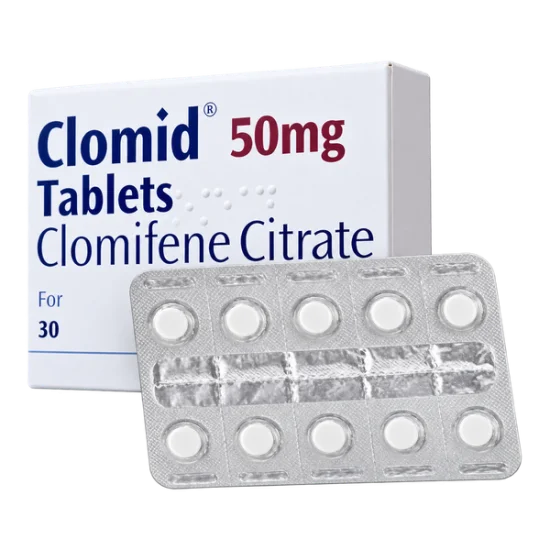
Clomid tablets contain clomiphene citrate and are used for female infertility linked to ovulatory dysfunction. They support the development of an ovulatory cycle when the ovaries can respond to hormonal stimulation.
Product information
Clomid tablets are taken by mouth during a defined part of the menstrual cycle to stimulate ovulation in women with ovulatory infertility. Each tablet contains clomiphene citrate. How much to use and how often depends on the purpose of treatment and is agreed with a doctor or pharmacist.
Dosage and administration
Clomid is supplied as tablets containing clomiphene citrate. How much to use and how often depends on the purpose of treatment and is agreed with a doctor or pharmacist. Treatment is oral and is usually prescribed for a five-day course early in the menstrual cycle. The exact starting day, dose plan, and number of treatment cycles depend on the reason for treatment and are agreed with the fertility clinician.
Common treatment schedules start between cycle days 3 and 7 or days 5 and 9. A clinician may adjust the plan in a later cycle if ovulation did not occur, but self-adjusting the dose is unsafe because response varies widely.
- Swallow the tablet whole with water.
- Take it at approximately the same time each day during the prescribed five-day course.
- Food does not usually alter its clinical role, so it may be taken with or without food.
- Record bleeding dates, tablet days, ovulation tests, ultrasound appointments, and any pelvic symptoms.
- Do not take a second dose to compensate for one missed tablet unless specifically instructed.
A frequent mistake is counting the first day of light spotting as cycle day 1. Fertility clinics often define day 1 as the first day of proper menstrual flow, since timing affects when tablets and monitoring are scheduled.
Ovulation often occurs roughly five to ten days after the last tablet, though the timing can vary between cycles. An LH urine test may help identify the approaching LH surge, while ultrasound can show follicle size and help reduce the risk of mistimed intercourse or treatment.
A useful clinical detail: clomiphene can remain in the body longer than many people expect because some metabolites are eliminated slowly. Taking extra tablets after a missed dose can therefore create avoidable hormonal exposure.
Ingredients
Clomid contains clomiphene citrate. How much to use and how often depends on the purpose of treatment and is agreed with a doctor or pharmacist.
How it affects the body
Clomid contains clomiphene citrate, also called clomiphene, and belongs to the selective estrogen receptor modulator, or SERM, class. It is a fertility medicine used when the ovaries do not release an egg regularly or at all.
Clomiphene acts mainly in the hypothalamus, a hormone-control area of the brain. It temporarily blocks part of the normal estrogen signal. The brain responds as though estrogen levels are lower than they are, so the pituitary gland increases production of follicle-stimulating hormone, or FSH, and luteinising hormone, or LH. These hormones support follicle growth in the ovary and can trigger ovulation.
The FDA describes clomiphene citrate as an ovulatory stimulant for women with demonstrated ovulatory dysfunction who want to become pregnant [1].
Role of Clomiphene Citrate in Endocrine Regulation
The feedback loop is the key to understanding treatment. Estrogen usually tells the brain that the ovary is already producing enough hormone. Clomiphene reduces that feedback signal for a short period. More FSH may then recruit and mature an ovarian follicle, while the LH surge supports egg release.
This action differs from fertility injections. Clomid works through the body’s own pituitary hormones rather than supplying FSH or LH directly.
Therapeutic indications
Clomid is used for female infertility linked to ovulatory dysfunction. This includes anovulation, where no egg is released, and irregular ovulation that makes conception difficult to time. It is most relevant when the ovaries are capable of responding to hormonal stimulation.
| Clinical situation | Therapeutic target |
|---|---|
| Irregular or absent ovulation | Development of an ovulatory cycle |
| Polycystic ovary syndrome | Improved follicle maturation and egg release |
| Unexplained irregular cycles after assessment | Clarifying and supporting ovulatory response |
Clomid does not correct every cause of infertility. Blocked fallopian tubes, severe sperm-factor infertility, major uterine abnormalities, and diminished ovarian reserve require different assessment and management. That distinction prevents months of treatment being spent on a pathway that cannot address the main barrier.
Common mistakes
Several avoidable errors reduce the value of a treatment cycle:
- Starting tablets on the wrong cycle day after mistaking spotting for menstruation.
- Taking a missed tablet late and then doubling the next dose.
- Assuming a positive ovulation test guarantees pregnancy.
- Continuing repeated cycles without reviewing ultrasound, progesterone results, or pelvic symptoms.
- Ignoring visual disturbances because they seem mild.
- Treating pelvic bloating as normal when pain is increasing or abdominal swelling is substantial.
A second common issue is relying only on calendar dates. Cycles affected by PCOS may be unpredictable, so tracking with clinical guidance is more useful than assuming ovulation will happen on the same day each month.
When not to use it
Clomid should not be used during pregnancy. Pregnancy should be excluded before each treatment course. Women with a history of ovarian hyperstimulation, significant pelvic pain during fertility treatment, endometriosis-related ovarian cysts, or hormone-sensitive cancers need individual specialist assessment.
Tell the prescriber about:
- medicines used for thyroid, adrenal, or pituitary disorders;
- hormonal medicines and fertility injections;
- medicines affecting vision or causing dizziness;
- prior liver disease, ovarian surgery, or blood-clotting disorders;
- a history of depression, migraine with aura, or significant mood changes during hormone therapy.
When this is not for you
This is NOT for you if you have liver disease, unexplained uterine bleeding, uncontrolled thyroid or adrenal disease, an ovarian cyst not caused by PCOS, a pituitary tumour, or known allergy to clomiphene citrate.
Clomiphene is not intended for routine long-term use. Treatment without evidence of ovulation, monitoring, or a defined fertility plan can delay diagnosis of another infertility cause.
Possible side effects
Clomid is often tolerated, yet it can cause hormone-related adverse effects. Hot flushes, breast discomfort, nausea, headache, mood changes, bloating, and pelvic discomfort can occur. Visual symptoms are less common but require prompt medical attention because blurred vision, flashes, spots, or after-images can persist if treatment continues.
Ovarian enlargement and ovarian hyperstimulation can occur, especially in women who respond strongly. Severe lower abdominal pain, marked swelling, rapid weight gain, shortness of breath, fainting, or reduced urine output need urgent assessment. Multiple pregnancy is another recognised possibility because more than one follicle may mature.
The FDA prescribing information advises limiting repeated courses and assessing each cycle before further treatment because prolonged use raises concerns about ovarian enlargement, visual symptoms, and reduced benefit over time [3].
Comparison
Management of Polycystic Ovary Syndrome via Ovulation Induction
PCOS often involves irregular hormone signalling, elevated androgen activity, and infrequent ovulation. Clomiphene can prompt ovulation in some women with PCOS by increasing pituitary FSH and LH release. The 2023 International Evidence-based Guideline for PCOS recognises ovulation induction as a central part of fertility care for anovulatory infertility, while also placing letrozole ahead of clomiphene as first-line pharmacological therapy for many women with PCOS [2].
| Option | How it induces ovulation | Typical clinical role |
|---|---|---|
| Clomiphene citrate | Alters estrogen feedback to raise FSH and LH | Ovulatory dysfunction in selected patients |
| Letrozole | Reduces estrogen synthesis temporarily | Often preferred for PCOS-related anovulation |
| Gonadotropins | Supplies FSH activity directly | Specialist-led treatment after oral options |
Clomid has a long treatment history and is taken as tablets, which many patients find simpler than injectable therapy. Its limitation is anti-estrogenic activity outside the brain. In some cycles, that can thin the endometrium or reduce cervical mucus quality.
What doctors say
In clinical practice, fertility clinicians often focus first on whether ovulation is truly absent, inconsistent, or simply poorly timed. A regular bleed does not always prove regular ovulation. Doctors also watch for an excessive ovarian response and for endometrial effects across successive cycles.
Clomid can work well when the hormonal target is correct. It can be frustrating when a person expects it to solve tubal, uterine, or sperm-related fertility factors. The practical goal is a documented ovulatory response and a clear decision after each cycle about whether repeating treatment makes sense.
Common questions
Can Clomid tablets be split, crushed, or chewed?
Clomid tablets should usually be swallowed whole with water. Splitting, crushing, or chewing can make a short treatment course harder to dose consistently, especially when the prescribed schedule is tailored to a cycle. The FDA product information published in 2012 describes oral tablet treatment and does not present crushing or chewing as a standard administration method. Ask the prescriber before altering a tablet for swallowing difficulties.
What should be discussed before starting Clomid?
Discuss menstrual regularity, pregnancy history, pelvic pain, liver disease, thyroid conditions, abnormal bleeding, ovarian cysts, and all medicines or hormonal treatments. Fertility assessment may also involve semen analysis and evaluation of the fallopian tubes, since clomiphene only addresses ovulatory dysfunction. The WHO infertility guidance published in 2025 supports evaluating both partners and the likely cause of infertility before treatment selection. Mention any previous visual symptoms during hormonal treatment.
What is the best time of day to take Clomid?
Clomid may be taken at a consistent time that fits the prescribed five-day course. Morning and evening dosing can both be practical because food is not usually required for absorption. The FDA’s 2012 prescribing information focuses on cycle timing rather than a preferred clock time. Evening can suit people who experience mild nausea or hot flushes, though response differs between individuals.
What should happen after a missed Clomid dose?
Take the missed tablet only when the prescriber’s instructions support doing so. Do not automatically double the next dose, since clomiphene affects hormonal signalling and the planned total exposure matters. EMA pharmacovigilance principles published in 2017 support avoiding unsupervised dose changes when medicines may produce clinically relevant adverse effects. Contact the fertility clinician promptly if a dose is missed, especially if ultrasound or blood testing has already been scheduled.
How long does a Clomid course last, and is long-term use acceptable?
A treatment course commonly lasts five days, while the number of cycles is decided after reviewing ovulation and tolerability. Clomiphene is not intended as indefinite monthly treatment because repeated cycles may bring diminishing benefit and more concerns about ovarian effects, visual symptoms, and endometrial response. The American Society for Reproductive Medicine addressed ovulation-induction pathways in its 2023 PCOS guideline, with treatment tailored according to response and infertility factors. A clinician should reassess the plan when ovulation does not occur or pregnancy has not resulted after several appropriately monitored cycles.
Do you offer anonymous delivery?
Your order will be securely packed and shipped within 24 hours. This is exactly what your package will look like (images of an actual item sent). It has the size and look of a regular private letter (24x11x0.7 cm) and its contents cannot be seen.
Reviews: Clomid
The main benefit was finally finding out that my issue was not only ovulation. My clinician did not continue Clomid after the tests showed other factors. It was disappointing, yet it saved time.
The first cycle did not show ovulation, and I felt discouraged. The next plan was adjusted after blood tests and scanning. I had mild bloating, but no severe pain.
I used a calendar and ovulation tests, which made the timing less confusing. I noticed warmth in my face at night for a few days. My cycle was more organised than usual.
I expected pregnancy immediately and that was the hardest part. I ovulated, but it did not happen in that cycle. The monitoring helped me understand that ovulation and conception are separate steps.
Sources
- U.S. Food and Drug Administration (2012). Clomid (clomiphene citrate) tablets prescribing information.
- International Evidence-based Guideline for the Assessment and Management of Polycystic Ovary Syndrome (2023). Recommendations from the 2023 International Evidence-based Guideline for the Assessment and Management of Polycystic Ovary Syndrome.
- European Medicines Agency (2017). Guideline on good pharmacovigilance practices: Module VI — Collection, management and submission of reports of suspected adverse reactions to medicinal products.