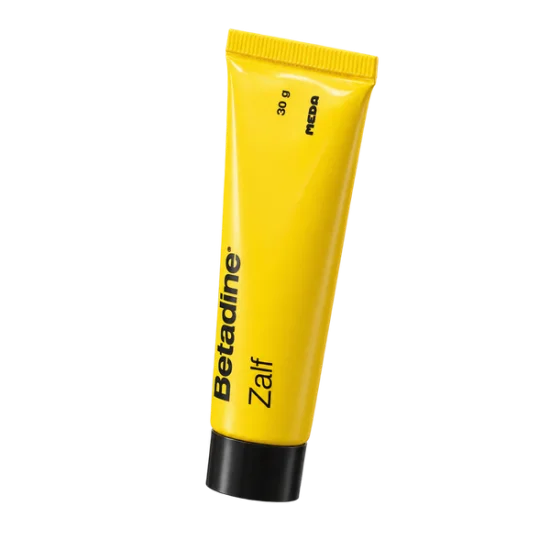
The ointment stayed in place better than a liquid product. The scrape looked calmer after a couple of days, although it left a yellow mark on the dressing and I had mild stinging at first.
Adults and children with minor superficial skin injuries may use Betadine as a topical ointment for local skin care. The 30 g tube is intended for external application to affected skin, where an ointment base helps maintain contact with the treatment area.
Product information
Betadine is supplied here as a topical ointment in a tube. The product is intended for external use on the skin rather than for oral, vaginal, or throat administration. Povidone-iodine is a recognised broad-spectrum topical antiseptic used in some skin preparations.
Dosage and administration
The treatment area should be gently cleaned before application. Aggressive scrubbing can damage newly forming tissue and may increase discomfort. Pat the skin dry around the injury, then apply a thin layer rather than building up a thick coating.
Practical application
- Wash hands before and after use.
- Clean visible dirt from the surrounding skin with water.
- Apply a thin layer to the affected area.
- Keep the ointment away from the eyes and inside the mouth.
- Avoid covering a large area with an airtight dressing unless a clinician has advised it.
- Do not share the tube between people.
- Use a clean dressing when the area is exposed to rubbing or dirt.
- Seek medical care if pain, warmth, swelling, pus, or redness continues to increase.
There is no single amount that suits everyone. The required quantity depends on the size of the affected area, the type of injury, the person’s age, and the clinical purpose of treatment.
Ingredients
Betadine is a topical ointment supplied in a 30 g tube for external use on the skin. It contains povidone-iodine, a recognised broad-spectrum topical antiseptic used in some skin preparations. The ointment base helps maintain contact with the affected area.
How it affects the body
It releases free iodine, which can disrupt microbial proteins and cell structures. WHO infection-prevention guidance describes antiseptic use as one part of wound and procedure care, alongside hand hygiene, cleaning, and appropriate wound management [1].
Therapeutic indications
Betadine ointment is used on the skin. Suitable situations may include limited superficial abrasions, small cuts, and minor areas of irritated or damaged skin when an external antiseptic ointment is appropriate.
Common mistakes
The following errors can reduce benefit or increase irritation:
- Applying a thick layer because more ointment seems stronger.
- Scrubbing the wound repeatedly with cotton, alcohol, or harsh cleansers.
- Using the skin ointment inside the mouth or on the eyelids.
- Covering an extensive area with an airtight dressing.
- Continuing treatment despite swelling, blistering, or a spreading rash.
- Sharing one tube between family members.
- Treating a deep puncture at home without checking tetanus protection.
- Applying the ointment to a wound containing glass, metal, soil, or another foreign body.
- Using several antiseptics together.
- Ignoring worsening pain because the wound looks small.
A common practical mistake is applying the ointment before removing visible dirt. Cleaning the surrounding area first improves contact with the skin and makes later changes easier to monitor.
Another is assuming that a brown or yellow topical preparation should be scrubbed off immediately. The correct handling depends on the specific formulation and clinical purpose; unnecessary rubbing can injure fragile tissue.
When not to use it
Use extra caution in the following situations:
- known thyroid disease or previous thyroid treatment;
- kidney impairment;
- extensive burns or large areas of broken skin;
- infants and very young children;
- pregnancy or breastfeeding;
- repeated treatment over several days;
- planned thyroid-function testing;
- treatment with medicines that affect thyroid function or contain iodine.
Povidone-iodine products may interfere with some thyroid investigations after significant absorption. The concern is greater when the skin barrier is damaged or treatment continues for a long period. NICE guidance on wound care also supports escalation when a wound is deep, contaminated, infected, or failing to heal rather than relying on repeated topical treatment alone [3].
Do not combine several antiseptic products on the same area without a clear clinical reason. Mixing topical preparations can increase irritation, reduce compatibility, or make it difficult to identify which product caused a reaction.
When this is not for you
Betadine ointment is not for you if you have previously experienced a serious reaction to the product or to one of its ingredients. Avoid applying it to the eyes, inside the mouth, or to other body sites unless the formulation is specifically approved for that use.
Possible side effects
Topical ointments can cause local reactions. Possible effects include temporary stinging, dryness, redness, itching, irritation, or contact dermatitis. A true allergic reaction is less common but may produce pronounced swelling, blistering, hives, or difficulty breathing.
Stop use and obtain urgent help for breathing difficulty, swelling of the lips or face, widespread hives, or faintness. Local irritation that remains mild may settle after the product is removed, but a worsening reaction requires medical review.
Repeated application over a large surface can increase exposure to some antiseptic ingredients. The risk deserves extra attention in infants, people with extensive burns, and people with thyroid or kidney disorders. EMA safety information for iodine-containing medicinal products highlights the need to consider systemic absorption when treatment involves damaged skin, large areas, prolonged use, or vulnerable patients [2].
Comparison
Topical products should be selected by their pharmaceutical form and intended site of use, not by brand familiarity alone.
| Category | Main role | Important limitation |
|---|---|---|
| Antiseptic ointment | Maintains topical contact on a small skin area | Not suitable for swallowing, eyes, or deep wounds |
| Aqueous skin antiseptic | Spreads over a broader external area and can be easier to rinse | May run from the treatment site |
| Plain wound dressing ointment | Protects or moisturises damaged skin | May not provide antiseptic activity |
Betadine ointment is most relevant when a person wants an external preparation that stays on the skin. A liquid antiseptic may be easier for larger superficial areas, while a non-antiseptic protective ointment may suit dry irritation where microbial control is not the treatment goal.
These categories are not interchangeable. A product intended for skin should not be substituted for an oral rinse or a mucosal preparation, even when the same brand family appears on the label.
What doctors say
Clinicians usually judge a topical antiseptic by three factors: the type of wound, the condition of the surrounding skin, and the person’s risk of complications. A small clean abrasion may need simple cleansing and protection. A contaminated puncture wound may need vaccination review, exploration, or systemic treatment.
A doctor would also ask how the wound is changing. Improving tenderness and stable redness are different from worsening pain, spreading warmth, increasing swelling, or discharge. The direction of change matters more than the appearance during the first few minutes after application.
Topical treatment works best when the wound is kept clean and protected from repeated friction. It cannot correct poor blood supply, remove a foreign body, or treat an established abscess.
For people with diabetes, reduced sensation, vascular disease, or immune suppression, even a small foot wound can progress quickly. Early assessment is preferable to repeated self-treatment when healing is slow.
Common questions
Which condition rules out the use of Betadine ointment?
A known serious allergy to Betadine or any ingredient rules out use. The ointment should also not be used as the sole treatment for a deep puncture, extensive burn, uncontrolled bleeding, spreading skin infection, or wound containing a foreign body. Guidance from WHO and wound-care services supports medical assessment when injury depth, contamination, or infection risk exceeds simple superficial care; this principle remains relevant in 2026 [4]. A history of thyroid disease, kidney impairment, or extensive skin damage calls for a more cautious treatment decision. The clinician should also review the wound’s size, depth, and rate of healing.
How should Betadine ointment be stored at home or while travelling?
Keep the tube closed, away from direct heat and strong sunlight, and out of children’s reach. Do not leave it in a hot car or beside a shower where repeated heat and humidity may affect the product. During travel, place the closed tube in a clean, dry toiletry bag so the cap and opening remain protected. EMA pharmaceutical-quality guidance treats appropriate storage and protection from excessive heat as part of maintaining medicine quality; the same practical approach applies in 2026 [5].
Can Betadine ointment be used with cosmetics, sunscreen, or other topical products?
Avoid layering cosmetics, sunscreen, moisturisers, or another medicated cream directly over the treated injury unless a clinician has selected that combination. Multiple products can dilute the ointment, increase irritation, or trap moisture against broken skin. Apply necessary skin products to unaffected surrounding areas rather than over the wound. Guidance from the American Academy of Dermatology (AAD) in 2025 supported a simple topical routine for irritated or injured skin, with unnecessary combinations avoided.
Is alcohol suitable while using Betadine ointment?
Alcohol applied directly to an open wound can sting and irritate tissue, so it should not be used as an additional cleanser unless specifically directed for a clinical procedure. Drinking alcohol does not create the same type of interaction as it can with many oral medicines, because Betadine ointment is applied to the skin. Large-area, prolonged, or occlusive use can increase absorption concerns, so alcohol should not be used to dismiss new symptoms or worsening redness. WHO wound-care principles in 2025 continued to prioritise gentle cleaning and appropriate antiseptic selection over harsh repeated applications.
Can Betadine ointment affect driving, concentration, or machinery work?
A small amount applied to a limited skin area is not expected to impair alertness, concentration, or coordination. The ointment can make the skin slippery and may transfer to tools, gloves, or vehicle controls, so the treated area should be covered appropriately when practical. Stop work involving machinery if an allergic reaction, severe irritation, dizziness, or another unexpected symptom develops. MOHAP patient-safety principles support preventing contamination and maintaining safe handling during work activities in 2026.
Is Betadine ointment suitable for older adults?
Older adults may use topical ointment when the injury is minor and the skin area is limited, but thinner skin can be more vulnerable to irritation and delayed healing. Extra caution applies with diabetes, poor circulation, reduced sensation, kidney disease, thyroid disease, or medicines affecting thyroid function. Monitor the wound for increasing redness, warmth, swelling, drainage, or pain rather than judging progress only by its size. WHO healthy-ageing and wound-care principles in 2025 supported early assessment for wounds that fail to improve or occur in people with significant chronic disease.
Do you offer anonymous delivery?
Your order will be securely packed and shipped within 24 hours. This is exactly what your package will look like (images of an actual item sent). It has the size and look of a regular private letter (24x11x0.7 cm) and its contents cannot be seen.
Reviews: Betadine
It was easy to spread and the tube was convenient for a small injury. I stopped after the skin became itchy around the cut, and the irritation settled after I washed the area.
The area healed without trouble, but the ointment made the surrounding skin feel greasy under a dressing. I used much less the next time and kept the dressing loose.
Sources
- World Health Organization (2009). WHO Guidelines on Hand Hygiene in Health Care
- European Medicines Agency (2023). Summary of Product Characteristics (SmPC) — povidone-iodine medicinal product
- National Institute for Health and Care Excellence (2020). Leg ulcer infection: antimicrobial prescribing
- World Health Organization (2016). Global Guidelines for the Prevention of Surgical Site Infection
- European Medicines Agency (2015). Guideline on the specification limits for residues of metal catalysts or metal reagents