Skip to content
Afrin
Active ingredient: Oxymetazoline

Afrin

Quality products
24/7 Support
Fast delivery
Delivery from 4 days
Select pack Package Per unit Price

Free delivery on orders from AED 860.00, free express delivery from AED 1,290.00

Secure Payments
Track your order
Best price guarantee

Afrin provides temporary relief from blocked nasal passages by narrowing swollen blood vessels in the nasal lining. It is intended for adults with congestion linked to a common cold, allergic rhinitis, or sinus congestion. Its active ingredient is oxymetazoline hydrochloride.

Product information

Afrin is a topical nasal decongestant supplied as a nasal spray in a bottle. Its active ingredient is oxymetazoline hydrochloride, which reduces swelling inside the nose and improves airflow for a limited period. Oxymetazoline belongs to the decongestant class.

Dosage and administration

The dose is decided individually, taking age, other medicines, and health conditions into account. Strengths and age limits can differ between oxymetazoline products, so the specific instructions supplied for this Afrin presentation determine the appropriate use.

Use Afrin by the nasal route. The individual dose depends on the product strength, age group, other medicines, and health conditions.

  • Clear excess mucus gently before spraying.
  • Keep the head upright or slightly forward.
  • Direct the nozzle into one nostril without aiming toward the nasal septum.
  • Use the prescribed or product-specific number of sprays.
  • Repeat in the other nostril only when the recommended instructions require it.
  • Wipe the nozzle after use according to the product instructions.
  • Do not share the bottle or nozzle with another person.

Many adult oxymetazoline nasal sprays use a 0.05% formulation, but the strength must match the specific Afrin presentation. Adult spray should not be used in a child unless the product instructions or a clinician specifically permit it.

Correct Nasal Spray Technique

Aim slightly outward, away from the nasal septum. The septum is the thin wall separating the two nostrils. Spraying directly onto it can increase burning, dryness, or minor bleeding.

Do not sniff forcefully immediately after spraying. Strong inhalation can pull the liquid into the throat, where it may taste unpleasant and irritate the mouth.

A blocked nose can make users spray repeatedly within a short period. Allow the first spray time to work instead of adding extra doses because the first sensation is not immediate.

Age-Specific Dosing

Children require age-appropriate dosing. A child’s nasal passages and cardiovascular system can respond differently from an adult’s, and accidental swallowing may be more serious.

Young children should receive individualized advice before using oxymetazoline. Older adults may also need extra care because hypertension, heart disease, glaucoma, prostate enlargement, and multiple medicines become more common with age.

Maximum Treatment Duration

Short-term use is essential. Many oxymetazoline products limit continuous use to no more than three days because longer use can cause rebound congestion.

If congestion continues, frequent spraying can create a cycle in which the nose becomes blocked again as the effect wears off.

Ingredients

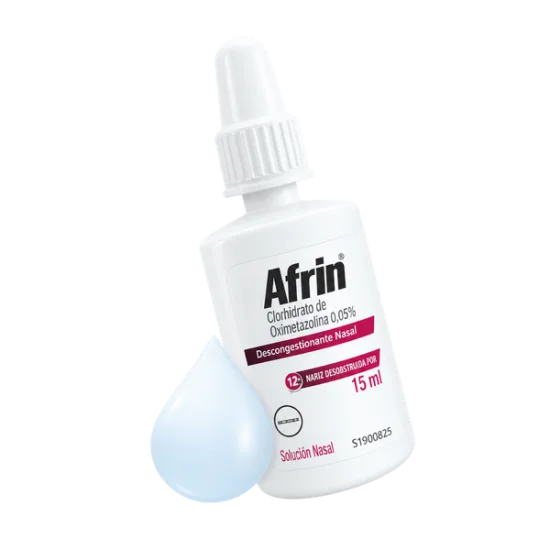
Afrin is a topical nasal decongestant supplied as a nasal spray in a bottle. Its active ingredient is oxymetazoline hydrochloride, which reduces swelling inside the nose and improves airflow for a limited period. The product contains 15 ml of nasal spray.

Oxymetazoline belongs to the decongestant class. It acts locally on blood vessels in the nasal mucosa, the moist lining inside the nose.

How it affects the body

Oxymetazoline stimulates alpha-adrenergic receptors in the nasal blood vessels. This causes vasoconstriction, which means narrowing of small blood vessels. Less blood flow reaches swollen tissue, so the nasal mucosa becomes less enlarged and nasal airflow improves.

The effect is temporary because oxymetazoline reduces swelling without removing the underlying infection, allergy, irritant, or structural cause.

Nasal Blood Vessel Constriction

The nose contains a dense network of blood vessels that can expand during inflammation. Alpha-adrenergic receptor stimulation tightens those vessels. This mechanism explains why a small amount of topical spray can produce noticeable relief.

Topical use limits exposure compared with some oral medicines, yet systemic absorption can still occur. People with cardiovascular or endocrine conditions may therefore experience effects beyond the nose.

Rapid but Temporary Nasal Relief

The medicine only reduces swelling in the nasal lining. It does not remove an infection or allergy trigger.

The World Health Organization describes topical nasal decongestants as symptom-relief treatments rather than cures for respiratory infections [1].

Therapeutic indications

Afrin may help with:

  • Nasal congestion during a common cold
  • Blocked nasal passages linked to allergic rhinitis
  • Sinus congestion and pressure caused by swollen nasal tissue
  • Difficulty breathing through the nose at night
  • Nasal obstruction that contributes to sleep disruption

Afrin relieves congestion. It does not treat the viral cause of a common cold, remove an allergy trigger, or cure bacterial sinusitis.

Common mistakes

Several everyday mistakes reduce benefit or increase the chance of adverse effects:

  • Using Afrin beyond the short-term treatment limit
  • Spraying toward the nasal septum
  • Repeating a dose too soon
  • Combining Afrin with oral cold remedies containing another decongestant
  • Using adult spray for a child
  • Sharing the nozzle
  • Continuing to escalate use when relief lasts for less time
  • Assuming improved airflow means the underlying illness has resolved

The nozzle should not be shared. Even when the bottle contains the same medicine, sharing creates a route for microorganisms to pass between users.

Correct direction matters. Aim away from the septum and avoid forceful sniffing after spraying. This reduces throat drainage and may limit local irritation, though it cannot prevent every side effect.

Persistent congestion, recurrent blockage, severe facial pain, high fever, breathing difficulty, or repeated nosebleeds needs medical assessment rather than more frequent spraying.

When not to use it

Medical review is needed before use in the following situations:

  • Hypertension, especially when poorly controlled
  • Heart disease, irregular heartbeat, or previous palpitations
  • Hyperthyroidism
  • Diabetes
  • Glaucoma or raised pressure inside the eye
  • Prostate enlargement or difficulty urinating
  • Pregnancy or breastfeeding
  • Recent nasal surgery or significant nasal injury
  • Childhood use
  • Persistent, severe, or unexplained nasal congestion

Important categories include:

  • Monoamine oxidase inhibitors
  • Tricyclic antidepressants
  • Other nasal or oral decongestants
  • Stimulants
  • Some blood pressure medicines
  • Medicines that can raise heart rate or blood pressure

The FDA label information for oxymetazoline products includes warnings related to excessive use, accidental ingestion, and relevant medical conditions [2].

When this is not for you

Afrin is not for you without individualized medical advice if you have a condition that could worsen with vasoconstriction or if you take medicines affecting blood pressure or heart rate.

These conditions do not all mean that oxymetazoline is prohibited. They mean the expected benefit and possible cardiovascular, eye, urinary, or nasal risks need individual assessment.

People with hypertension or heart disease may require closer attention to blood pressure, pulse, headache, or palpitations. People with glaucoma should obtain product-specific advice before use. Pregnancy and breastfeeding require an individual decision based on the active ingredient, duration, and maternal symptoms. The same applies to children, especially young children.

Possible side effects

The most common problems involve the nose. Oxymetazoline may cause dryness, burning, stinging, sneezing, or temporary irritation. Excessive spraying can worsen these effects.

Possible systemic effects include headache, palpitations, increased blood pressure, nervousness, or an awareness of a rapid heartbeat. These effects are more concerning in people with cardiovascular disease, uncontrolled hypertension, thyroid disease, or interactions with other stimulants.

Common Local Nasal Effects

Dryness can feel like tightness or crusting. A humid environment and gentle nasal care may make the nose more comfortable, provided these measures do not delay assessment of severe symptoms.

Minor irritation often improves after reducing unnecessary exposure. Repeatedly aiming the spray at the septum can make soreness worse.

Systemic Cardiovascular Effects

Oxymetazoline can influence blood vessels outside the nose if enough is absorbed. Severe palpitations, chest pain, fainting, severe headache, marked weakness, or breathing difficulty require urgent medical attention.

Children are more vulnerable to accidental ingestion. Significant swallowing or suspected overdose requires immediate contact with local emergency or poison-support services.

Do not combine Afrin with another nasal or oral decongestant simply because the first product seems to wear off. Duplicate decongestants can increase cardiovascular effects without solving the cause of congestion.

Rebound Congestion and Rhinitis Medicamentosa

Rhinitis medicamentosa is persistent nasal blockage caused by repeated topical decongestant use. The spray initially opens the nose, but frequent use can leave the nasal blood vessels more reactive when the effect fades.

A common mistake is increasing spray frequency to treat this worsening blockage. Stopping after prolonged use can feel difficult because congestion may temporarily intensify.

Comparison

Different treatments suit different causes of nasal obstruction. A short episode of cold-related swelling may call for a different approach from recurrent allergic rhinitis.

Treatment Main role and limitation
Afrin with oxymetazoline Rapid short-term relief; prolonged use may cause rebound congestion
Saline nasal spray Moisture and mucus clearance; does not produce the same vasoconstrictor effect
Intranasal corticosteroid Reduces allergic inflammation; usually less immediate and requires regular use

Saline nasal spray can support moisture and clearance without the same decongestant mechanism. It may be useful when dryness, thick mucus, or environmental irritation contributes to discomfort.

Intranasal corticosteroids target inflammation associated with allergic rhinitis. They generally take longer to provide their full benefit and should not be stopped or replaced when prescribed treatment is needed.

Oral decongestants can create greater systemic exposure than topical oxymetazoline. They may affect blood pressure, heart rate, sleep, or urinary function, so neither route is free from precautions.

What doctors say

In clinical practice, doctors often view oxymetazoline as a short-term rescue option for severe nasal obstruction, not as a daily solution for recurrent congestion. The practical question is whether the nasal blockage is temporary or keeps returning after the spray wears off.

A physician would usually ask about allergy symptoms, fever, facial pain, nasal discharge, snoring, medication use, asthma, blood pressure, and the number of days the spray has been used. Those details help separate a brief viral illness from allergic rhinitis, rhinitis medicamentosa, or a structural nasal problem.

The American Academy of Otolaryngology–Head and Neck Surgery links persistent nasal obstruction with several possible causes, including inflammatory disease and anatomical narrowing [3]. A better technique cannot correct every cause.

Common questions

Can Afrin affect driving, concentration, or work with machinery?

Most people use oxymetazoline locally and do not experience major impairment, yet headache, dizziness, nervousness, or palpitations can occur. The FDA’s oxymetazoline information from 2023 advises attention to adverse reactions that could affect normal activities . Do not drive or operate machinery if you feel dizzy, faint, unusually drowsy, or unable to concentrate.

How does Afrin differ from saline spray or another decongestant?

Afrin contains oxymetazoline, which narrows swollen nasal blood vessels through alpha-adrenergic activity. Saline mainly moistens the nasal lining and supports mucus clearance, while intranasal corticosteroids target inflammation rather than producing rapid vasoconstriction. EMA guidance from 2022 supports duration limits for topical decongestants because repeated use can cause rebound congestion .

How should Afrin be stored at home and while travelling?

Keep the bottle closed, protected from excessive heat, and stored where children cannot reach it. Do not leave it in a hot vehicle or in direct sunlight during travel, because heat can affect medicines and packaging. WHO storage guidance published in 2020 supports protection from damaging temperature and environmental conditions .

Do diet, exercise, or daily habits affect Afrin’s result?

Food does not usually determine the local nasal action of oxymetazoline. Caffeine, stimulant products, intense exertion, and other decongestants may make palpitations or blood-pressure effects more noticeable in sensitive people. Advice from the American Heart Association in 2024 supports limiting avoidable stimulant exposure when cardiovascular symptoms occur [4].

How long can a course last, and is long-term use acceptable?

Afrin is intended for short-term relief, and many oxymetazoline products limit use to three days. Longer or repeated use can produce rhinitis medicamentosa, in which congestion returns or worsens after the spray wears off. The American Academy of Otolaryngology–Head and Neck Surgery described this pattern in its 2023 clinical information on topical decongestant overuse .

What is the correct technique for using the Afrin device?

Clear the nose gently, keep your head upright, place the nozzle inside one nostril, and aim away from the nasal septum. Use only the individually appropriate number of sprays, then repeat on the other side only when required. The FDA’s 2023 oxymetazoline product information advises avoiding excessive use and taking care to prevent accidental ingestion, especially in children .

Do you offer anonymous delivery?

Your order will be securely packed and shipped within 24 hours. This is exactly what your package will look like (images of an actual item sent). It has the size and look of a regular private letter (24x11x0.7 cm) and its contents cannot be seen.

Reviews: Afrin

3
Based on 3 reviews
Waleed B., 51 Bur Dubai Two days
Verified
Rating: 3.5 out of 5

Waleed B., 51 - Bur Dubai, used Afrin at the directed dose during a cold for two days. He said the first sprays opened his nose quickly and helped him sleep, but the burning sensation was noticeable when he sprayed more often than directed.

4 Nov 2026
Mohammed, 60 Sharjah Five days
Verified
Rating: 2 out of 5

Mohammed, 60 - Sharjah, used Afrin more often than directed for five days because his blocked nose kept returning. He later learned that rebound congestion could be part of the problem and needed clinical guidance to stop regular use.

6 Oct 2026
Ahmed, 47 Fujairah Two days
Verified
Rating: 3.5 out of 5

Ahmed, 47 - Fujairah, used Afrin at the directed dose for two days during an upper respiratory infection. He found the relief useful, although the bottle was less helpful once his symptoms became recurrent rather than occasional.

17 Oct 2026

Sources

  1. World Health Organization (2020). WHO Expert Committee on Specifications for Pharmaceutical Preparations: Good Storage and Distribution Practices for Medical Products.
  2. U.S. Food and Drug Administration (2023). Oxymetazoline hydrochloride nasal spray: Drug Facts and product labelling information.
  3. American Academy of Otolaryngology–Head and Neck Surgery (2023). Clinical information on nasal congestion and topical nasal decongestant overuse.
  4. American Heart Association (2024). Scientific information on stimulants, blood pressure, and cardiovascular symptoms.
Get our free app Shop faster and track your orders 3.9 · 576 reviews Install
